
Japan Eases Defense Equipment Exports Rules as Firms Ramp Up Production
Japan eases defense equipment exports rules, prompting IHI and Mitsubishi Heavy to expand production, investment and hiring to pursue growing overseas demand.
Japan on April 21, 2026 moved to relax long-standing limits on defense equipment exports, a policy shift expected to unlock new overseas sales and spur capital investment across the domestic defense sector. The decision to ease restrictions on defense equipment exports was announced by the government and immediately prompted major manufacturers to signal plans for increased production, new facilities and staff expansion. Industry executives and analysts say the change could reshape supply chains and give Japanese firms a larger role in allied and partner procurement programs.
Government Revises Export Limits
The government framed the revision as a measured update to export controls that preserves strict oversight while allowing broader technology transfers and sales to trusted partners. Officials said the aim is to balance national security safeguards with the economic and strategic benefits of enabling domestic companies to compete in global defense markets. The statement stressed continued vetting of end users and adherence to international non-proliferation norms.
Industry Response: Production and Capital Investment
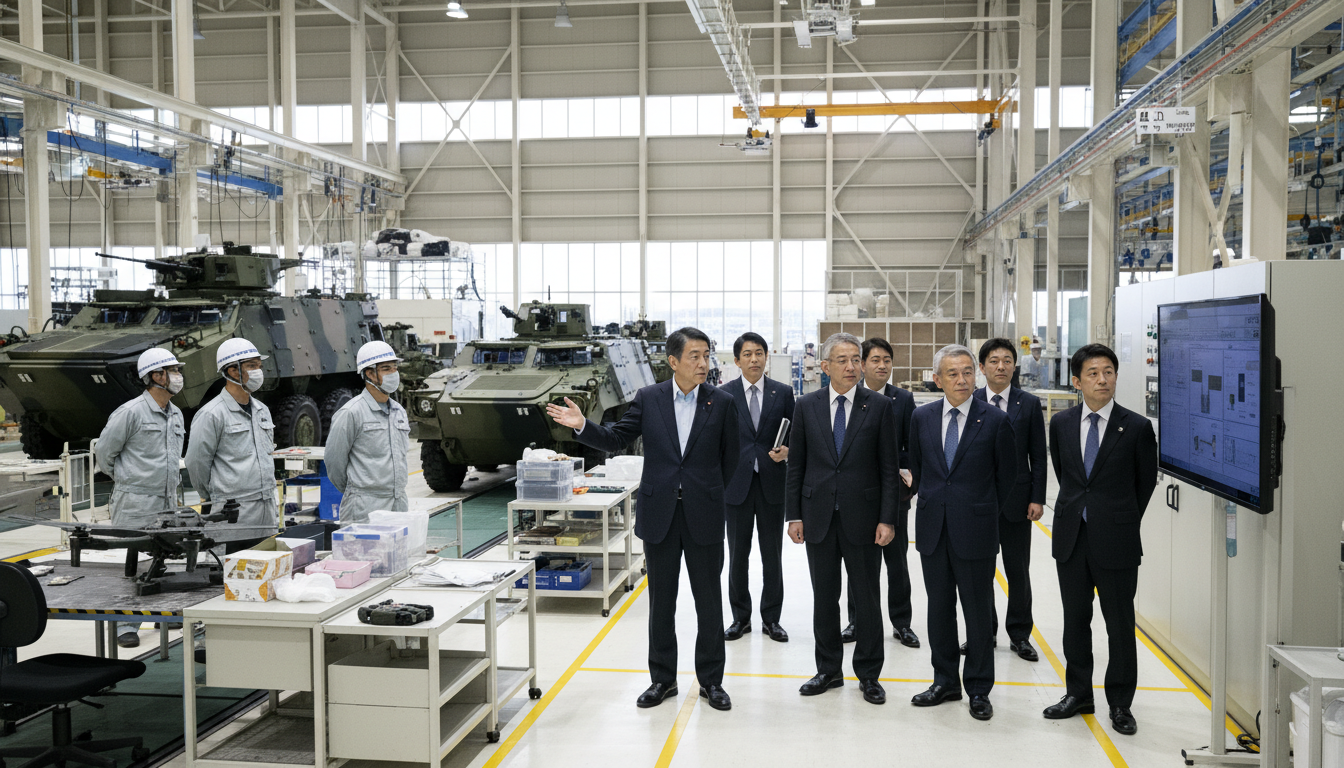
Immediately after the policy shift, several manufacturers announced plans to accelerate production and boost capital spending to meet potential orders from overseas customers. Companies are reported to be evaluating new manufacturing lines, expanding testing facilities and hiring engineers and technicians to shorten delivery timelines. Investment decisions are being pitched as both a business opportunity and a way to strengthen Japan’s domestic industrial base for defense-related manufacturing.
IHI and Mitsubishi Heavy Industries’ Plans
Two of Japan’s largest conglomerates, IHI and Mitsubishi Heavy Industries, were identified by industry sources as among the first to respond to the eased export rules with concrete expansion plans. Both firms are preparing to scale up production capabilities, allocate funds for plant upgrades and increase headcount in areas tied to defense manufacturing and systems integration. Executives say these moves are intended to position the companies competitively for contracts with governments and allied forces seeking diversification of suppliers.
Potential Overseas Markets and Partnerships
Analysts anticipate demand from a range of international partners that prioritize interoperability and stable supply lines, including long-standing allies and regional partners. Companies are expected to target markets where Japanese systems and components can complement existing platforms, or where governments seek reliable alternatives to larger suppliers. Observers note that successful overseas sales will depend on long-term service packages, technology transfer terms and clear end-use assurances.
Economic and Employment Impact
Economists and industry representatives highlight the potential for job creation in manufacturing, engineering and maintenance as firms expand capacity to serve export customers. Capital investment in new plants and equipment could also spur growth in related sectors such as electronics, precision machining and software systems. While the magnitude of economic benefit will depend on contract wins and sustained demand, the policy change is widely seen as opening a new growth pathway for Japan’s high-tech industrial exporters.
Security Oversight and Export Controls Remain
Government officials emphasized that easing export limits does not mean a free-for-all, and existing controls will remain in place to prevent misuse and proliferation. Licensing procedures, export risk assessments and post-delivery monitoring were described as central components of the revised framework. Legal and diplomatic safeguards will be maintained to ensure that transfers are consistent with Japan’s security commitments and international obligations.
Japan’s move is likely to prompt scrutiny from domestic lawmakers and international partners alike as it seeks to expand defense-related trade while preserving transparency and control. Observers caution that firms will need to navigate complex regulatory, legal and customer-requirement landscapes to convert policy change into sales and long-term industrial partnerships.
The immediate industry reaction underscores a strategic recalibration: manufacturers are preparing for a future in which defense equipment exports play a more prominent role in company portfolios and national industrial policy. Timeframes for plant construction, hiring and first deliveries will depend on procurement cycles, export approvals and the pace at which overseas customers commit to purchases.

