
Unexploded ordnance: Two 500-pound US MK82 bombs destroyed near Luang Prabang as Laos continues UXO clearance
Two 500-pound MK82 bombs were destroyed near Luang Prabang as Laos continues to face unexploded ordnance from U.S. bombing, endangering communities and farmland.
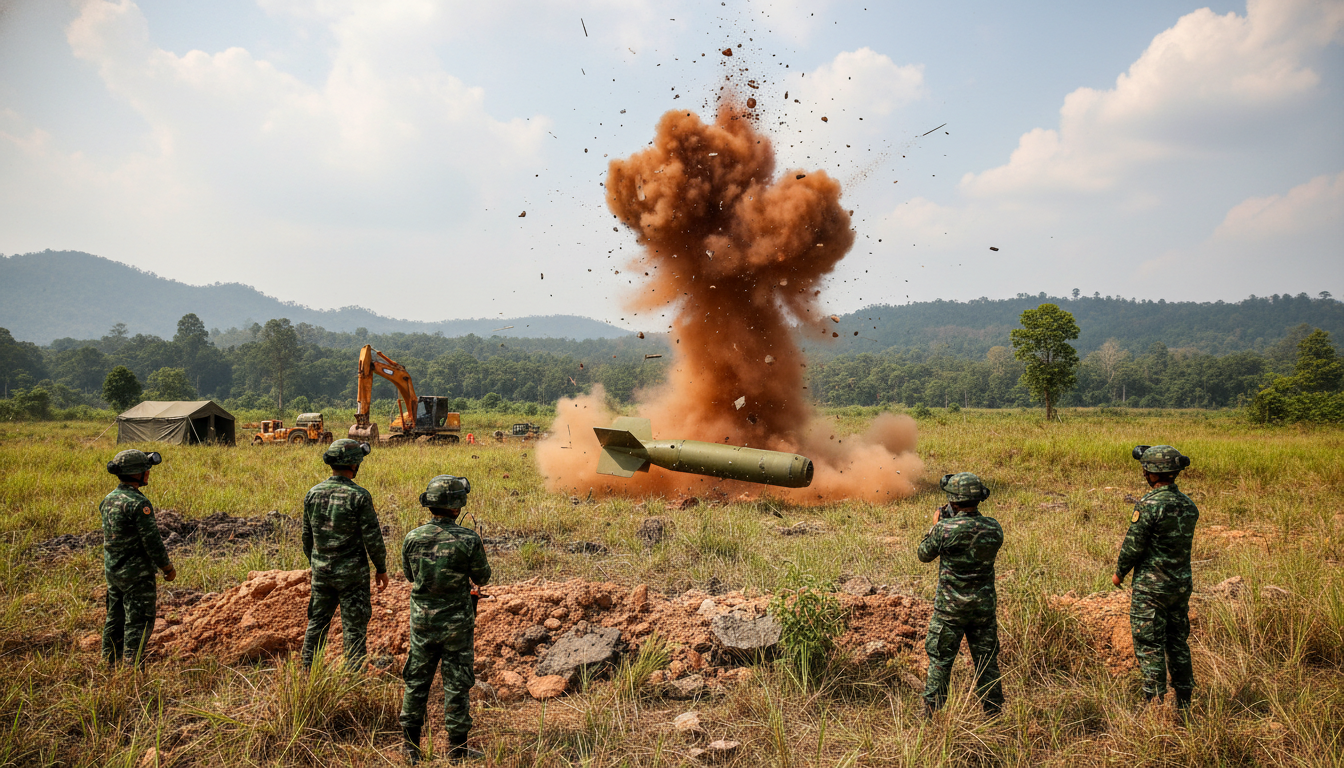
Laotian clearance teams destroyed a U.S.-manufactured 500-pound MK82 bomb in a village near Luang Prabang on March 27, the Laotian Times reported, marking the latest find in a steady stream of wartime munitions recovered across the country. Three days earlier, another MK82 was destroyed in Xiengkhouang province, underscoring the persistence of unexploded ordnance that remains lethal decades after the Indochina War. The discoveries highlight the ongoing hazard posed by UXO to civilians, farmers and development projects in Laos.
Two MK82 bombs neutralized near Luang Prabang
Teams operating near Luang Prabang located and safely detonated an MK82 bomb on March 27 after securing the immediate area and following established disposal protocols. The ordnance was one of several residual items from intense U.S. aerial campaigns during the 1960s and 1970s that left unexploded devices scattered across rural districts. Local authorities and explosive ordnance disposal personnel coordinated the clearance to prevent civilian casualties and to allow residents to resume farming and daily activities.
Recent clearance in Xiengkhouang confirms wider contamination
A separate clearance unit destroyed an MK82 in Xiengkhouang province three days prior, illustrating that UXO finds are not isolated events but part of a nationwide pattern. Xiengkhouang, which witnessed heavy bombing in the war, has long been a focus of sustained clearance and victim assistance efforts. The recurrence of large aerial bombs in agricultural and residential areas demonstrates how deeply contamination is embedded in land used for livelihood and settlement.
Historical scale of the bombing campaign
Laos remains the most heavily bombed country per capita in the history of warfare, with millions of cluster munitions and other ordnance dropped during U.S. operations in Indochina. Many of those weapons failed to detonate on impact, becoming unexploded ordnance that pose a latent but persistent threat. Decades of clearance work have removed large quantities of explosives, but the scale of the original bombardment means discoveries continue to emerge during routine farming, construction and digging.
Human and economic toll from unexploded ordnance
Unexploded ordnance kills and maims civilians and restricts access to arable land, impeding food security and local development. Farmers who encounter buried munitions often abandon productive plots or face the risk of injury when attempting to remove UXO themselves. Beyond direct casualties, the presence of unexploded devices increases the cost of infrastructure projects and limits safe expansion of tourism in areas of cultural significance.
Clearance methods and safety procedures used by Lao teams
Disposal teams follow standardized explosive ordnance disposal procedures that include site cordoning, evacuation, remote assessment and controlled detonation or neutralization where feasible. Technicians use metal detectors, protective gear and, when available, remote-handling tools to reduce risk to personnel. Community reporting mechanisms and mine-risk education programs are integral to preventing accidents while teams conduct systematic clearance operations.
International support and continuing funding needs
International organizations, non-governmental groups and bilateral partners have provided technical support, funding and training to Lao authorities over several decades. Despite this assistance, experts say clearance and victim assistance remain under-resourced relative to the scale of contamination. Sustained international funding and capacity building are cited as crucial to accelerating clearance, improving victim care and enabling formerly contaminated land to be returned to safe civilian use.
The recent neutralizations in Luang Prabang and Xiengkhouang underscore that unexploded ordnance remains a daily reality for many Laotians, decades after the conflict that created it. Continued clearance, stronger community education and steady international assistance will be required if the nation is to reduce the toll of these wartime remnants and expand safe access to land and livelihoods.

