
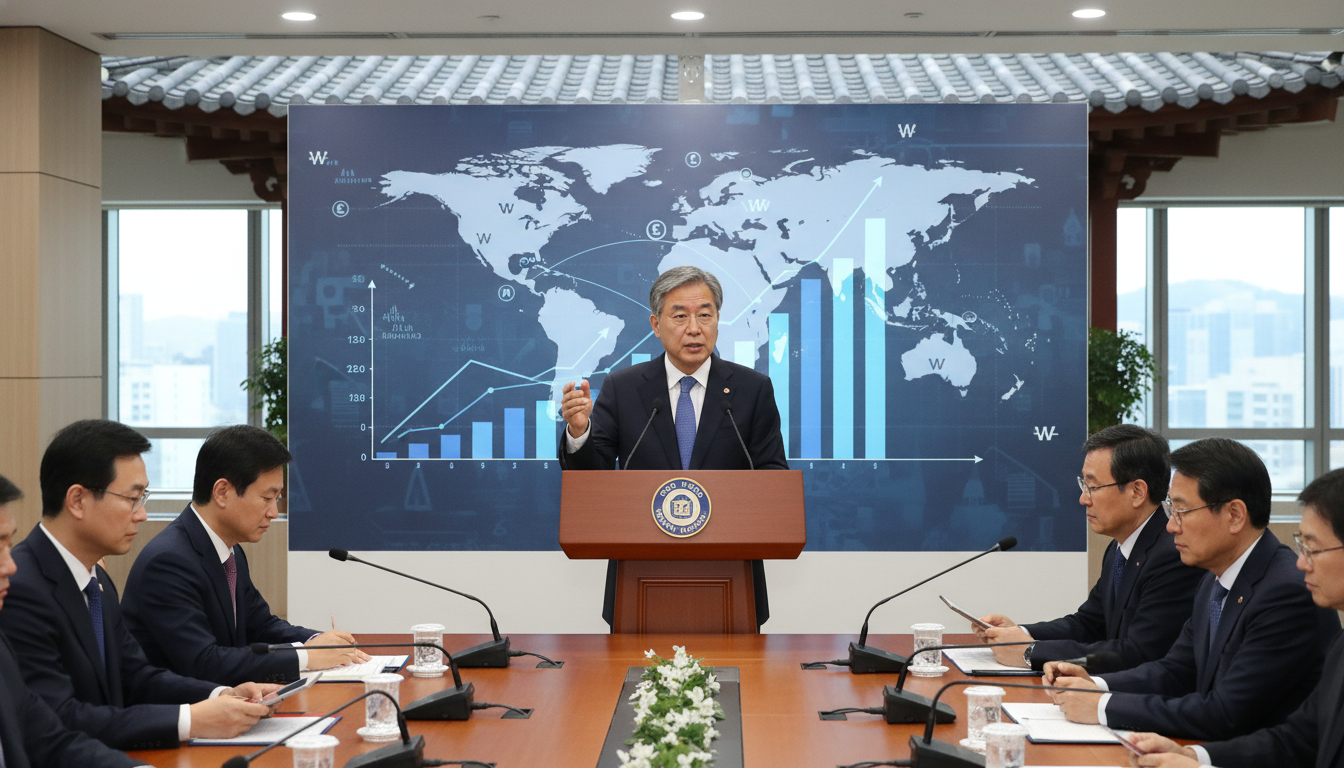
Shin Hyun Song Seeks Won Internationalisation While Guarding Against Capital Shocks
New Bank of Korea governor Shin Hyun Song proposes won internationalisation to widen the currency’s global use while protecting capital flows and markets.
Opening: Governor’s Ambition and the Keyword
As Shin Hyun Song assumes the governorship of the Bank of Korea this week, he has laid out a high-profile objective: won internationalisation. The veteran economist, aged 66, told officials he wants to rebuild the policy framework that currently insulates the won, aiming to expand the currency’s role abroad without provoking sudden capital movements. His plan returns him to debates he helped shape during a prior stint as a presidential adviser in 2010.
Shin’s Economic Record and Mandate
Shin is internationally recognised for having flagged the 2008 global financial crisis ahead of many peers, a reputation that buttresses his credibility at the central bank. Domestic and international observers are watching closely as he transitions from adviser and academic roles to central-bank leadership. His mandate combines steering monetary policy with a longer-term task of gradually loosening protections around the won to encourage wider cross-border usage.
What Shin Means by Rebuilding the Framework
The governor has signalled a systematic approach, not an abrupt liberalisation. Rebuilding the framework, as described in briefings, refers to sequenced policy tools: clearer market infrastructure, enhanced offshore liquidity arrangements, and tighter coordination with fiscal authorities. The intent is to reduce barriers that keep the won largely a domestic medium of exchange while avoiding the shocks that unfettered capital liberalisation can trigger.
Historical Context: The 2010 Fortress Around the Won
Shin was part of policy circles that supported measures after the 2008 crisis designed to shield the won from volatile external flows. That “protective fortress” involved capital flow management and interventions intended to preserve financial stability during stress. Now he faces the inverse challenge: how to unwind parts of that system without re-exposing markets to disorder, a delicate balance between openness and resilience.
Regional Comparisons and External Constraints
Analysts point to the uneven record of regional peers as a caution. China’s long-running effort to raise the yuan’s international standing has encountered structural, regulatory and confidence hurdles, underlining the complexity of currency internationalisation. Pinnacle Economic Research Institute economist Chang Jaechul warns that even for large Asian currencies, transitioning to greater global use is a multi-decade endeavour and poses realistic constraints for policymakers.
Market Risks and Capital Flow Management
A central concern is preventing volatile capital flows from amplifying exchange-rate swings or forcing abrupt policy shifts. The Bank of Korea will likely rely on a toolkit that includes forward guidance, targeted liquidity facilities for offshore markets, and calibrated adjustments to market access rules. Officials have emphasised that any steps toward won internationalisation will be incremental and reversible if market conditions deteriorate.
Implications for Trade, Investment and Monetary Policy
Greater international use of the won could lower transaction costs for Korean firms and deepen local financial markets by attracting foreign participation. It may also shift the transmission of monetary policy, requiring closer monitoring of cross-border credit and reserve dynamics. Policymakers will need to ensure that internationalisation complements, rather than conflicts with, core price stability and financial stability objectives.
International Coordination and Institutional Steps
Experts expect the Bank of Korea to seek stronger engagement with foreign central banks, multilateral institutions and global custodians to build trust in won-denominated instruments. Steps could include developing swap lines, improving offshore trading venues, and enhancing transparency in regulatory regimes. Institutional credibility and predictable policymaking will be critical to persuading foreign investors to hold and trade the won at a meaningful scale.
Shin’s pursuit of won internationalisation places him at the intersection of ambition and caution, asking whether a currency long managed for domestic stability can be eased into a larger global role without incurring disruptive spillovers. Observers will now watch policy signals, technical measures and international dialogues for evidence of how Seoul plans to thread that needle in the coming months.

