
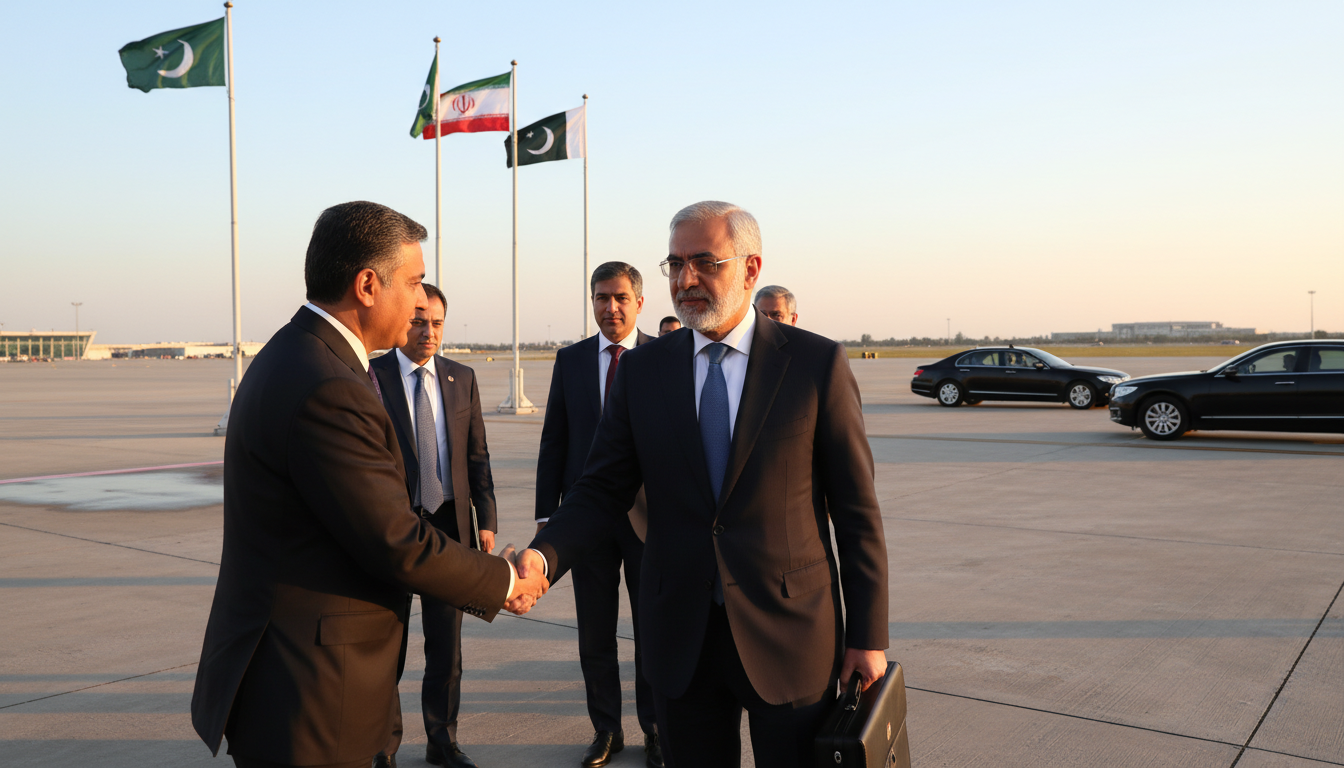
Iran foreign minister visit Pakistan: Araghchi returns to Islamabad ahead of trip to Russia
Iran foreign minister visit Pakistan: Abbas Araghchi returns to Islamabad after Oman and will travel to Russia amid ceasefire diplomacy and coordination.
Iran’s foreign minister, Abbas Araghchi, has returned to Pakistan following a stop in Oman and is expected to depart for Russia as part of a regional diplomatic push, Iranian state news agency IRNA reported. The Iran foreign minister visit Pakistan is framed by ongoing ceasefire negotiations and broader efforts to stabilise tensions across the region. Pakistani and Iranian officials say the meetings focused on coordination and practical steps to maintain the ceasefire and advance bilateral ties. Araghchi’s movements underscore Tehran’s accelerated diplomacy with neighbouring and regional partners.
Araghchi’s itinerary: Oman, Pakistan and Russia
Araghchi’s short tour began with consultations in Muscat and continued in Islamabad, according to official accounts. Iran’s foreign ministry presented the sequence as part of a planned effort to engage multiple regional capitals in quick succession. The return to Pakistan follows meetings with senior officials in Islamabad and precedes the scheduled trip to Moscow. Officials offered few public details about the full agenda for the Russia leg, but described it as a continuation of the diplomatic momentum.
Meetings with Pakistani leaders in Islamabad
During his stay in Pakistan, Araghchi met Prime Minister Shehbaz Sharif and other senior figures, including military chief General Asim Munir, officials confirmed. Discussions reportedly covered regional developments, bilateral trade and security cooperation, with an emphasis on preventing fresh escalations. Pakistani leaders reiterated their interest in playing a constructive role in stabilising tensions between regional actors. Both sides described the conversations as substantive and aimed at strengthening practical coordination.
Ceasefire diplomacy and de‑escalation talks
Araghchi’s visits come amid a ceasefire and ongoing efforts to stabilise hostilities that have affected multiple borders and maritime routes. Tehran has framed its current diplomacy as focused on consolidating the ceasefire and translating ceasefire commitments into durable mechanisms. Delegations in Islamabad discussed steps to reduce the risk of inadvertent clashes and to improve communication channels between security establishments. Observers note that such contact between foreign ministries and militaries is intended to build trust and reduce the likelihood of miscalculation.
Iran emphasizes regional coordination and practical measures
Iranian officials have stressed that strengthening coordination with regional partners is a top priority, a point reiterated during the Islamabad meetings. Tehran is seeking cooperative approaches on border security, intelligence sharing, and humanitarian access where needed, officials said. Economic ties and transport links were also listed as areas where closer cooperation could reinforce stability. Analysts say Iran’s approach combines immediate security diplomacy with longer-term efforts to expand pragmatic regional engagement.
Significance of the planned visit to Russia
The scheduled stop in Russia adds a strategic layer to the tour, given Moscow’s influence with several regional actors and its broader geopolitical role. Conversations in Moscow are expected to include assessments of how third‑party actors might affect ceasefire durability and how international actors can support de‑escalation. Iran and Russia maintain a complex partnership that spans security, energy and diplomatic coordination, and a meeting between foreign ministers will allow Tehran to align messaging with a key external partner. Officials have not released detailed timetables or confirmed bilateral deliverables ahead of that trip.
Potential regional and diplomatic implications
Araghchi’s rapid engagements with Oman, Pakistan and Russia signal Tehran’s intent to pursue a multi-track diplomacy that pairs bilateral consultations with wider regional coordination. If these talks yield operational arrangements—such as hotlines, joint working groups, or protocols for border incidents—they could reduce the chances of renewed confrontation. However, durable progress will depend on follow‑through and on the actions of other regional and global actors not present at these meetings. Policy experts caution that while diplomacy can lower immediate tensions, lasting stability requires parallel political and economic measures.
The visits underline a pragmatic push by Iran to convert a fragile ceasefire into more stable arrangements through active engagement with neighbours and strategic partners. Observers will watch for official communiqués after the Russia leg and for any concrete steps announced by Islamabad or Tehran. Continued contact among foreign ministries, militaries and regional capitals will be key to determining whether this phase of diplomacy produces tangible changes on the ground.

