
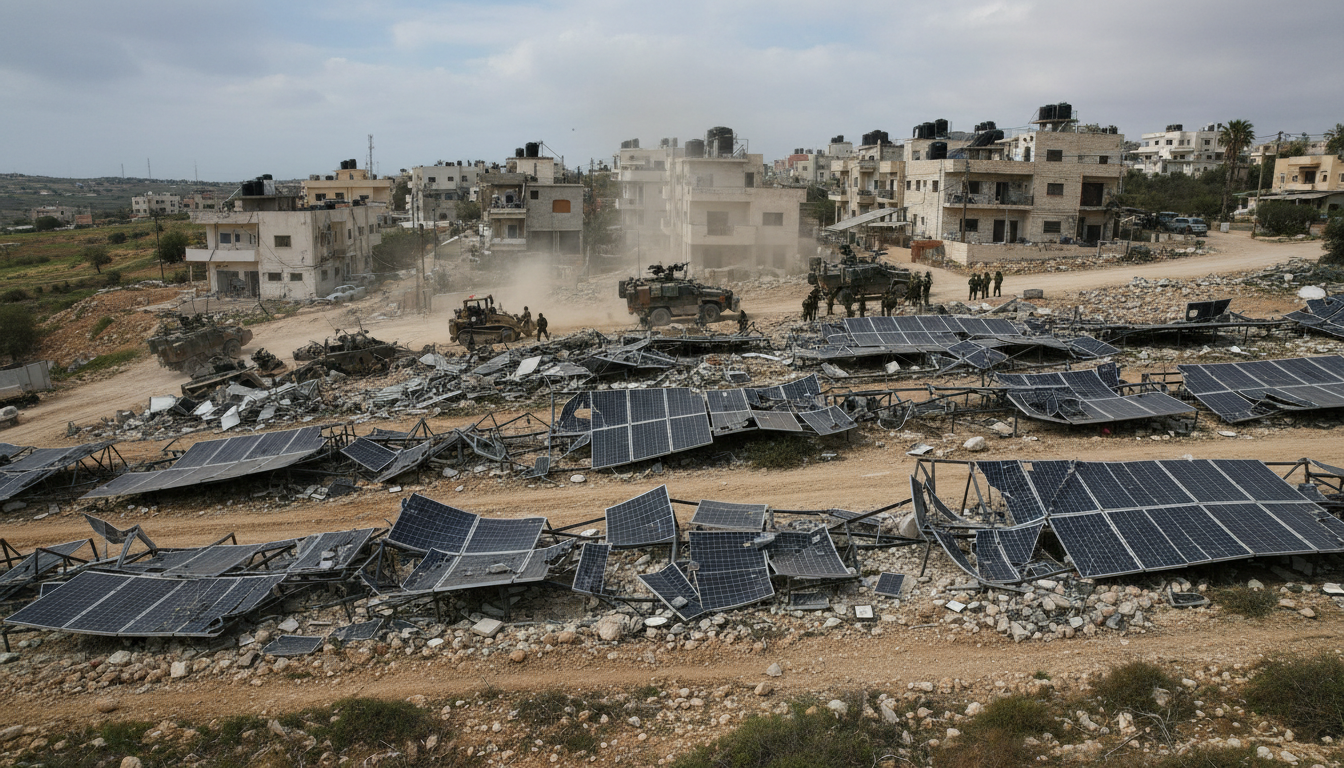
Israeli Forces Destroy Debel Solar Panels, Cutting Power and Water Services
Israeli forces bulldozed the Debel solar panels in south Lebanon on April 26, 2026, severing a key electricity source for the town and disrupting its water supply, Lebanese officials said. The Lebanese National News Agency reported that the operation also damaged homes, roads and olive groves in and around Debel. Local leaders and aid organisations warned of immediate humanitarian consequences as residents faced loss of power for pumps and household needs. No independent verification was immediately available and there was no immediate comment from Israeli military spokespeople.
Israeli forces raze solar panels in Debel
On April 26, 2026, armoured vehicles and bulldozers entered areas near Debel and demolished solar installations that provided electricity to the town, according to the Lebanese National News Agency. The installations were described as community-level photovoltaic arrays that had supplied power for domestic use and for critical municipal services. Witnesses and local officials said crews systematically tore panels from their mounts and pushed equipment into debris piles, leaving electrical wiring and mounting frames scattered. The destruction appears to have been carried out over several hours during daylight operations.
Impact on electricity and water supply
Debel’s solar panels supplied power to pumps used in the town’s water distribution network, local municipal officials said, and the loss of generation capacity immediately affected water availability. Residents reported low or no water pressure within hours, with households relying on stored water or private deliveries. Municipal technicians warned that without the solar arrays, backup diesel generators would be the only short-term option, raising concerns about fuel availability and costs. Humanitarian agencies cautioned that reduced water access could heighten public health risks, particularly for vulnerable populations.
Destruction of homes, roads and olive groves
Beyond energy infrastructure, reports from local authorities say the operation damaged residential buildings, local roads and extensive olive groves in the surrounding countryside. Several families were displaced after their homes were rendered uninhabitable by the bulldozing and associated shelling reported in the area, municipal records indicated. Road damage has hampered access for emergency vehicles and relief convoys, complicating efforts to deliver water, shelter materials and medical assistance. Farmers described long-standing orchards uprooted in fields where trees had produced olives for generations, a loss with both economic and cultural ramifications.
Local and national officials respond
Lebanese municipal leaders and national officials condemned the incident and called for immediate accountability, the national news agency reported. The mayor of Debel urged national authorities to document the damage and to seek international intervention to prevent further infrastructure losses. Lebanon’s Ministry of Energy and Water appealed for emergency support to restore power to water pumps and to secure alternative fuel supplies for generators. Beirut-based diplomats and parliamentarians called on international organisations to investigate and assess humanitarian needs in the affected district.
Humanitarian concerns and relief needs
Humanitarian organisations monitoring southern Lebanon said the destruction of the Debel solar panels adds to mounting civilian needs in a region already strained by prolonged hostilities. Aid coordinators emphasized urgent requirements for potable water, temporary shelter, power for medical facilities and agricultural recovery support. Local health clinics warned that intermittent electricity could disrupt refrigeration for medications and the operation of essential medical equipment. Relief groups requested safe access to the town to conduct assessments, but noted that damaged roads and security uncertainty were impeding rapid response.
Regional implications and security context
The demolition of energy infrastructure in Debel takes place against a backdrop of heightened Israeli-Lebanese tensions and intermittent cross-border exchanges. Analysts say attacks on civilian infrastructure risk escalating humanitarian crises and complicating diplomatic efforts to stabilise the border area. International law and protection-of-civilians frameworks typically prohibit deliberate attacks on civilian energy installations unless they are being used for military purposes, and legal observers called for transparent, independent inquiries. Neighbouring communities have expressed alarm that similar operations could extend further into populated areas.
The destruction of Debel’s solar panels has immediate practical consequences for electricity-dependent services and longer-term economic effects for families and farmers whose livelihoods rely on stable power and intact olive groves. Local officials and aid organisations are assembling damage assessments and appeals for emergency assistance while calling on national and international actors to press for protection of civilian infrastructure. As investigators and relief teams seek access to the affected zones, residents face the dual challenge of restoring basic services and documenting losses for potential reparations or reconstruction funding.

