
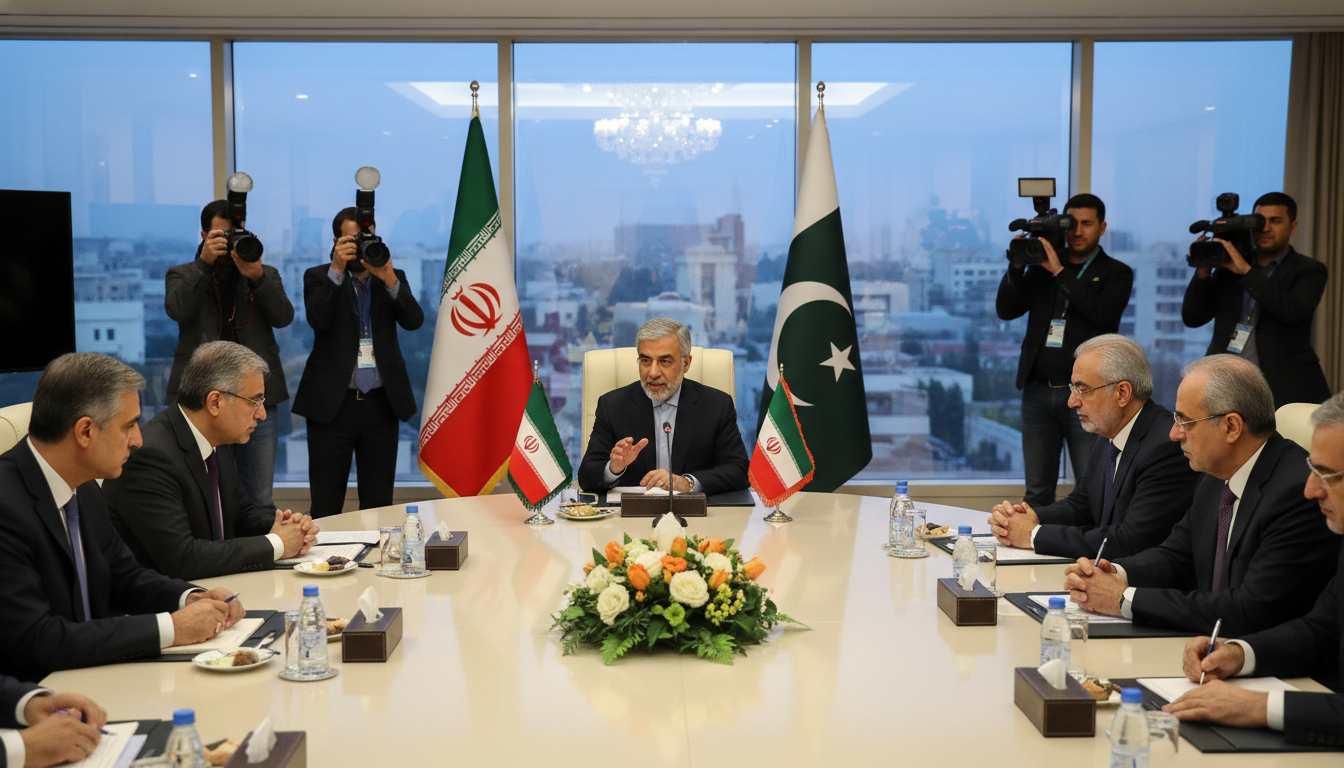
Iran-Pakistan peace talks: Araghchi returns to Islamabad as US cancels envoy trip
Iran-Pakistan peace talks resume as Iran’s Abbas Araghchi returns to Islamabad amid US envoy cancellation and regional tensions over the Strait of Hormuz.
Iran’s deputy foreign minister Abbas Araghchi is expected back in Islamabad to continue Iran-Pakistan peace talks after an initial round of meetings, even as the White House called off a planned US envoy visit. Pakistani officials say Araghchi will convey Tehran’s positions on a framework aimed at “completely end[ing] the war,” while Tehran maintains a cautious stance toward Washington’s intentions. The developments underscore a complex diplomatic scramble as Iran also conducts consultations in Muscat and signals regional military resolve.
Araghchi returns to Islamabad for peace talks
Araghchi’s return to Pakistan follows an earlier visit in which he met Prime Minister Shehbaz Sharif, Foreign Minister Ishaq Dar and army chief General Asim Munir. Pakistani sources describe Islamabad’s role as a key mediator seeking to host and shuttle negotiators from multiple capitals. Iranian statements framed the dialogue as part of a broader push for a diplomatic end to hostilities, with Araghchi expected to clarify Tehran’s conditions for any durable arrangement.
US cancels envoy visit as Trump criticises negotiations
The White House had announced a planned trip by the US Middle East envoy and a senior adviser, but President Donald Trump later said he had cancelled the mission, arguing there was “no point sitting around talking about nothing.” Trump also claimed Tehran revised its proposal shortly after the US decision, saying a new paper arrived that was “much better,” though he offered no further detail. Washington’s abrupt reversal has prompted doubt in Tehran about US seriousness and injected fresh uncertainty into the negotiating timetable.
Muscat meetings and Pakistan’s mediation role
In addition to Pakistan, Araghchi held talks in Muscat with Oman’s Sultan Haitham bin Tariq al-Said to discuss security in the Strait of Hormuz and wider Gulf waters. Iranian officials described the Muscat session as part of diplomatic efforts to reduce regional tension and to advance discussions on how to halt the conflict. Pakistan’s meetings with Iranian diplomats, including talks with military leadership, reflect Islamabad’s aim to bridge positions and to support a regional process that limits external intervention.
IRGC affirms control of the Strait of Hormuz
Iran’s Islamic Revolutionary Guard Corps reiterated that it has no intention of lifting its blockade of the Strait of Hormuz, describing control of the waterway as central to Tehran’s deterrent posture. The strait remains a strategic choke point through which a significant share of the world’s crude oil and liquefied natural gas transits, and Tehran’s public stance raises commercial and security alarms. Separately, Iran noted that the United States has imposed restrictions on Iranian ports, underscoring how reciprocal maritime measures have escalated regional friction.
Security incident in Washington following diplomatic fallout
On the evening after the negotiations and cancellations, an unrelated security incident in Washington led to the evacuation of the president and senior officials from the Washington Hilton during the White House Correspondents’ Association Dinner. Authorities said shots were fired outside the venue and a Secret Service agent was struck but protected by body armor. President Trump said the episode would not deter US policy toward Iran and shared a photograph of a detained suspect on social media, drawing attention from both domestic security officials and international observers.
Israeli strikes continue in southern Lebanon despite ceasefire
While diplomacy unfolded over Iran’s role in the wider conflict, Lebanese state media reported that Israeli forces carried out strikes in southern Lebanon, including villages in the Nabatieh, Bint Jbeil and Sour districts. The Lebanese health ministry said the death toll from cross-border fighting since early March has continued to rise, with thousands wounded and many displaced inside and beyond the contested “yellow line” area. Israel has also distributed warnings and leaflets advising civilians not to return to villages near the Litani River and other designated zones, prolonging humanitarian and security stress in the border region.
The juxtaposition of behind-the-scenes diplomacy and persistent military action highlights the fragile balance between negotiation and escalation in the region. With Araghchi set to continue shuttle diplomacy and travel reportedly planned to Moscow after Islamabad, the coming days will test whether mediation through Pakistan and Gulf interlocutors can produce concrete steps toward de-escalation. International actors and regional capitals remain watchful as negotiators attempt to convert tentative exchanges into enforceable arrangements while military forces on multiple fronts maintain pressure.

