
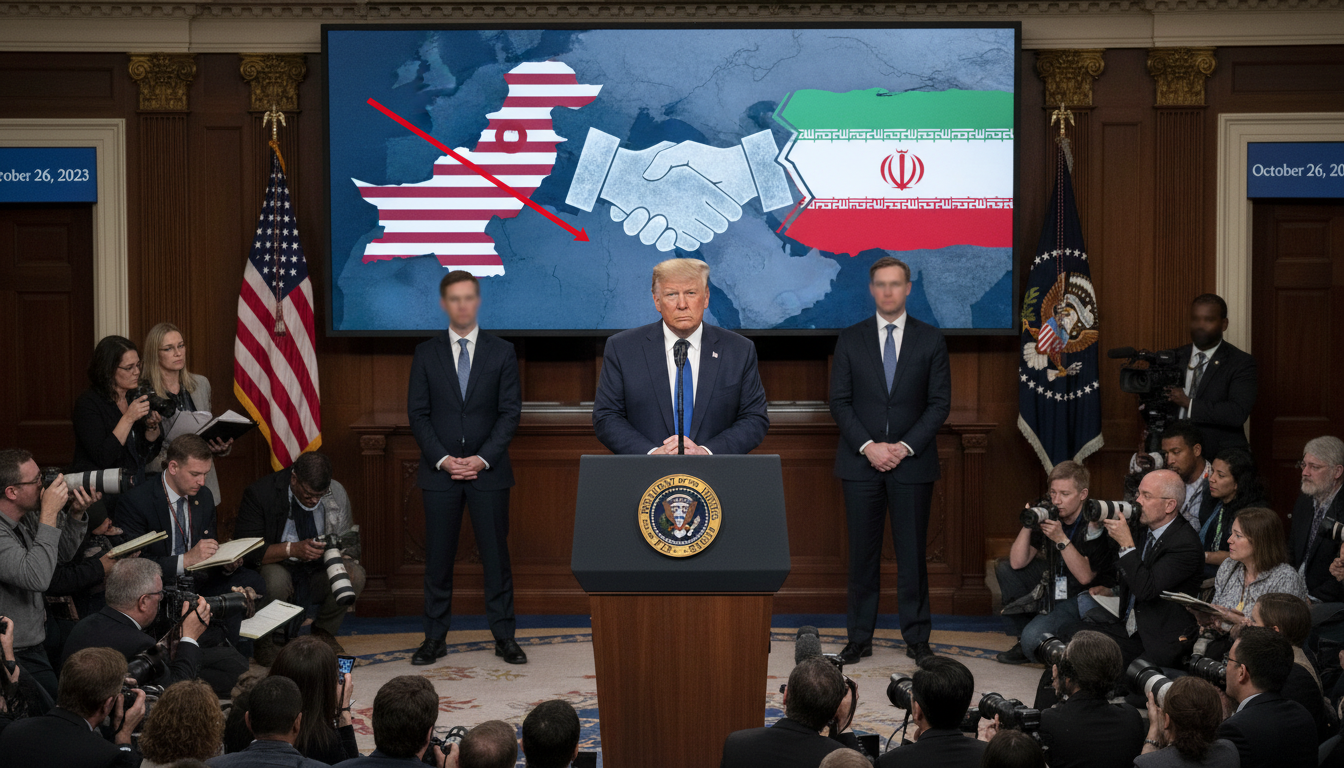
Trump Cancels Envoys’ Visit to Pakistan, Stalling Islamabad-Mediated US–Iran Talks
President Trump canceled envoys’ visit to Pakistan, halting Islamabad-mediated US–Iran talks over the Strait of Hormuz blockade and stalled ceasefire efforts.
The White House announced on Saturday that President Donald Trump has called off the planned envoy trip to Pakistan, scrapping a mission intended to facilitate indirect talks between Washington and Tehran. The cancellation, announced on the president’s social platform, leaves Pakistan’s mediation role in limbo and deepens doubts about prospects for a lasting ceasefire. The envoys’ visit to Pakistan is central to efforts to negotiate remaining disputes, notably the U.S. naval blockade of Iranian ports and control of the Strait of Hormuz.
Trump cites inadequate offer and operational costs
President Trump told reporters in Florida that he canceled the envoys’ visit to Pakistan because the proposed Iranian offer did not justify the travel or expense. He said Iran “offered a lot, but not enough,” and accused Tehran’s leadership of internal confusion in posts on his Truth Social account. The president added that the United States holds “all the cards” and invited Iran to initiate contact directly, signaling Washington’s preference for a stronger negotiating position before sending envoys.
Iran conditions talks on lifting of blockade
Iranian officials rejected negotiations while the U.S. naval blockade on Iranian ports remains in place, reiterating a key condition for further engagement. President Masoud Pezeshkian told Pakistan’s prime minister by phone that operational obstacles must be removed before fresh talks can proceed, according to Iranian state news outlets. Tehran also argues the blockade constitutes a breach of the ceasefire and has cited continued seizures and interceptions of commercial vessels as evidence of U.S. aggression.
Pakistani mediation continues despite setback
Pakistan’s civilian and military leadership has kept mediation channels open even after the cancellation, with officials describing indirect contacts as fragile but intact. Pakistani authorities view the scheduled return of Iran’s foreign minister to Islamabad as a hopeful sign that negotiations can advance incrementally. Two Pakistani officials told international media there were no immediate plans for U.S. envoys to resume talks, and that Islamabad would continue to press both parties toward a renewed exchange.
Ceasefire status and Strait of Hormuz dispute
A ceasefire first took effect on April 8 following nearly six weeks of exchanges between U.S. and Israeli strikes on Iran and Iranian reprisals across the region. The sides met in Islamabad on April 11 for 21 hours of talks aimed at a permanent deal, but left without agreement. The blockade and control of the Strait of Hormuz remain central flashpoints: Iran has effectively restricted passage, captured commercial vessels, and floated proposals such as tolls, while Washington insists on freedom of navigation.
Regional and economic ripple effects
The conflict and its maritime fallout have widened into the broader Middle East, including Lebanon, and contributed to what analysts call the worst global energy disruption since the 1970s. Disruptions to the strait — which previously handled about one-fifth of the world’s oil and liquefied natural gas shipments — have sent commodity and shipping markets into volatility and raised recession risks. Gulf countries that depend on the strait for exports have opposed any Iranian imposition of tolls and remain anxious about long-term security guarantees.
Nuclear enrichment debate persists
Beyond maritime access, negotiators are divided over Iran’s uranium enrichment program and international concerns about proliferation. The United States and Israel continue to press for a reduction to zero enrichment levels, alleging clandestine weapon aims although they have not presented public evidence to substantiate those claims. Iran maintains its program is civilian and points to its status as a signatory of the Treaty on the Non‑Proliferation of Nuclear Weapons, while the International Atomic Energy Agency reports Tehran has enriched uranium to levels substantially above typical civilian thresholds.
The cancellation of the envoys’ visit underscores the fragility of a mediation process that relies on incremental confidence-building and reciprocal concessions. With Washington emphasizing leverage and Tehran demanding concrete steps to end the operational blockade, Islamabad faces a delicate task in sustaining channels for indirect diplomacy. The absence of face-to-face envoy diplomacy raises the prospect that the ceasefire, while holding in many places, could be tested further if either side perceives that its core security demands are unmet.

