
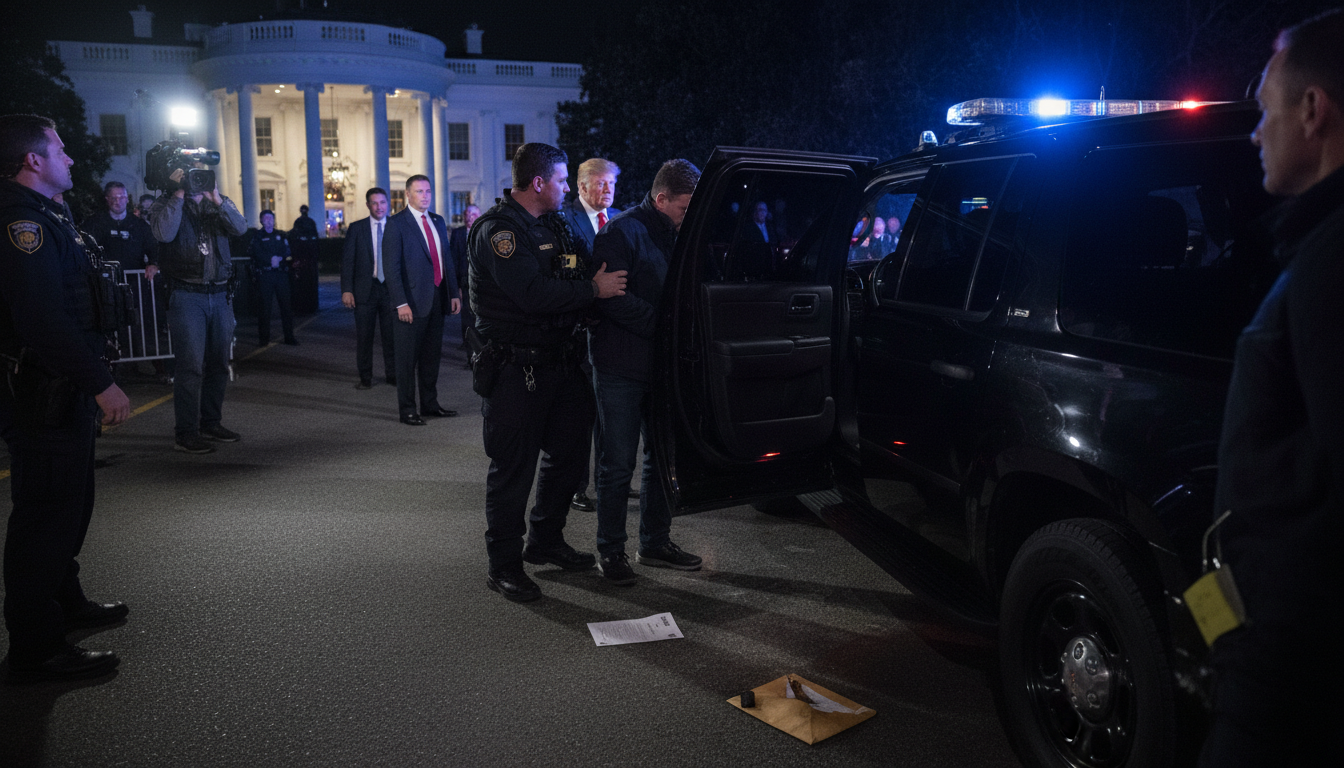
Trump dinner shooting: suspect sent family documents hinting at attack, authorities say
Suspect in Trump dinner shooting sent documents to family suggesting attacks on administration officials; FBI searched his California home, authorities say.
A man detained after a shooting at a Washington dinner attended by former President Donald Trump reportedly sent documents to family members that hinted at an attack on administration officials shortly before the incident, U.S. media and investigators said. The episode unfolded at an event hosted by the White House Correspondents’ Association on April 26, 2026, and intensified questions about how the suspect reached the venue and whether existing security gaps were exploited. Authorities have identified the detained man and carried out searches in California as part of a rapidly expanding federal investigation.
Suspect identified and detained following shooting
Law enforcement sources and U.S. media named the suspect as Cole Thomas Allen, 31, who is reported to have lived near Los Angeles, California. He was detained at the scene of the shooting, and officials said he had been a registered guest at the hotel where the White House Correspondents’ Association dinner took place. Details released by investigators indicate they believe he traveled to Washington specifically to attend the event.
Officials conducting the investigation have declined to disclose a full account of the timeline or whether there were any casualties at the scene, citing the continuing nature of the probe. Law enforcement statements to the press emphasized that the matter remains under active federal investigation and that further operational details are being withheld while agents gather evidence.
Documents to family raised alarms before the event
Investigators told U.S. media outlets that the detainee sent written material to family members in the hours immediately preceding the shooting that suggested an intent to target high-level administration officials. The content of those documents has not been publicly released in full, and authorities said they were treating the communications as key evidence in determining motive and planning. Media reports described the messages as prompting alarm among the recipient family members, who notified investigators.
Prosecutors and federal investigators are likely to examine the timing, authorship and distribution of those documents to determine whether the act constituted a premeditated plan or was influenced by other factors. Family members and potential witnesses are being interviewed as part of the wider inquiry, according to law enforcement officials cited in initial reports.
Travel and hotel stay traced to West Coast
Sources said Allen travelled from the U.S. West Coast to Washington, D.C., by train and checked into the hotel hosting the dinner, placing him in proximity to the event. Investigators are reconstructing his movements in the days and hours before the shooting to identify any accomplices, purchases or preparatory actions that could clarify motive and intent. Surveillance footage from transit hubs and the hotel, along with travel records, are expected to be central to that effort.
The fact that the suspect was registered as a hotel guest has prompted renewed scrutiny of security screening practices for high-profile gatherings, particularly those involving senior administration figures. Event organizers and security teams routinely coordinate with federal agencies for such dinners, and investigators will assess whether protocols were followed and whether adjustments are needed.
FBI search and investigative response in California
Federal agents conducted searches at the suspect’s residence in California on April 26, 2026, as part of the probe, law enforcement officials and photographic evidence showed. Those search efforts were described as aimed at locating firearms, electronic devices and documents that could shed light on planning or intent. The U.S. Department of Justice and the FBI are coordinating with local authorities in the search and evidence-gathering process.
Officials indicated that seized materials will undergo forensic analysis to establish timelines, communications and any digital footprints that could link the defendant to extremist rhetoric or pre-incident planning. Investigators are also examining the suspect’s known associates and social media activity to determine whether he acted alone or had outside support.
White House Correspondents’ Association dinner and security implications
The incident occurred during a White House Correspondents’ Association dinner, an annual event that attracts political figures, journalists and administration officials, underscoring the high-profile nature of the target. Organizers and security partners typically implement layered protections for such gatherings, and investigators are working to review how the suspect gained access to areas near the event. The presence of a detained individual at a controlled venue has prompted immediate reviews of registration and entry screening procedures.
In response to the shooting, event organizers and government security agencies have said they will cooperate fully with the investigation. Officials have been reticent about operational details, but several participants and witnesses were being interviewed by investigators to reconstruct the sequence of events and to determine whether additional security measures are warranted for future gatherings.
Federal and local authorities continue to investigate the circumstances surrounding the Trump dinner shooting, with prosecutors reviewing the evidence collected at the scene, in transit records and from the California search. No comprehensive account of injuries or motive has been released, and officials stressed the need to gather and analyze forensic and testimonial evidence before drawing conclusions.
The probe remains active and evolving, and authorities have urged anyone with information to come forward to assist the investigation.

