
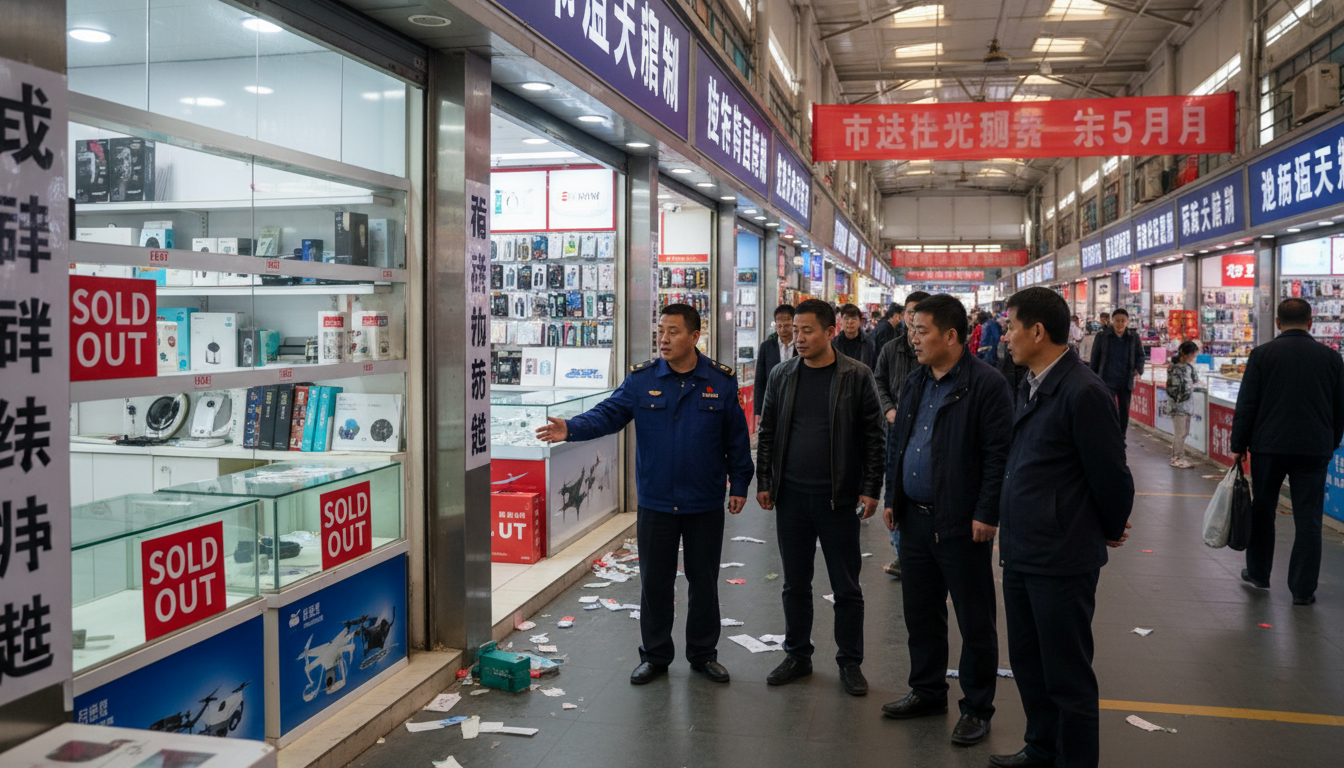
Beijing to Ban Consumer Drone Sales from May 2026, Citing National Security Concerns
Beijing will ban sales of consumer drones from May 2026 to protect sensitive information and bolster security, a move that threatens the low-altitude economy and affects retailers, manufacturers and hobbyists.
Beijing sets start date for citywide sales ban
Beijing municipal authorities announced a blanket prohibition on new sales of consumer drones that will take effect in May 2026. Officials cited the need to safeguard sensitive information and reduce security risks near political, military and administrative centers concentrated in the capital.
The ban applies to sales within the municipality and targets consumer-grade unmanned aerial vehicles, according to the announcement distributed by local regulators. The measure is framed as a preventive security step rather than an immediate restriction on existing aircraft already owned by residents.
Security rationale and official concerns
Local authorities linked the decision to heightened concern about data capture and the potential for drones to gather imagery or transmit signals near key sites. Beijing officials described the capital’s dense concentration of government and military facilities as a motivating factor for tighter controls.
Regulators emphasized preventing inadvertent breaches of what they termed “sensitive information,” noting the difficulty of distinguishing benign recreational flights from activities that could pose intelligence or safety risks. The announcement presented the ban as part of a broader effort to strengthen national security measures in urban airspace.
Scope, enforcement and restricted zones
The prohibition focuses on new sales rather than a blanket grounding of all consumer drones, leaving open questions about continued use and registration requirements for existing devices. Municipal agencies said enforcement will concentrate around clearly defined high-security zones such as central government precincts and military installations.
Authorities indicated that retailers found selling banned models could face penalties, and that online marketplaces would be expected to remove listings for affected consumer units. The city did not publish a detailed enforcement timetable with the initial notice, but said enforcement teams would coordinate with public safety and airspace regulators.
Impact on retailers, manufacturers and intermediaries
The sales ban is likely to disrupt domestic retailers and platforms that depend on drone sales as part of electronics and hobbyist offerings. Brick-and-mortar shops in the capital and online vendors that serve Beijing customers will need to revise inventory and compliance procedures ahead of the May 2026 start date.
Manufacturers that serve the consumer market may face a sudden drop in demand within Beijing, prompting adjustments to distribution and after-sales support. Industry suppliers and service providers — including repair shops, training schools and aerial photography services oriented to hobbyists — could see revenue declines if consumer purchases fall sharply.
Industry and expert reactions
Manufacturers and industry groups have signaled concern about the precedent such a ban could set for other large Chinese cities. Analysts warn that restrictions targeting consumer drones in major urban centers could ripple through the “low‑altitude economy,” a term used to describe businesses built around small unmanned aircraft.
Security experts say large cities have legitimate grounds to secure sensitive areas, but they also call for clarity on definitions, exemptions and technical measures that balance safety with legitimate commercial and recreational uses. Some analysts urged officials to publish clear maps of restricted airspace and to create streamlined channels for certified commercial operators to obtain permissions.
Broader implications for the low-altitude economy
The Beijing ban underscores the tension between modern urban security needs and the rapid commercialization of low-altitude airspace. In recent years, consumer drones supported a range of services from photography and leisure to local deliveries and technical inspections, forming a growing niche within the broader tech and logistics sectors.
Restrictions in a major market like Beijing could slow investment in consumer-focused drone applications and accelerate a shift toward professional, certified operators who can meet stricter registration, encryption and telemetry standards. Municipal regulators and industry stakeholders will likely negotiate new frameworks that differentiate high-risk operations from benign recreational flights.
The city’s move may also prompt national guidance to reconcile municipal security policies with broader commercial and innovation goals. Observers note that piecemeal local bans can create fragmentation across markets and complicate compliance for businesses that operate in multiple urban areas.
Authorities have not yet laid out exemptions for commercial or public-safety uses, but the statement suggested continued allowances for accredited organizations operating under formal permissions. How officials will treat existing device owners, hobbyist clubs, and drone rental services remains a central question as the May 2026 implementation date approaches.
As Beijing prepares to implement the sales ban, municipal regulators say they will provide additional technical guidance and enforcement details in the weeks ahead. Industry groups and consumer advocates are expected to press for clearer rules on registration, permissible zones and pathways for legal commercial operation to preserve parts of the low‑altitude economy while addressing the stated security concerns.
The coming weeks will test how quickly local businesses can adjust and whether Beijing’s approach will be replicated elsewhere, reshaping the regulatory landscape for small unmanned aircraft across urban China.

