
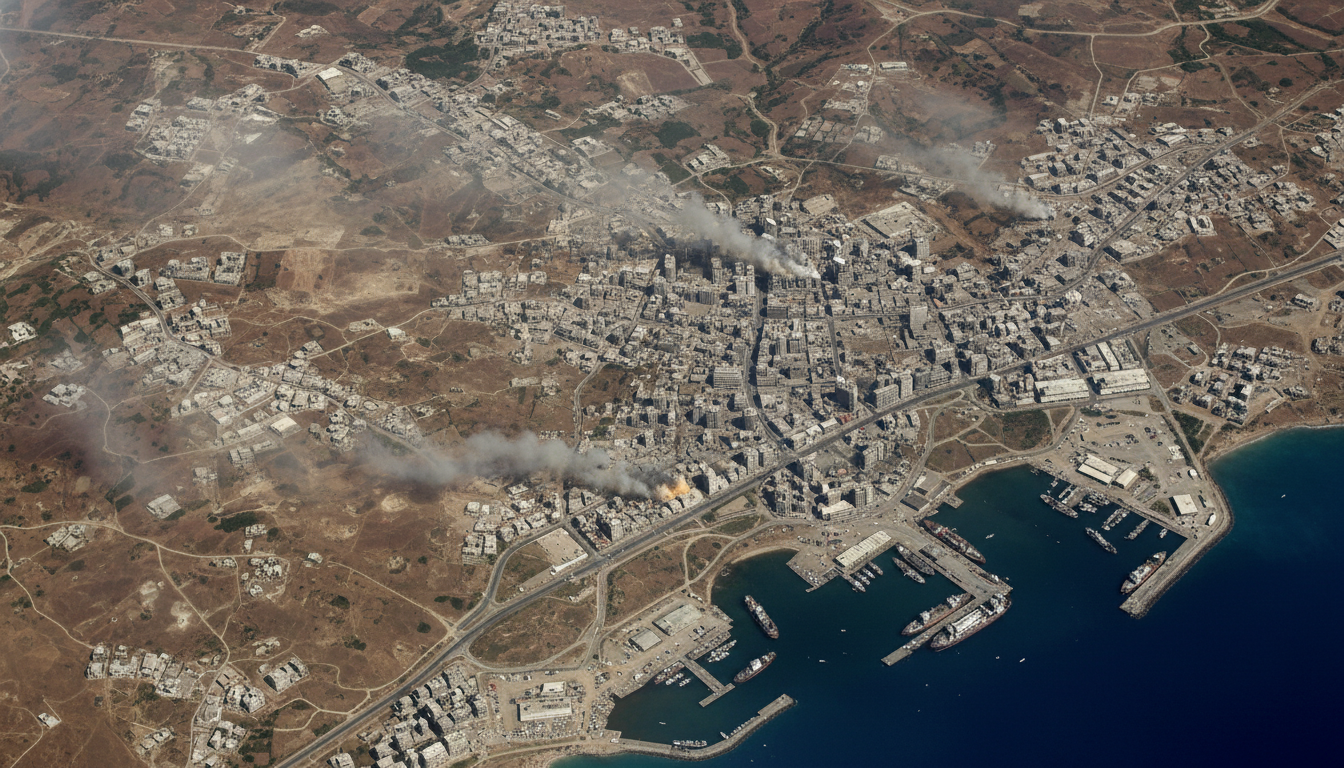
Satellite images reveal large-scale destruction in south Lebanon towns al-Qozah and Beit Lif
Satellite images captured April 16 show extensive destruction in south Lebanon’s al-Qozah and Beit Lif after Israel’s ground invasion and sustained attacks, highlighting urgent humanitarian needs.
Aerial and satellite imagery taken on April 16 show widespread destruction across the towns of al-Qozah and Beit Lif in south Lebanon, underscoring the toll of recent military operations in the region. The images, released publicly on April 27, 2026, depict flattened buildings, scorched terrain and patterns consistent with sustained artillery and ground strikes. Local residents and observers say the damage has severely disrupted daily life and driven many families from their homes.
April 16 imagery documents structural collapse across town centers
The imagery shows entire blocks where residential and commercial buildings have been reduced to rubble, with damage concentrated around main roads and municipal centers. Roofs are missing on multistory structures and several clusters of buildings appear to have suffered fires that left blackened debris fields. Analysts note that the footprint of damage is more extensive than in earlier rounds of fighting, indicating intensified operations during the days preceding the images.
Al-Qozah and Beit Lif among the hardest-hit communities
Both al-Qozah and Beit Lif are depicted with heavy damage in multiple neighborhoods, suggesting these towns bore direct blows from ground and aerial operations. Streets that once connected neighborhoods now show cratered surfaces and collapsed facades, complicating movement and emergency response. Residents who fled told local media they left with little more than the clothes they wore, describing scenes of destroyed shops and damaged public facilities.
Israeli military ground invasion and sustained attacks reported
The observed destruction follows a reported Israeli ground invasion into parts of southern Lebanon and sustained attacks in the area, operations officials and local sources said. Military movements combined with repeated strikes have been cited by local authorities as the proximate cause of the damage visible in the April 16 imagery. Officials in Beirut and international observers have expressed concern at the scale of military activity and the civilian impact it is producing.
Civilian displacement and infrastructure collapse
The damage documented in the satellite images corresponds with a spike in internal displacement from affected towns, aid workers say. Electricity and water networks show signs of disruption in the imagery and in subsequent field reports, raising fears of prolonged outages and public health risks. Hospitals and clinics in nearby towns face strain as they absorb patients and displaced families, while damaged roads hamper deliveries of medical and relief supplies.
Humanitarian access and response challenges
Humanitarian agencies warn that damaged roads and ongoing hostilities are constraining relief access to al-Qozah, Beit Lif and surrounding villages. Aid organizations have called for protected corridors and deconfliction measures to reach civilians in need, citing the imagery as evidence of urgent requirements for food, shelter and medical care. International diplomats are reportedly engaged in discussions to facilitate safe passage for humanitarian convoys amid continuing security concerns.
Calls for independent assessment and accountability
Observers and some regional governments have urged independent assessments to verify the imagery and document the scale of destruction and any potential violations of international humanitarian law. Satellite images can establish a timeline and physical footprint of damage, experts say, but on-the-ground verification remains essential for accurate casualty counts and attribution. Rights groups have said that prompt, impartial investigations are necessary to inform accountability and guide reconstruction efforts.
Local leaders in south Lebanon are appealing for immediate relief and a clear plan for reconstruction once hostilities subside. They stress that rebuilding will require not only funds and materials but also long-term security arrangements to prevent further cycles of violence. Meanwhile, displaced residents face decisions about whether to return to damaged homes or relocate permanently while basic services remain disrupted.
The April 16 satellite images provide a stark visual record of the impact of recent military operations on south Lebanon communities, and they have sharpened international attention on the humanitarian consequences. As diplomatic channels and aid organizations press for access, the immediate priorities remain protecting civilians, delivering lifesaving assistance, and documenting damage to plan recovery.

