
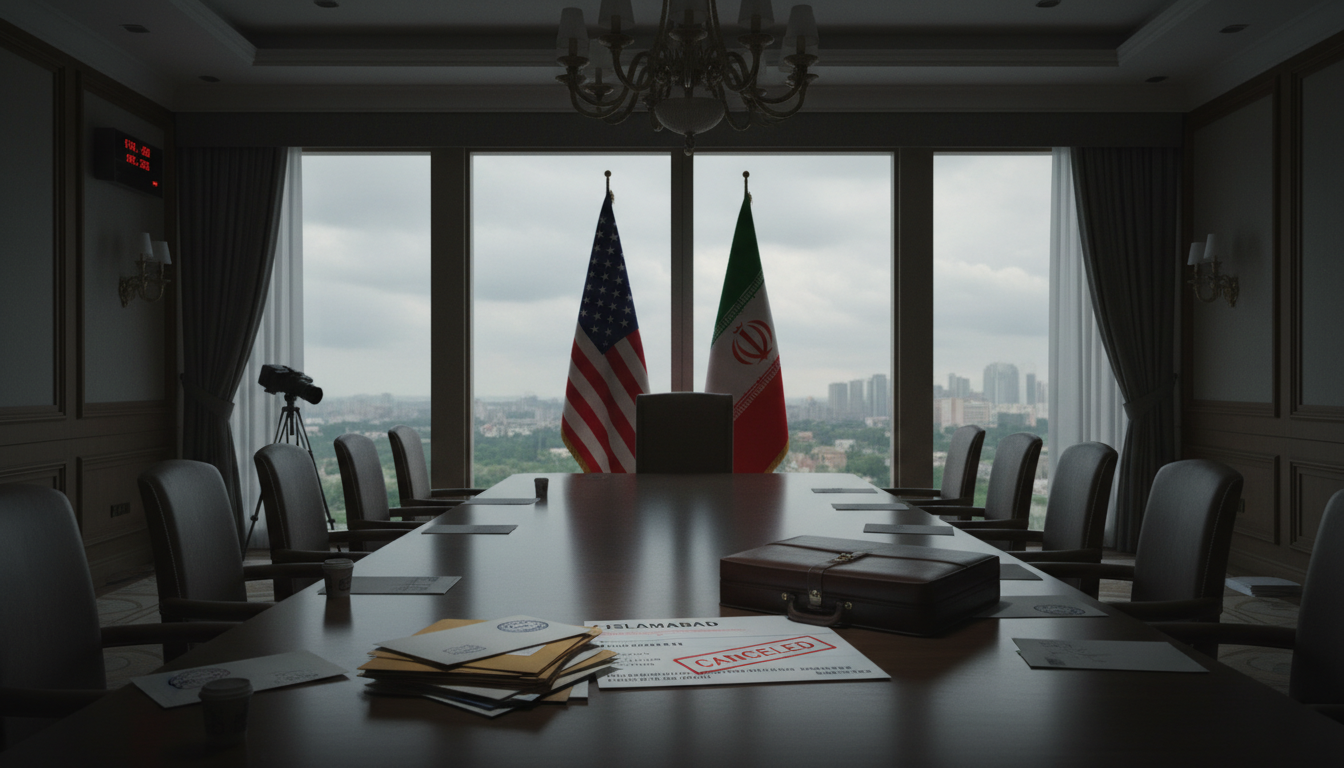
US-Iran talks stall as fragile ceasefire holds
US-Iran talks stall as the fragile ceasefire holds; disputes over Tehran’s nuclear program and control of the Strait of Hormuz have halted recent mediation efforts.
The fragile ceasefire between Washington and Tehran is holding, but US-Iran talks to convert the truce into a durable agreement have stalled, diplomats and officials say. A planned round of mediation in Islamabad was called off after the United States cancelled its envoy visit, and Tehran has signalled it will not accept negotiations perceived as coerced. Both sides continue to exchange messages indirectly, leaving the region in a tense limbo between peace and renewed conflict.
Ceasefire endures amid cancelled Islamabad mediation
The nearly three-week truce has largely prevented a return to open warfare, yet efforts to solidify a settlement faltered when the US withdrew its delegation to Pakistan. US officials cited what they described as an inadequate Iranian offer and the expense of travel as reasons for the cancellation. Iranian authorities immediately blamed Washington for derailing the process, calling US demands excessive and objectionable.
Diplomatic channels remain open but indirect, with mediators in Pakistan and other regional partners carrying written messages between the parties. Those intermediated communications have outlined Tehran’s red lines, notably preservation of its nuclear program and control over actions in the Strait of Hormuz. The breakdown of face-to-face talks has pushed negotiators back toward confidential exchanges and regional diplomacy.
Nuclear program and Strait of Hormuz at the centre of the impasse
Central issues widening the gap are Iran’s insistence on retaining its uranium enrichment activities and US demands that Tehran accept limits to ensure it cannot develop nuclear weapons. Equally contentious is control of the Strait of Hormuz, through which a significant share of global energy supplies transits. Iran’s partial closure of the strait since early March and the subsequent US naval blockade have amplified economic and strategic stakes.
The disruptions to shipping have contributed to global price volatility and prompted countries to seek alternative energy routes and reserves. These economic pressures add urgency to talks but also harden positions, as each side weighs domestic political costs against concessions that could be portrayed as weakness.
Regional diplomacy intensifies as Iranian envoys travel
Iranian Foreign Minister Abbas Araghchi has embarked on an intensive regional tour, visiting Pakistan, Oman and Russia to consult on the stalled negotiations and to convey Tehran’s conditions. Tehran has reportedly used those visits to both coordinate with allies and to transmit formal responses to US proposals via third-party intermediaries. Pakistani and Omani roles have been particularly visible in shuttling messages between capitals.
Russia has been positioned as a key interlocutor for Tehran, providing diplomatic cover and a forum for consultations. Iranian officials have publicly framed these visits as efforts to seek broader understanding of recent developments and to create leverage for any future talks with Washington.
Analysts describe impasse as a slowdown, not a collapse
Foreign policy analysts caution that deadlock is a common phase in protracted negotiations and does not necessarily signal the end of diplomacy. Experts point to historical precedents where talks repeatedly stalled before producing agreements, noting that diplomacy often advances through fits and starts. Observers say both Washington and Tehran currently prefer a fragile standoff to a renewed, costly war.
Commentators also highlight domestic political pressures influencing leaders in both countries, with US officials sensitive to public discontent over energy prices and Iranian leaders mindful of recovering military capabilities and national pride. Those dynamics, analysts argue, make political compromise difficult in the short term but leave room for incremental moves mediated by regional actors.
Past agreements and stop-start negotiations offer context
Previous diplomatic efforts, including the 2015 nuclear accord, show how protracted, concealed and multilateral negotiations can eventually produce frameworks despite periods of stalemate. That agreement required years of backchannel engagement and regional mediation before it was finalised, only to be later abandoned by the United States in 2018. Such history informs current expectations that any final settlement will likely require extended, patient diplomacy.
Other conflicts in recent years also demonstrate the halting nature of negotiations: early talks may yield limited, piecemeal agreements even if comprehensive settlements remain elusive. These precedents suggest that the present impasse could evolve into gradual, specific arrangements rather than a single sweeping treaty.
Scenarios ahead and risks to regional stability
Diplomats outline a narrow set of plausible outcomes: a gradual normalization of the ceasefire into a semi-permanent standoff; renewed indirect negotiations that produce limited agreements on navigation or nuclear transparency; or, in a worst-case turn, an escalation triggered by miscalculation at sea. Each path carries economic and security consequences for the wider region and global markets.
For now, both capitals appear to prefer managed competition over immediate escalation, relying on intermediaries to keep lines of communication open. The coming weeks of backchannel diplomacy, regional consultations and economic maneuvers will determine whether the current lull hardens into lasting stability or unravels into fresh confrontation.
The international community continues to monitor developments closely, urging restraint while encouraging renewed talks that respect clearly stated red lines. Whether indirect diplomacy can bridge the deep divides over Tehran’s nuclear program and control of the Strait of Hormuz remains uncertain, but for now the fragile ceasefire is the thin margin keeping a broader conflagration at bay.

