
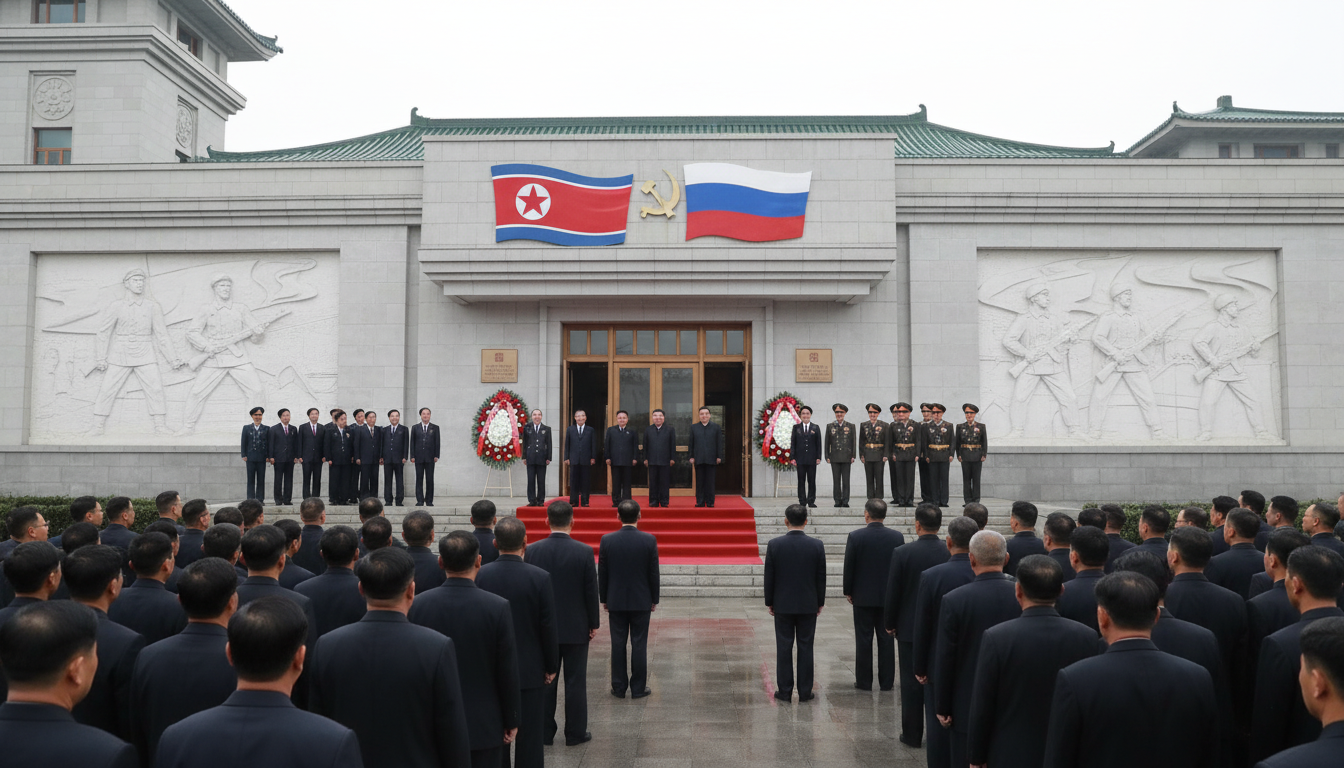
North Korea opens memorial museum in Pyongyang for soldiers killed in Ukraine
North Korea opens memorial museum in Pyongyang for soldiers killed fighting with Russia in Ukraine, signaling deeper Moscow-Pyongyang military ties.
North Korea has opened a memorial museum in Pyongyang dedicated to soldiers it says died fighting alongside Russian forces in the war in Ukraine, a development that underscores the growing strategic alignment between the two capitals. The North Korea memorial museum was inaugurated on the anniversary of what Pyongyang and Moscow describe as the end of an operation near Russia’s Kursk region, and was attended by Kim Jong Un and senior Russian officials. State media said the ceremony combined funerary rites, political speeches and symbolic acts intended to cement the bilateral narrative of shared sacrifice.
Kim Jong Un and Russian delegation attend inauguration
Kim Jong Un presided over the opening ceremony at the Memorial Museum of Combat Feats at the Overseas Military Operations on Sunday, according to state reports. The event included senior Russian figures, among them State Duma Chairman Vyacheslav Volodin and Defence Minister Andrei Belousov, signaling high-level Kremlin participation.
During the ceremony, state-run accounts described ritual gestures including the sprinkling of earth over the remains of one soldier and floral tributes placed at a mortuary display. Kim and the Russian delegates also signed a guestbook at the new museum, which Pyongyang framed as a monument to shared military endeavor.
South Korean estimates on deployment and casualties
Seoul’s intelligence agencies estimate that roughly 15,000 North Korean soldiers were deployed to assist Russian operations in the Kursk area, with about 2,000 of those troops killed, according to officials familiar with the assessments. Neither Moscow nor Pyongyang has released official tallies of personnel deployed or casualties, and the discrepancy in public accounting remains a point of international scrutiny.
The South Korean estimate has been cited repeatedly by allied capitals as evidence of the scale of North Korea’s involvement in the conflict, and it informs diplomatic and strategic responses in Seoul and Washington. Independent verification of battlefield figures has been difficult because of restricted access and the political sensitivities surrounding foreign combatants.
Ceremony rhetoric and symbolic messaging
In remarks delivered at the opening, Kim described the fallen troops as embodiments of Korean heroism and framed their sacrifice as supportive of a “victorious march” for both peoples. He also publicly accused the United States and its allies of pursuing what he called hegemonic plots and military adventurism on the Russia-Ukraine front.
Russian officials conveyed reciprocal messages of solidarity; a letter read at the event from President Vladimir Putin praised the museum as a symbol of friendship and pledged to deepen the countries’ strategic partnership. The tone and staging of the ceremony were designed to broadcast mutual political and military loyalty to domestic and international audiences.
Signals of expanded military cooperation with Moscow
Following the event, Russian defence officials were quoted as saying Moscow is prepared to sign a military cooperation plan with Pyongyang covering 2027–2031, a potential formalization of ties that would expand bilateral security arrangements. That proposal, if concluded, would mark a long-term institutionalization of defense cooperation between the two governments.
Analysts note that such a plan could include joint training, arms transfers, and logistical cooperation, though precise terms would remain subject to negotiation and international legal constraints. The museum opening itself is being read in many capitals as both a commemorative gesture and a strategic signal of a deepening Russia–North Korea military alignment.
Western and regional security concerns
Officials in Seoul, Washington and allied capitals have repeatedly warned that closer Moscow–Pyongyang ties raise the risk of sensitive technologies and know-how being transferred to North Korea. Western security assessments emphasize concern that advanced weaponry, dual-use technologies or technical expertise could accelerate Pyongyang’s missile and nuclear programs.
Those concerns have driven intensified diplomatic activity aimed at deterring arms transfers and limiting channels for military cooperation that could undermine non-proliferation efforts. The public ceremony and Russian participation in Pyongyang are likely to increase scrutiny by intelligence agencies and prompt further discussions among allies about sanctions, export controls and defensive preparedness.
Combat experience and battlefield assessments in Kursk
Military analysts say North Korean units initially suffered heavy losses in the Kursk region due to limited combat experience and unfamiliarity with the terrain, which made them vulnerable to Ukrainian drone strikes and artillery fire. Reports from Ukrainian and international sources suggest the forces adapted over time, gaining tactical lessons that altered their battlefield role.
Ukrainian military and intelligence officials have assessed that the later deployments of North Korean troops became an element of Russia’s strategy to sustain manpower-intensive offensives in parts of the front. The museum’s existence and the state narrative that accompanies it indicate Pyongyang’s desire to institutionalize those battlefield experiences as part of its military identity.
The museum opening in Pyongyang is a visible symbol of how the Russia-Ukraine conflict has influenced North Korea’s foreign policy orientation, and it will likely shape diplomatic and security responses in the region for months ahead.

