
U.K.-U.S. special relationship tested as King Charles III visits Washington amid Starmer’s diplomatic dilemma
King Charles’s Washington state visit and Keir Starmer’s diplomatic balancing amid tensions with President Trump question the U.K.-U.S. special relationship.
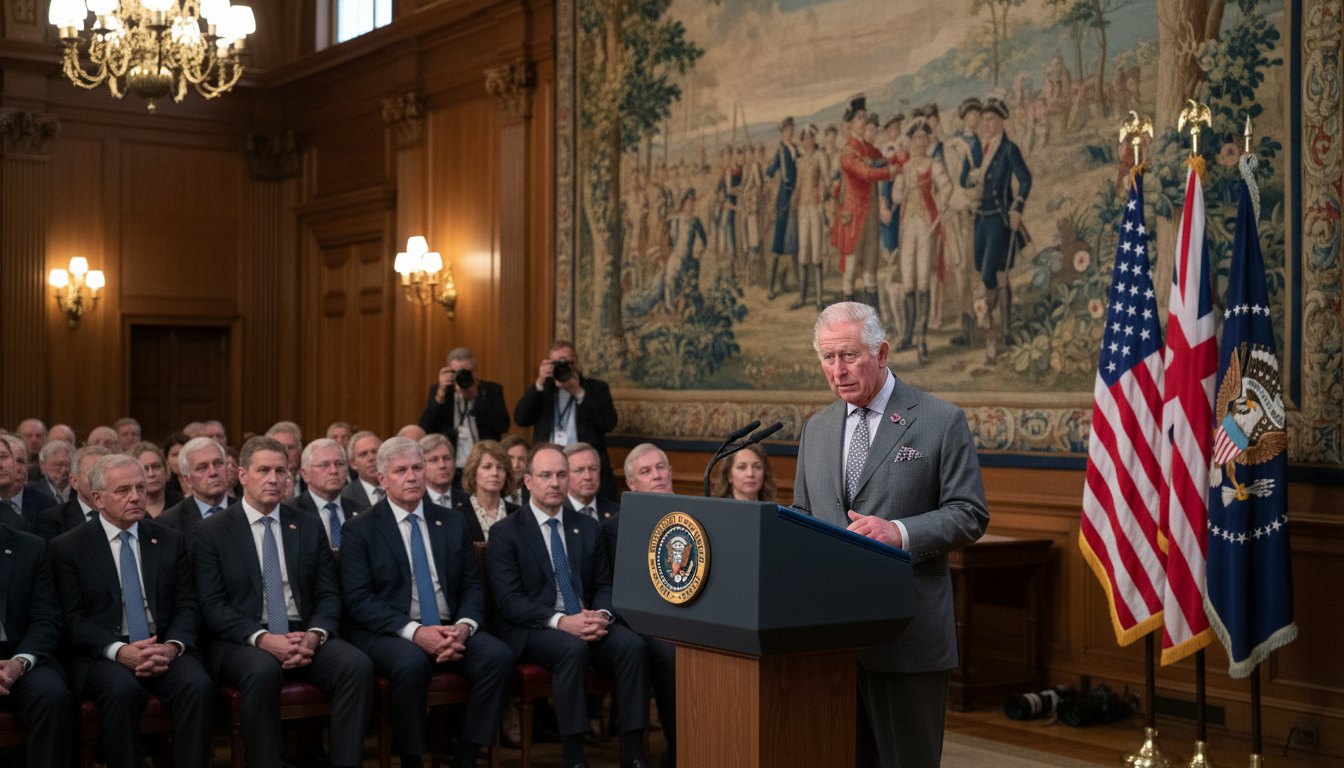
Britain’s ties with the United States were put squarely in the spotlight as King Charles III made a state visit to Washington tied to the 250th anniversary of American independence, a trip framed as a bid to shore up the long-standing special relationship. The visit included ceremonial events at the White House that played to symbolism and history, even as Prime Minister Keir Starmer confronted political fallout at home. The parallel scenes in the House of Representatives and the House of Commons underscored how management of U.S. relations has become a central preoccupation for British leaders.
King Charles’s Washington State Visit
The monarch’s visit was presented by Buckingham Palace and the White House as a reaffirmation of shared history and common values between the two countries. Ceremonial highlights included a military review and a fighter-jet flyover at the White House, events designed to emphasize continuity and the personal rapport between the British crown and American institutions.
Royal officials described the trip as an opportunity to remind both publics of deep bilateral links that stretch back centuries and underpin cooperation on security and diplomacy. For Charles, the state visit offered a distinctly symbolic channel to bolster an alliance that British officials increasingly view as politically fragile.
Starmer Faces Parliamentary Pushback
In Westminster, Prime Minister Keir Starmer found his domestic agenda repeatedly overshadowed by debates over how best to manage the U.K.’s relationship with Washington. Labour’s tilt toward a more pragmatic foreign policy under Starmer has encountered resistance from legislators who worry that close alignment with a highly personalized U.S. approach could carry electoral and strategic costs.
Parliamentary debates have highlighted a tension at the heart of British politics: the desire to maintain strong ties with Washington while also preserving the Labour Party’s identity and domestic priorities. Critics argue that sustained accommodation of American policy whims risks eroding public trust in the government’s independence.
Ceremonial Moments at the White House
The White House sequences during the state visit were carefully staged and drew visible engagement from President Donald Trump, who has shown an affinity for high-profile ceremonies and symbolic gestures. The flyover and review placed the visit in the public eye in a way that national leaders often use to reset or reinforce bilateral narratives.
Observers in Washington noted the unusual optics of a British monarch participating in events that blend statecraft with spectacle, underscoring how diplomatic theatre can serve political ends on both sides of the Atlantic. For proponents of close ties, the pageantry helped project unity and historic continuity.
Strains on the Special Relationship
Despite the theatrical moments, officials on both sides acknowledge that the U.K.-U.S. special relationship is under strain from policy disagreements and shifting political calculations. Analysts point to areas of friction where strategic priorities and personal leadership styles have complicated routine cooperation on defense, trade and diplomacy.
The cumulative effect of those disagreements has made the relationship more transactional and more dependent on constant management, according to diplomats who briefed reporters. That dynamic elevates the importance of each high-profile visit and parliamentary exchange as both symbolic reassurance and practical negotiation.
Domestic Political Fallout in London
Back in London, the optics of the state visit collided with a domestic narrative that Starmer’s government must defend its independence while sustaining vital alliances. Opposition parties seized on perceived concessions to American preferences, arguing that national interests should not be subordinated to an unpredictable U.S. administration.
Labour ministers have countered that securing strong defense and intelligence partnerships remains essential and that visible displays of unity—however ceremonial—help protect long-term cooperation. The debate has nevertheless complicated Starmer’s legislative calendar and political messaging.
Implications for Defense and Diplomacy
Officials in both capitals say the immediate test is whether ceremonial affirmations translate into durable policy alignment on security and global challenges. Defense planners emphasize the practical value of interoperability and intelligence sharing, even as political leaders navigate diverging stances on trade and international norms.
Longer-term prospects for the special relationship will depend on how effectively the two governments convert symbolic goodwill into concrete agreements on defense spending, technology collaboration and crisis response. Diplomats stress that sustained, lower-profile engagements will be as consequential as headline-making visits.
The state visit and ensuing parliamentary debates have made plain that the U.K.-U.S. relationship remains a living, contested partnership shaped as much by ceremony as by strategy. As both capitals pursue their immediate political aims, officials say the true measure will be whether routine cooperation survives periods of political friction and returns to a steadier, interest-driven footing.

