
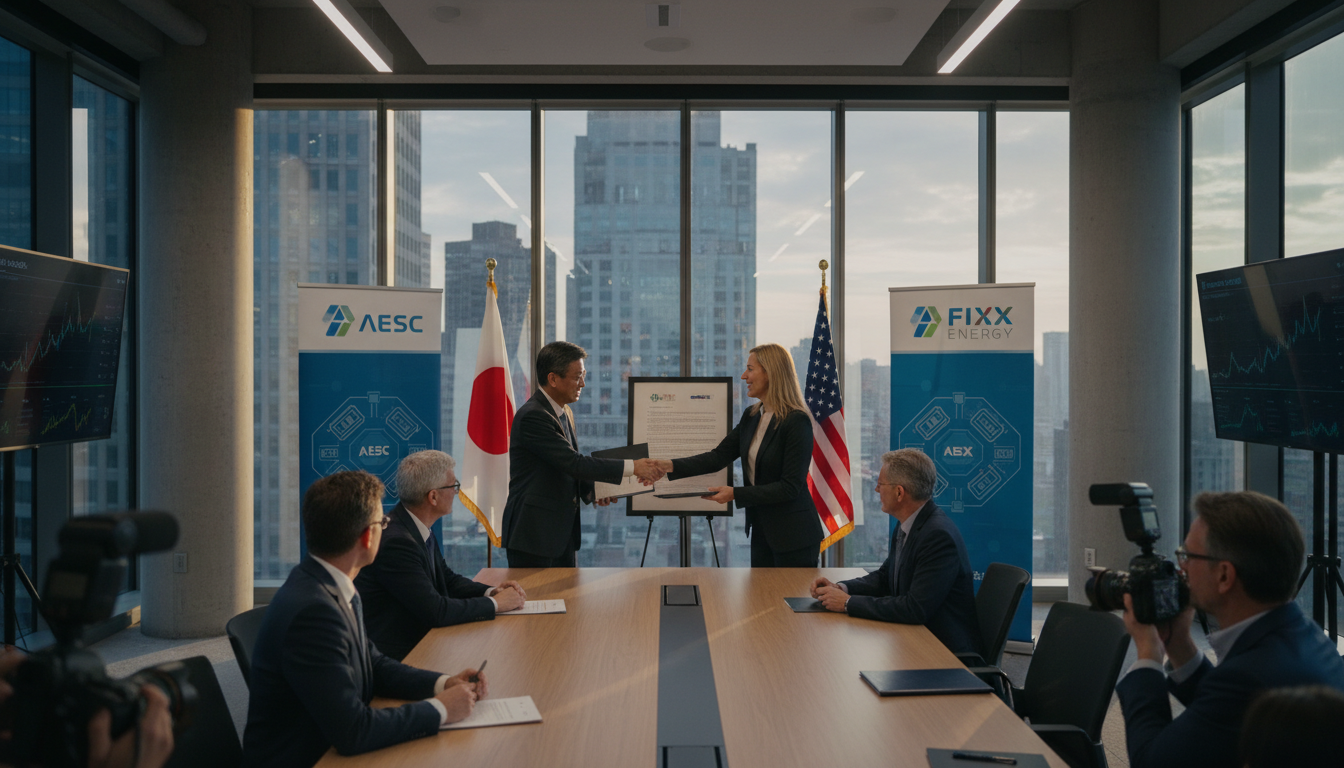
AESC sale: Chinese-owned AESC sells majority stake in U.S. battery plant to Fixx Energy amid tighter China-linked rules
AESC sale: Chinese-owned Automotive Energy Supply Corp has sold a majority stake in its only U.S. battery plant to Fixx Energy, a move tied to a multiyear supply arrangement and rising scrutiny of China-linked firms.
Strong opening: Brisbane announcement and transaction details
Brisbane — Chinese-owned Automotive Energy Supply Corp (AESC) has sold a majority stake in its sole U.S. battery plant to Fixx Energy, the companies announced in a Brisbane statement, in a deal that includes a licensing arrangement for AESC cell technology. The transaction also coincides with a multiyear supply agreement under which Fixx Energy will provide battery cells to energy storage supplier Fluence Energy.
The companies said the licensing terms will allow AESC’s technology to be used in battery cells sold under the Fixx Energy brand, and that the multiyear supply contract with Fluence is intended to support utility-scale energy storage projects in North America. The announcement follows months of uncertainty for foreign-owned battery projects in the United States. (battery-news.de)
Deal structure and technology licensing
The sale transfers controlling ownership of the Tennessee-based plant to Fixx Energy while preserving technical cooperation between the two firms through the licensing pact. Under the licensing provisions, Fixx will be permitted to manufacture and market cells incorporating AESC’s proprietary designs, subject to agreed quality controls and royalty terms.
Company officials framed the structure as a way to sustain U.S. production and reassure customers while addressing investor and regulatory concerns about foreign ownership and control of sensitive manufacturing capacity. The licensing approach is commonly used in battery and semiconductor deals to separate technology access from ownership. (battery-news.de)
Fluence supply agreement and market implications
Fixx Energy’s multiyear supply deal with Fluence positions the acquired plant to feed the growing pipeline of grid-scale battery installations across the United States. Fluence, a prominent energy storage supplier with a substantial project backlog and rising revenue guidance, has increasingly sought secure domestic cell sources for its Gridstack systems. (ir.fluenceenergy.com)
Analysts say the arrangement could help Fluence meet near-term project timelines that demand U.S.-made components to satisfy procurement preferences and domestic-content incentives. The deal also signals continued demand for stationary storage cells even as some automaker-driven EV battery investments slow or pause due to market and trade uncertainties. (ir.fluenceenergy.com)
Regulatory backdrop: tightened U.S. scrutiny of China-linked firms
The transaction comes as U.S. authorities have strengthened review mechanisms and proposed rules to limit the role of China-linked firms in strategic sectors, including batteries and critical supply chains. Recent policy moves have broadened the Committee on Foreign Investment in the United States (CFIUS) focus and proposed additional curbs on subsidiaries of sanctioned firms. (business-standard.com)
Those policy actions have added commercial pressure on companies with Chinese ownership or ties, prompting restructuring, divestments and licensing arrangements designed to reduce perceived national-security risk. Industry observers say deals that transfer operational control to domestically organized entities while retaining technical partnerships are increasing as a pragmatic response. (debevoise.com)
Local impact and workforce considerations
Company statements accompanying the sale stressed continuity of operations at the plant and commitments to local employment, though officials declined to disclose detailed headcount or investment plans immediately. Regional economic development agencies are monitoring the transition closely given the plant’s role in a clustered U.S. battery supply chain. (battery-news.de)
Local officials and labor advocates have urged clarity on long-term investment and procurement of locally sourced components, noting that stable jobs and supplier links are essential for community benefits tied to clean-energy manufacturing. The licensing arrangement, they say, should be matched by concrete plans for capital expenditure and workforce development. (abccolumbia.com)
Industry reaction and strategic implications
Market participants described the transaction as emblematic of a broader recalibration in the battery sector, where geopolitical risk and trade policy now figure prominently in dealmaking and site-selection decisions. Some investors view such deals favorably because they can preserve technology transfer and business relationships while reducing political exposure. (debevoise.com)
Others caution that licensing and partial divestments are not a panacea; downstream customers and U.S. regulators will scrutinize governance, data access and supply-chain transparency before awarding major long-term contracts or incentives. The case may therefore become a test of how commercial strategy and national-security concerns can be reconciled within the energy transition. (business-standard.com)
The sale of AESC’s majority stake to Fixx Energy, together with the Fluence supply deal and the licensing arrangement, underscores how battery manufacturing is now being shaped by both market demand for energy storage and a shifting regulatory environment that prioritizes domestic control and resilience.

