
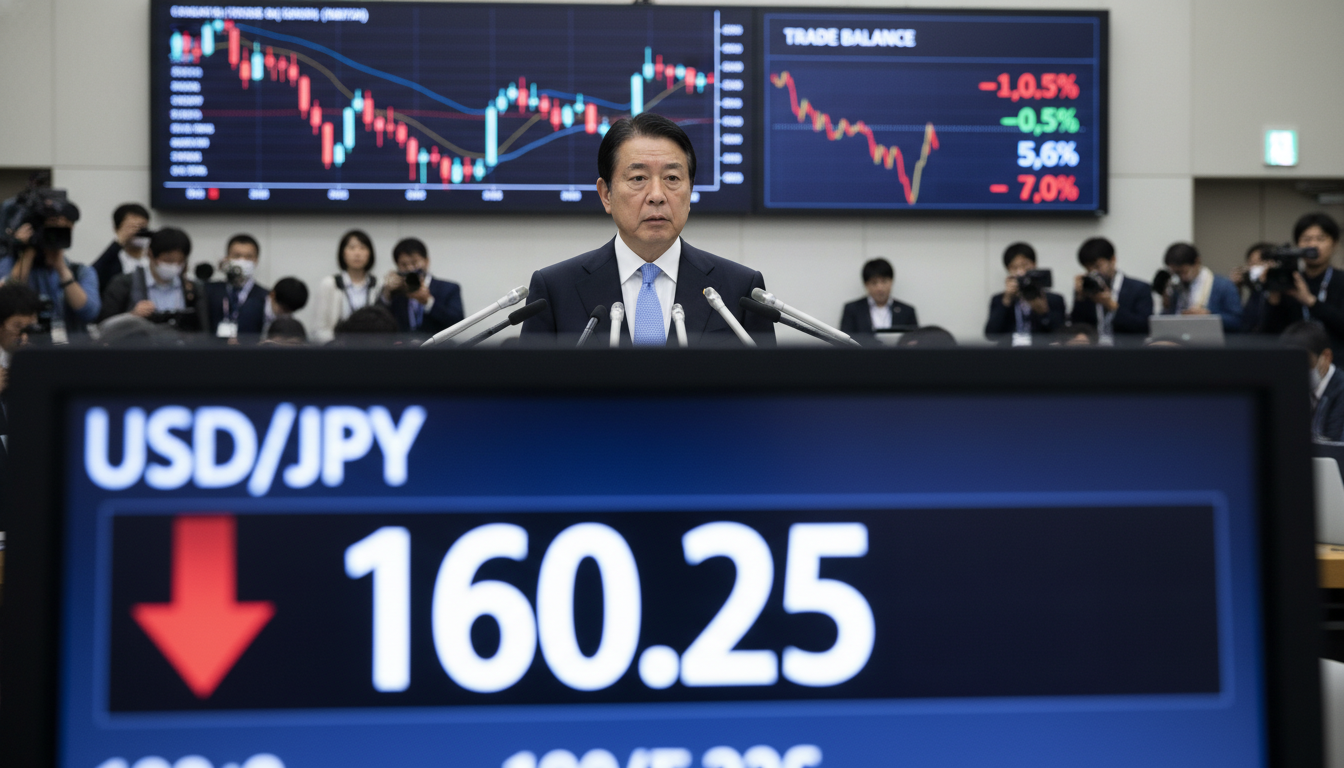
Yen Slump Persists as Tokyo Intervenes to Curb Slide Below 160
Japanese authorities intervened again to support the yen as the currency’s prolonged slump deepened, highlighting structural pressures including interest rate differentials, trade shortfalls and digital-era capital movements.
TOKYO — Japanese officials stepped into the foreign exchange market on Thursday to prop up the yen after another drop below 160 to the dollar, underscoring how the yen slump has become rooted in broader economic imbalances. The intervention did arrest the immediate fall, but market participants say the impact is likely temporary unless underlying causes such as interest rate differentials with major economies and persistent trade deficits are addressed. Traders and policymakers are now weighing the limits of one-off interventions against longer-term policy adjustments.
Tokyo intervention and immediate market reaction
Japanese finance ministry and central bank operations were visible in currency venues as officials sought to steady the market, according to market sources familiar with the trades. The intervention pushed the yen off intra-day lows and eased short-term volatility, yet dealers noted that volume and the scale of intervention were calibrated to avoid signaling a regime shift. Market liquidity subsequently tightened, and speculative positions that had bet on further depreciation were partially pared back.
Interest rate gap with the United States and others
A central driver of the yen slump is the widening interest rate differential between Japan and economies where policy rates are significantly higher, notably the United States. With overseas central banks maintaining comparatively restrictive stances to fight inflation, bond yields abroad have risen, making dollar-denominated assets more attractive and keeping downward pressure on the yen. Analysts say that unless the Bank of Japan signals a clear change in policy or global rates converge, the yield gap will continue to encourage capital outflows.
Trade deficits and structural external imbalances
Japan’s chronic trade shortfalls have added another persistent headwind for the currency, as imports—particularly of energy and intermediate goods—outpace exports in certain cycles. The trade deficit reduces the natural flow of foreign currency into Japan, forcing the economy to rely on capital inflows and reserves to balance external accounts. Economists argue that improving the trade balance will take time, requiring both cyclical recovery in manufacturing exports and strategic shifts in energy and supply-chain sourcing.
Digital economy shifts and capital flow dynamics
Beyond conventional trade and interest factors, the digitalization of commerce and finance has altered cross-border capital flows in ways that amplify currency moves. Corporate earnings repatriation patterns, heightened cross-border payments for technology services, and rapid portfolio reallocations by large digital-first firms can accelerate demand for foreign currency. These non-traditional flows now play a measurable role in short-term yen volatility, according to market strategists, complicating the authorities’ task of stabilizing the exchange rate solely through traditional tools.
Market participants’ positioning and speculative dynamics
Speculators and hedge funds have increasingly positioned for further yen weakness in recent months, leveraging futures and options to express views on continued depreciation. When interventions occur, some leveraged players quickly reduce exposure, creating temporary rebounds, but long-standing macro bets can reassert pressure once intervention effects fade. Risk managers cite a crowded trade in yen short positions as a reason why even large interventions may not permanently reverse the trend without accompanying policy changes.
Policy choices facing Japanese authorities
Authorities face a constrained menu of options: repeat interventions, adjust monetary policy, or pursue structural economic measures to address deficits and returns on capital. Repeated market operations can stabilize the yen for short stretches but carry a cost in foreign exchange reserves and may be less effective if market expectations do not change. A shift in monetary policy would have far-reaching implications for domestic borrowing costs, inflation dynamics and growth, making any change politically and economically sensitive.
Looking ahead, the trajectory of the yen slump will hinge on external rate developments, trade performance, and how decisively policymakers act to alter investors’ expectations. Market watchers emphasize that coordinated steps—including clearer communication on policy intent and measures to boost export competitiveness—would be more durable than episodic interventions alone. The authorities have signaled willingness to act in the market, but bridging the structural gaps feeding the yen slump will likely require a combination of monetary, fiscal and industrial strategies sustained over time.
The yen’s path remains a key barometer for Japan’s economic resilience and international financial stability, and authorities will be closely monitored for any further interventions or policy shifts that could reshape investor sentiment.

