
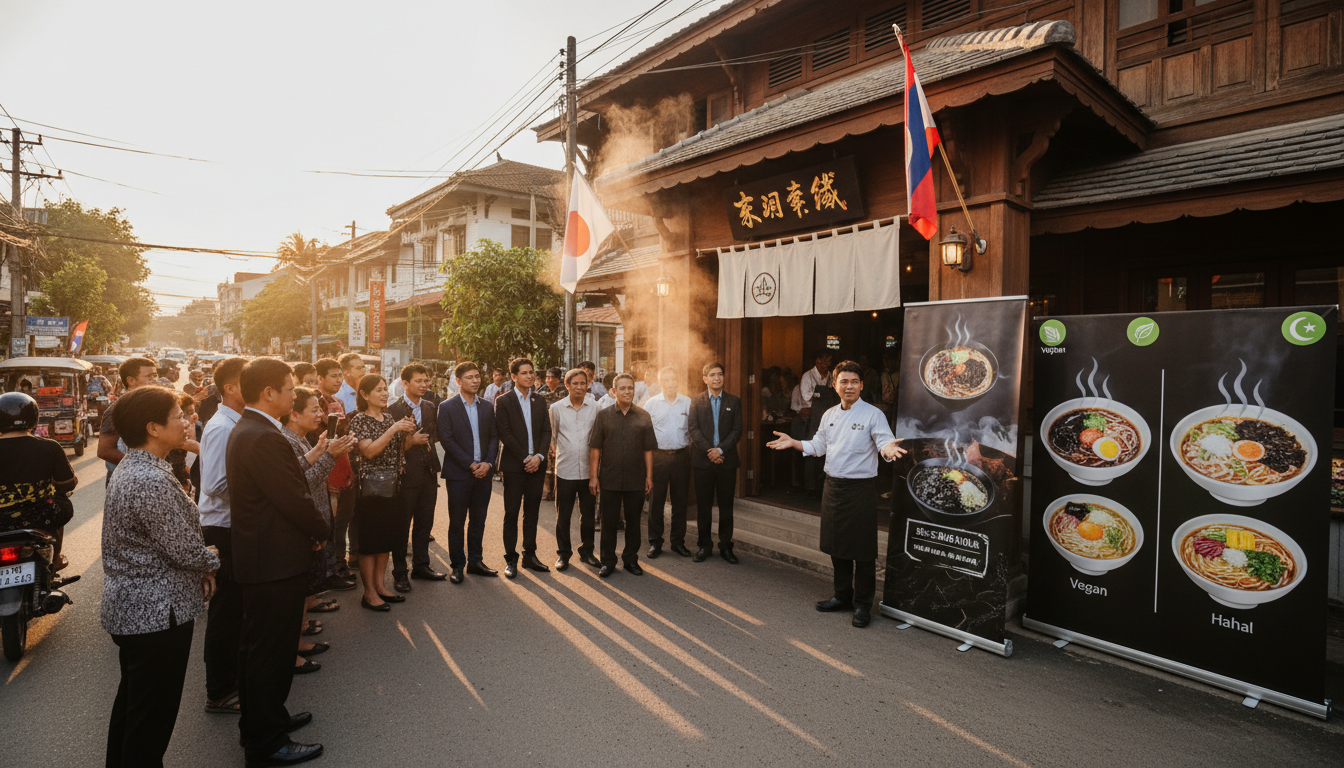
Tentakaku brings Toyama Black ramen to Vientiane in June 2026, expands vegan and halal menus for Europe and Middle East
Japan’s Tentakaku will open a Toyama Black ramen shop in Vientiane in June 2026 and is adapting menus with vegan and halal options for planned entries into Europe and the Middle East.
Tentakaku announces Vientiane opening for Toyama Black ramen
Toyama-based operator Tentakaku said it will open a shop serving its signature Toyama Black ramen in Vientiane in June 2026. The company described the move as the first step in a broader overseas expansion that targets Southeast Asia first, with subsequent launches planned in Europe and the Middle East.
The Vientiane outlet will showcase Toyama Black ramen, a regional variety known for its dark, soy-forward broth. Tentakaku said the launch aims to introduce the specific flavor profile of Toyama prefecture to a new customer base while testing menu adaptations for international markets.
How Toyama Black ramen is being adapted for international diners
Toyama Black ramen is distinctive for its deeply colored, savory broth and firm noodles, and Tentakaku plans to preserve those core elements. For markets with dietary restrictions or different taste preferences, the operator will offer modified broths and toppings, including lower-sodium options and clearer broth variants to broaden appeal.
The company also plans to introduce vegan and halal versions of its signature dishes for launches in Europe and the Middle East. Those adaptations will use plant-based stocks, alternative proteins and certified suppliers to retain texture and umami without animal-derived ingredients.
Menu changes for Europe and the Middle East include vegan and halal items
Tentakaku’s expansion strategy specifically highlights a tailored menu for Europe and the Middle East that combines local dietary requirements with the Toyama Black concept. The operator said vegan ramen will feature concentrated kombu and shiitake bases, while halal lines will rely on certified poultry and seafood where permitted.
To ensure compliance, Tentakaku intends to secure halal certification for applicable outlets and to work with local food safety authorities across target countries. The company emphasized that certification and supplier audits are integral to its rollout timetable for late 2026 and beyond.
Logistics and training for overseas outlets
Launching authentic regional ramen abroad requires more than recipes; it demands logistics and staff training, Tentakaku acknowledged. The company plans to ship proprietary soup bases and concentrate packets to initial international sites while training local chefs in the Toyama Black preparation method.
Tentakaku said it will also deploy Japanese master chefs for on-site training during the opening phase and maintain quality controls through regular audits. Sourcing of fresh produce and char siu will be adapted to local supply chains while keeping seasoning profiles consistent.
Market rationale: regional ramen meets global demand
Tentakaku’s move reflects growing international appetite for regional Japanese ramen styles and for menu diversity that caters to dietary trends. Industry observers point to rising demand for vegan and halal dining options globally, which Japanese chains are increasingly addressing to unlock new markets.
For Tentakaku, the choice of Vientiane offers a lower-cost entry point to Southeast Asia with potential regional spillover, while the push to Europe and the Middle East targets markets where interest in specialty Japanese noodles has expanded. The company framed the strategy as both a branding exercise and a commercial testbed for larger franchise plans.
Challenges and regulatory considerations ahead
Adapting a highly localized product like Toyama Black ramen carries operational and regulatory hurdles, including food safety standards, ingredient certification and consumer taste differences. Tentakaku acknowledged that striking the right balance between authenticity and local adaptation will be essential to long-term success.
The company must also manage currency and shipping cost fluctuations, staffing needs at foreign outlets, and the time required to secure halal approvals where needed. Tentakaku said it will phase openings to manage these risks and to learn from each market before scaling further.
Tentakaku’s planned June 2026 opening in Vientiane marks a deliberate step to internationalize Toyama Black ramen while responding to global demand for vegan and halal options. The operator’s phased, compliance-focused approach aims to preserve the dish’s regional identity even as recipes and supply chains are adapted to meet diverse dietary and regulatory requirements.

