
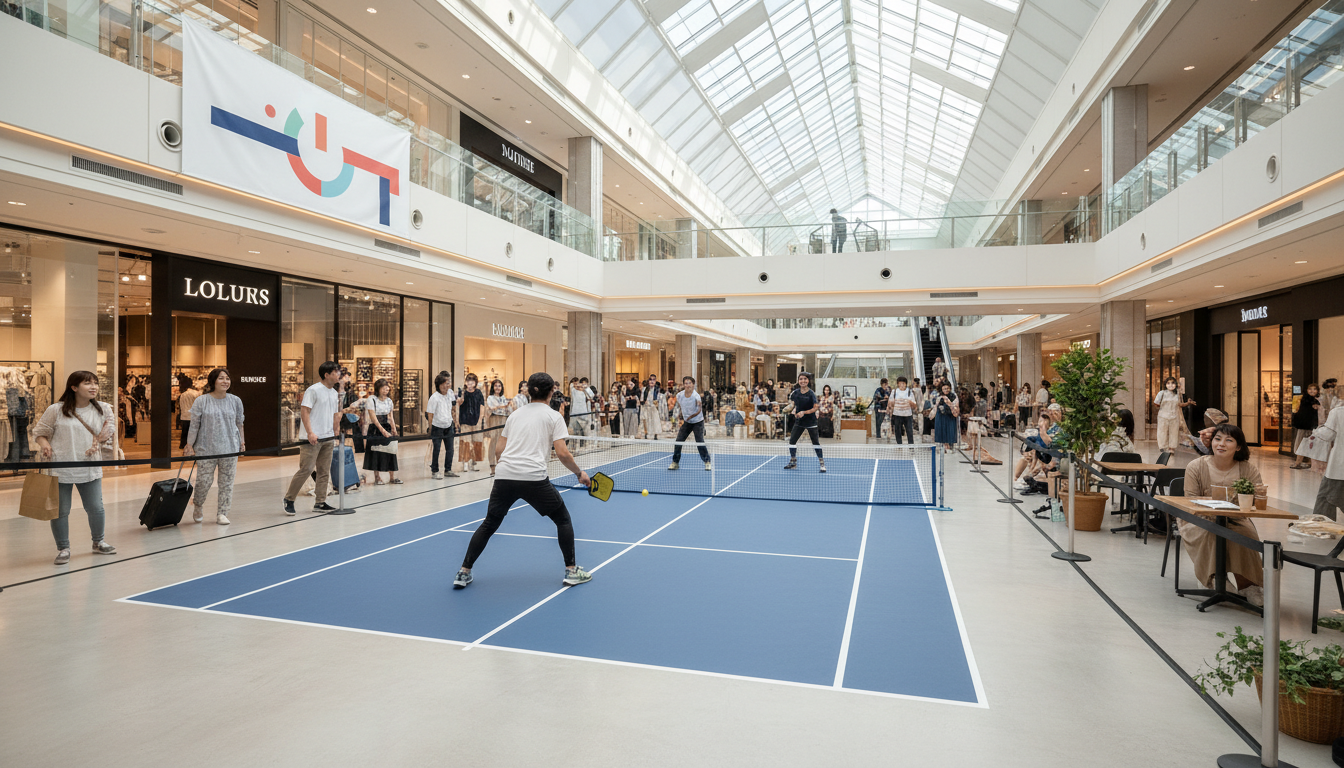
Pickleball in Japan Spurs Hotels and Malls to Convert Space into Courts
Pickleball in Japan is driving a wave of venue conversions as hotels, shopping centers and leisure operators install courts to attract customers and diversify revenues.
Hotels rework ballrooms into playing spaces
Shinagawa Prince Hotel has transformed part of a large banquet hall into an indoor pickleball court, a move mirrored by other hotel operators across Tokyo and major regional cities. Management teams say the conversions repurpose underused event space while offering guests a novel amenity that can be booked by both hotel patrons and local players. The hotel conversion at Shinagawa was documented by Seibu Media Communications and is indicative of a broader shift toward leisure-driven uses of hotel real estate.
These hotel-run courts are positioned as multiuse assets that can host casual play, lessons and private bookings, creating new daily revenue streams. Operators emphasize flexible scheduling to balance hotel guest access during the day and public or club bookings in evenings and on weekends.
Shopping centers add courts to boost foot traffic
Several shopping malls and retail complexes are setting up pickleball courts in vacant anchor zones, parking-deck spaces and rooftop areas to increase dwell time and consumer spending. Mall managers say offering sports attractions draws families and younger adults who then visit shops and food outlets before or after play. Developers are marketing courts as experiential drivers that complement existing entertainment and dining options.
Retail landlords report early signs of uplift in weekday visits where courts are available for free-play hours, lessons and beginner clinics. Some centers have combined courts with pop-up retail and sponsorship ties to sporting brands to create integrated promotions.
Economic logic behind the expansion
For hotels and mall operators, pickleball courts present a relatively low-cost, high-return conversion compared with long-term retail leases or extensive renovations. Courts require modest capital outlay for portable nets, line-marking and temporary surface treatment compared with the cost of constructing new facilities. Operators expect recurring income from hourly court rentals, coaching programs, equipment retail and event hosting fees.
Stakeholders say the sport’s rapid uptake makes it an attractive diversification strategy amid softening demand for traditional banquet and retail space. By offering lessons and scheduled leagues, venues can generate predictable weekday revenue and cultivate regular customer relationships that benefit adjacent businesses.
Operational and technical challenges
Repurposing indoor spaces for pickleball brings practical challenges, including flooring suitability, ceiling height, noise control and safety. Venues must ensure surfaces provide correct bounce and traction without damaging existing finishes, a constraint that has led some operators to deploy portable modular court systems. Noise transfer to neighboring rooms and shops is another concern, prompting investment in soundproofing and careful scheduling.
Insurance and liability issues also require attention when non-sporting venues open to public play, according to facility managers. Staffing needs change as venues hire or train personnel to manage court bookings, maintain equipment and run instruction programs.
Demand patterns and demographic shifts
Pickleball in Japan is attracting a broad demographic mix, drawing older adults seeking low-impact activity as well as younger players attracted to the sport’s social and fast-paced nature. Clubs and local community centers that formerly focused on tennis or badminton report that pickleball memberships have surged, increasing demand for indoor play during colder months. Leisure operators view the cross-generational appeal as advantageous for family-oriented promotions and multigenerational packages.
Tourism stakeholders are also watching the trend, with hotels anticipating that destination-level pickleball facilities could help lure domestic and international guests. Events such as corporate tournaments or beginner clinics targeted at visiting families are being explored as part of marketing strategies.
Partnerships, programming and future prospects
Operators are partnering with equipment manufacturers, coaching organizations and local governments to scale offerings and professionalize programming. These partnerships help venues access coaching curricula, bulk equipment procurement and insurance arrangements tailored to sports operations. Some facilities are piloting league structures and beginner-to-advanced progression programs to build sustainable user bases.
Industry observers expect continued expansion of pickleball courts in mixed-use properties where underutilized space can be converted quickly. If demand stabilizes, larger investments in permanent courts, lighting and spectator facilities could follow, enabling venues to host regional competitions and community events.
As operators refine flooring solutions, scheduling models and promotional tie-ups, pickleball in Japan appears set to remain a growth area for hospitality and retail sectors seeking new ways to draw visitors and generate steady income.

