
Iran crude oil storage crisis deepens as tankers become floating reserves
Iran crude oil storage woes intensify as U.S. Navy blockade of the Strait of Hormuz forces Tehran to store oil on decommissioned tankers, analysts say.
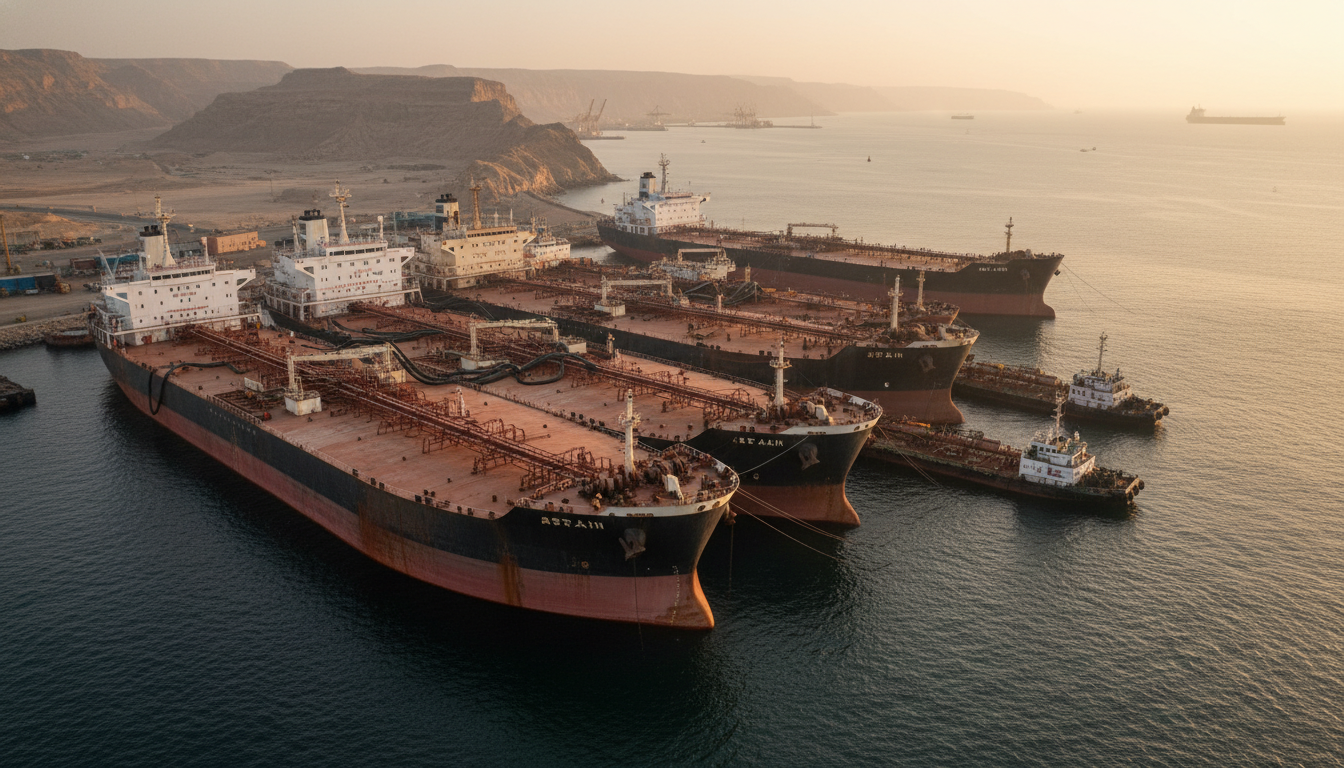
Iran’s crude oil storage situation has deteriorated sharply after a U.S. Navy blockade of the Strait of Hormuz cut off regular access to Asian buyers, leaving Tehran to rely on ageing tankers and shore facilities for unsold barrels. Satellite imagery taken on April 18, 2026, shows a concentration of vessels off Kharg Island consistent with a growing fleet of hulks and idled tankers being used as makeshift storage. Industry analysts say the improvised strategy highlights both logistical strain and the economic pain of lost export revenue.
Iran turns to decommissioned tankers for temporary storage
The Iranian oil ministry and commercial operators have reportedly begun using out-of-service crude carriers as ad hoc reservoirs, mooring them near key terminals where shore tanks are full. These vessels are not designed for long-term static storage and lack the maintenance and safety features of operational floating storage units, according to shipping experts. Converting retired tankers into storage solves an immediate capacity shortfall but raises questions about maintenance costs, leak risk and long-term viability.
Strait of Hormuz blockade severs supply routes to Asia
The blockade of the Strait of Hormuz by U.S. naval forces has effectively prevented Iranian crude from reaching customers in Asia, a region that has historically taken the bulk of Tehran’s exports. The disruption has left crude cargoes without clear destinations and vessels unable to enter normal trading patterns, prompting operators to idle ships rather than attempt risky transits. Shipping sources and analysts warn that prolonged restrictions will deepen market distortions and could reduce Iran’s ability to monetize new production.
Satellite images reveal tanker concentrations near Kharg Island
High-resolution satellite imagery from ESA’s Sentinel-2 captured on April 18, 2026, shows a dense aggregation of vessels in the waters off Kharg Island, a longtime hub for Iran’s oil exports. The imagery, processed by commercial satellite analysts, points to a notable increase in stationary tankers clustered around the island’s terminals compared with earlier months. Observers say the pattern is consistent with the intentional use of vessels for storage when shore-based tanks are at or nearing capacity.
Logistical, environmental and safety concerns mount
Using decommissioned tankers as floating storage presents immediate logistical challenges, including the need for continuous monitoring, maintenance of inerting systems and management of crude heating and stability. Experts caution that ageing hulls and piping increase the risk of spills or structural failures, with potentially severe environmental consequences for the Persian Gulf. Insurance and salvage arrangements also become more complex when vessels remain stationary for extended periods without full operational crews.
Economic impact on Iran’s oil revenue and global flows
The storage squeeze has direct fiscal consequences for Iran, which depends on oil export receipts to support government revenue and foreign currency reserves. Unsold crude tied up in floating storage represents foregone income and raises the prospect of forced production cuts if storage capacity cannot keep pace. Beyond Iran, the market disruption has the potential to redistribute regional cargoes, affect spot freight rates and complicate supply planning for refiners that have historically relied on steady shipments from the Gulf.
Analysts weigh duration and policy responses
Analysts and market participants are monitoring whether Tehran will reduce output, re-route sales through intermediaries, or negotiate transit arrangements to restore access to buyers. Some industry voices suggest that prolonged blockade conditions could push Iran toward deeper use of barter arrangements or sales at steep discounts, while others point to operational limits that will eventually force production adjustments. U.S. and regional security decisions will be decisive in shaping the timeline for any normalization of exports.
Iran faces a constrained set of choices as it balances the immediate need to store produced oil with the long-term risks of using vessels not intended for static storage. The congregation of decommissioned tankers near Kharg Island underscores the urgency of the problem and the broader reverberations for regional energy flows and maritime safety. Continued satellite monitoring, shipping data and official statements will be required to track how Tehran adapts production and storage policies in the coming weeks.

