
Anthropic expands Claude Mythos access amid U.S. government scrutiny
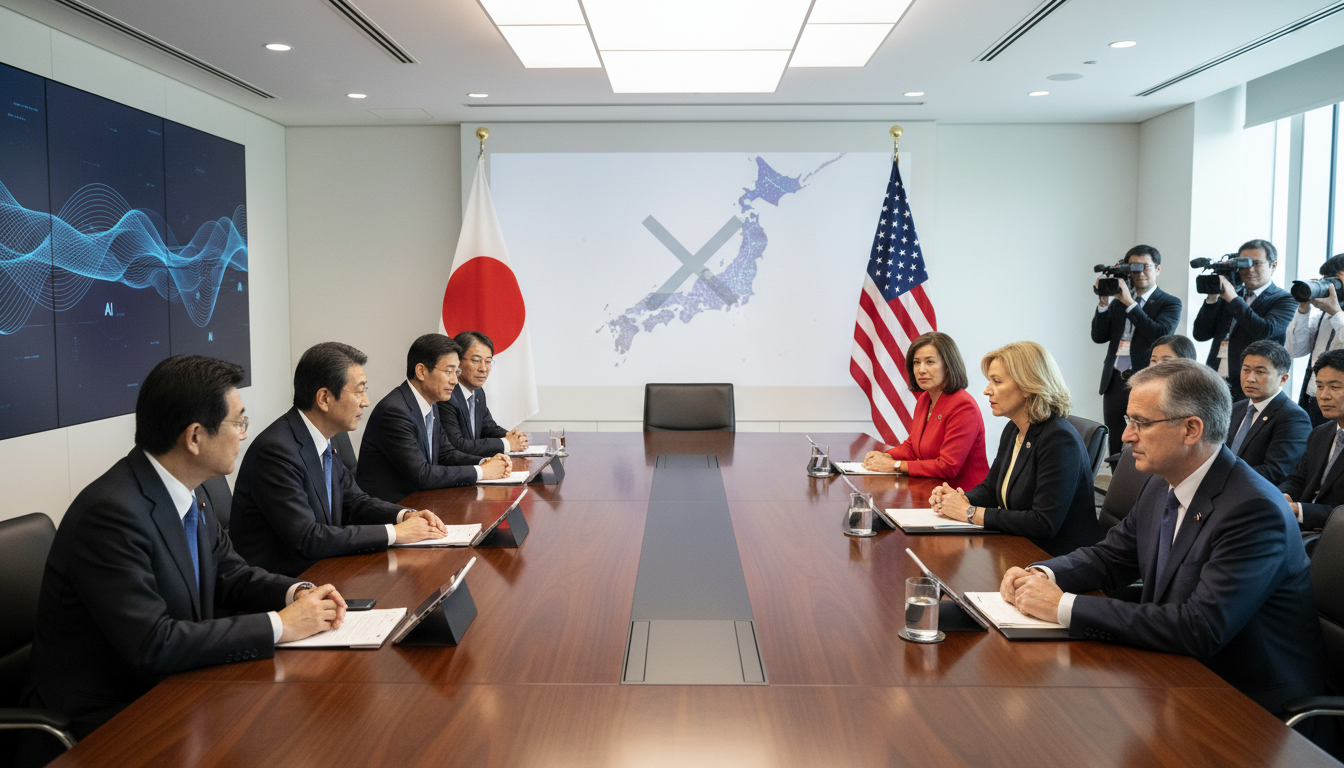
Anthropic plans wider international access to Claude Mythos, including Japan, as U.S. officials scrutinize the model for safety and national-security risks.
Anthropic, the U.S.-based artificial intelligence firm, is seeking to broaden access to its new Claude Mythos model to more companies and organisations worldwide, including in Japan. The company says the model offers advanced capabilities, but its expansion faces scrutiny from U.S. government officials concerned about potential misuse and national-security implications. Anthropic’s push underscores a growing tension between commercial deployment of powerful AI systems and regulatory caution in Washington. Industry and government sources say the debate will shape who can use Claude Mythos and under what controls.
Anthropic outlines plans to broaden Claude Mythos access
Anthropic has signalled an intention to make Claude Mythos available beyond its initial partners, offering licences and hosted services to enterprises and research institutions. Company representatives argue that wider access will allow businesses to integrate the model into software development, security testing and other commercial applications. Anthropic frames this expansion as a responsible scaling effort, accompanied by tools and policies intended to reduce misuse and improve oversight. The company’s public statements emphasise a balance between enabling innovation and deploying guardrails.
U.S. government voices concerns over potential risks
U.S. government officials have raised questions about whether broad distribution of high-capability models like Claude Mythos could amplify misuse risks or create avenues for malicious cyber activity. Regulators and national-security agencies are reported to be assessing whether additional controls or export-like restrictions are needed for certain capabilities. Officials are particularly focused on dual-use aspects, where advanced analysis capabilities could be repurposed for harmful ends. The government’s scrutiny underscores a cautious approach to releasing frontier AI systems internationally.
Technical strengths: detecting overlooked software vulnerabilities
Claude Mythos has been highlighted for its ability to identify software vulnerabilities that human experts sometimes miss, a capability that attracted attention from cybersecurity teams and software vendors. The model’s advanced code-analysis and reasoning features can assist in automated code review, bug hunting and security auditing. Proponents argue these strengths could materially improve software resilience and reduce time spent on manual vulnerability discovery. At the same time, those same analytic powers prompt regulators to weigh how to limit techniques that could be exploited by attackers.
Japanese interest and potential commercial applications
Japanese firms and research organisations have expressed interest in deploying advanced language models for applications ranging from code quality assurance to regulatory compliance and customer service. Anthropic has indicated Japan is among the markets it hopes to serve as it expands access to Claude Mythos. Local companies see potential to accelerate development cycles and to harden systems against cyber threats by integrating model-driven analysis. Yet, commercial adoption will depend on how quickly regulatory and security questions are resolved, and whether Japanese entities can obtain the necessary approvals.
Regulatory and export hurdles that could slow rollout
Experts say Anthropic’s expansion may encounter legal and policy hurdles similar to export-control mechanisms used for sensitive technologies. Even absent formal export controls, agencies can use licensing, certification requirements and contractual safeguards to limit risky transfers. Companies seeking access might face audits, contractual restrictions on downstream use, or requirements to deploy the model in tightly controlled cloud environments. The interplay between U.S. policy and the legal frameworks of other countries, including Japan, will be a key determinant of how broadly Claude Mythos can be distributed.
Industry response and proposals for safe deployment
Technology companies and academic researchers have proposed layered safeguards to allow beneficial uses while reducing misuse risk, including rigorous user vetting, usage monitoring and red-team testing. Some industry voices advocate for standardised certification processes and third-party audits to verify that deployments meet safety benchmarks. Others call for international coordination to ensure consistent rules and to prevent regulatory arbitrage. Anthropic itself has highlighted internal safety research and planned operational controls as part of its approach to wider distribution.
The coming months are likely to set important precedents for how high-capability AI models are governed and commercialised internationally. Decisions by U.S. agencies, combined with responses from partners in Japan and elsewhere, will determine the pace and scope of Claude Mythos deployments. Stakeholders from industry, government and civil society are expected to continue negotiating practical steps that balance innovation with safeguards.

