
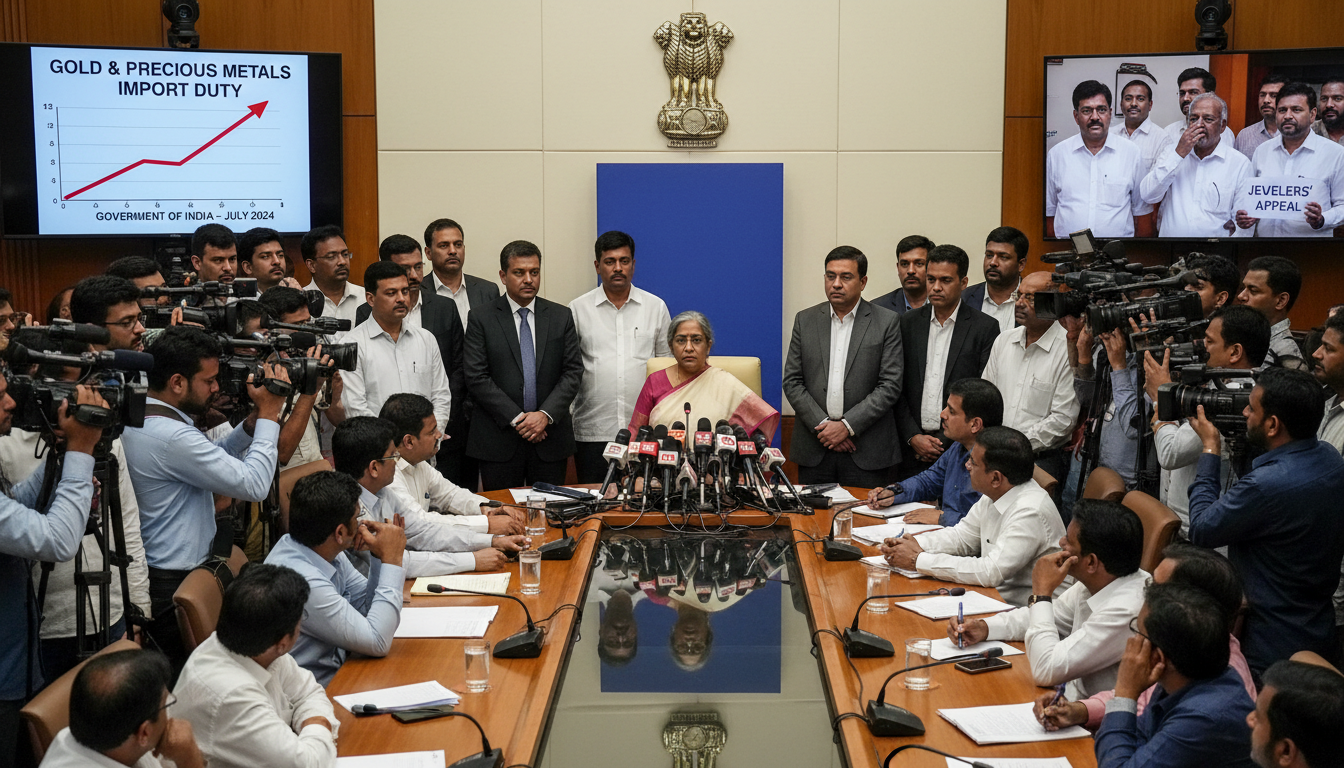
Gold import duty hike: India more than doubles duties on gold, silver and platinum
India’s gold import duty hike doubles taxes on gold, silver and platinum as New Delhi seeks to ease external account pressure and urgently support the rupee.
The government announced more than a doubling of import duties on precious metals, including gold, silver and platinum, in a move aimed at reducing bullion inflows and bolstering the external account. The gold import duty hike was deployed alongside policy appeals from Prime Minister Narendra Modi to curb unnecessary gold purchases and to lower fuel consumption.
Government more than doubles import duties on precious metals
The finance ministry said the revised tariffs will apply to both refined and raw forms of the metals, signaling a broad-based effort to curb import volumes. Officials framed the change as a fiscal and external-sector adjustment designed to reduce the current account deficit and stabilize currency pressures.
The measure represents one of the most significant adjustments to India’s bullion tariff regime in recent years and arrives after sustained concern about the trade gap and the rupee’s sensitivity to external shocks. The duty increase is intended to make imports costlier and discourage discretionary local purchases of precious metals.
Jewellers and retailers brace for weaker domestic demand
Jewellery associations and retail chains quickly warned that the duty rise could depress domestic sales, particularly in urban centres where purchases account for a large share of demand. Dealers said they expect immediate softness in footfall and buying intent, with consumers likely postponing discretionary purchases.
Smaller retail jewellers and artisans, many of whom operate on thin margins, are especially exposed to a sudden drop in demand ahead of seasonal buying periods. Trade bodies have already signalled they will seek dialogue with officials to discuss mitigation measures and potential exemptions for small businesses.
Why New Delhi says the move will ease external account pressure
New Delhi’s rationale is that by lifting the cost of imported bullion, total import volumes will fall, narrowing the trade deficit and reducing pressure on foreign exchange reserves. Policymakers argued this could provide breathing room for the rupee and reduce the need for larger monetary interventions.
Officials also linked the measure to a desire to rebalance the composition of imports by discouraging non-essential bullion inflows while preserving access for industrial and investment needs. The government framed the duty adjustment as a targeted tool rather than a long-term trade barrier.
Prime Minister Modi urges reduced gold purchases and fuel use
Alongside the tariff change, Prime Minister Narendra Modi publicly urged citizens to avoid excessive gold purchases, cut fuel consumption, promote electric vehicles and adopt remote work where feasible. The broader appeal underscores a multipronged strategy to curb import-driven demand across several sectors.
Modi’s message married fiscal policy with behavioral appeals, asking households and businesses to adopt practices that would lower energy and import intensity. Authorities hope these voluntary changes, together with the gold import duty hike, will have a complementary effect on the country’s external position.
Market response and risks of unintended consequences
Market participants cautioned that a steep rise in import duties could create unintended distortions, including higher domestic premiums, increased smuggling risk and a shift toward informal channels for bullion. Analysts warned that such side effects could blunt the intended impact on overall import volumes and complicate enforcement.
Traders may also adjust inventory strategies and pricing, which could produce short-term volatility in retail gold prices even if global bullion markets remain stable. Banks and non-bank financial firms that provide gold-backed lending or trade-related services could face operational pressures as flows and collateral values change.
Outlook for imports, the jewellery sector and the rupee
In the near term, importers are likely to reassess sourcing plans and bring forward or delay shipments to manage cost exposure, with cascading effects on shipping and refining businesses. For the jewellery sector, a sustained decline in consumer demand would force firms to slow production, draw down inventories and re-price stock, affecting margins and employment.
For policymakers, the challenge will be to monitor whether the gold import duty hike produces durable relief for the external account without inflicting disproportionate harm on domestic industry or encouraging illicit trade. Authorities may need to calibrate the measure or pair it with complementary steps if unintended consequences emerge.
The full economic impact will depend on household responses, global bullion prices and the government’s capacity to enforce higher tariffs while supporting jewellers and trade channels.

