
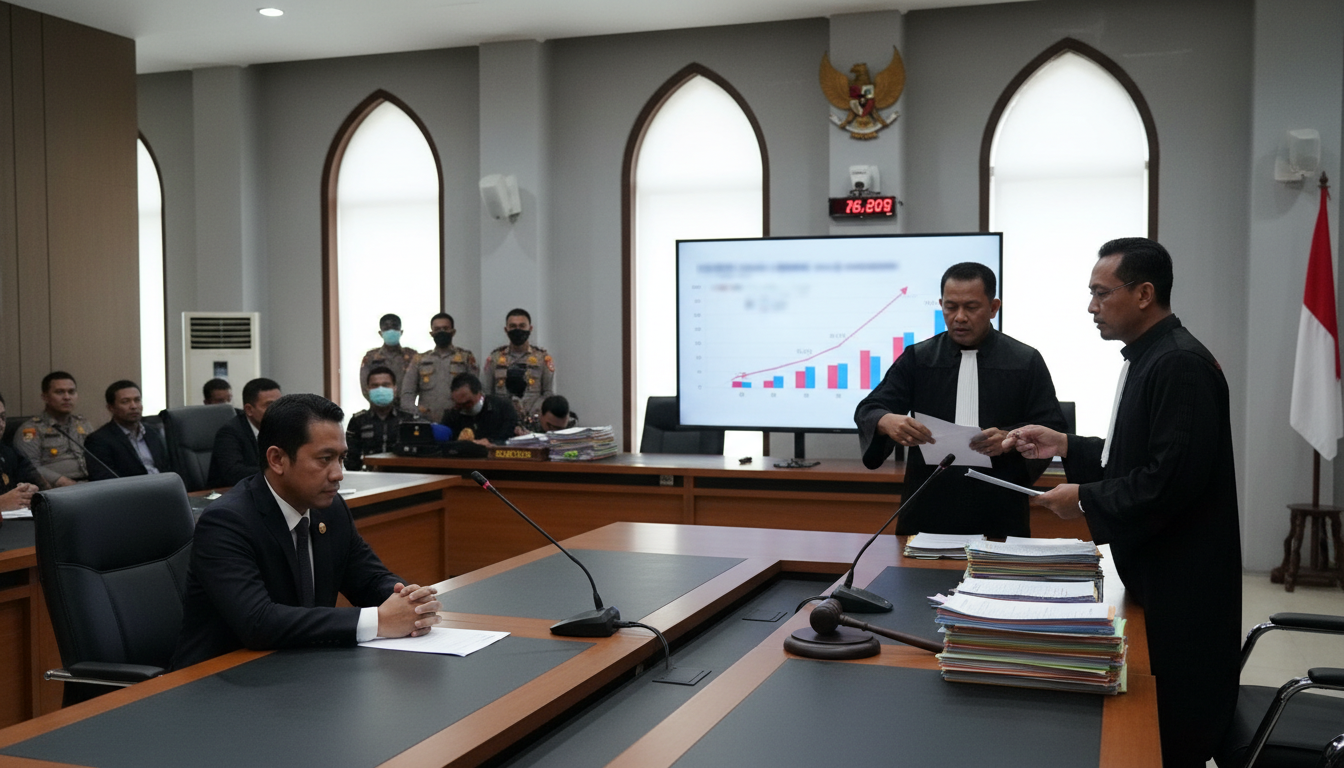
Prosecutors Seek 18-Year Sentence for Nadiem Makarim in Chromebook Procurement Case
Prosecutors seek 18 years in prison for Nadiem Makarim and demand $275m repayment or nine additional years over a 9.3 trillion rupiah Chromebook procurement scandal.
Jakarta prosecutors on Wednesday asked a court to sentence Nadiem Makarim to 18 years in prison and to order him to repay $275 million or face an additional nine-year term, officials said. The charges relate to the 9.3 trillion rupiah procurement of Google Chromebooks intended for remote schooling, a contract that has attracted intense public scrutiny. Nadiem, the former education minister and co-founder of the ride-hailing firm Gojek, has denied wrongdoing as the case proceeds through Jakarta’s criminal court.
Prosecutors’ sentencing demand in Jakarta
Prosecutors framed their sentencing request around alleged corruption in the procurement process for tens of thousands of laptop devices aimed at supporting distance learning. They argued that the scale of the contract and the alleged irregularities warranted a lengthy custodial sentence and significant financial restitution. The demand for a $275 million repayment sits alongside the prison term, with prosecutors asserting that the sum represents the proceeds or damage tied to the procurement scheme.
The Jakarta court heard detailed testimony this week from witnesses called by the prosecution, who outlined contract negotiations, supplier selection and payments. Prosecutors presented documents and financial records they say show illicit benefits and procedural violations. Defense lawyers have challenged the evidence and questioned the chain of custody and interpretation of contracts.
Details of the Chromebook procurement contract
The contested contract, valued at roughly 9.3 trillion rupiah, was for Google Chromebook devices intended to bolster remote education in Indonesia’s schools. Prosecutors say the procurement process lacked transparency and favoured certain vendors, leading to problematic terms and inflated costs. The devices were purchased amid a nationwide push to upgrade digital access for students during pandemic-related school closures.
Court filings and testimony reviewed by prosecutors allege that procurement guidelines were bypassed and that officials received kickbacks or other benefits. The defense counters that procurement decisions were made under urgent circumstances and in consultation with multiple ministry officials. Independent audits and technical assessments cited during the hearings produced mixed findings, according to court statements.
Restitution demand and legal exposure
Prosecutors’ insistence on a $275 million repayment carries major legal and financial consequences beyond prison time. They argued the restitution figure is intended to redress public loss and deter future misconduct in large-scale government contracts. Should the court accept the repayment demand, it could require asset seizures, fines and other enforcement measures to recover funds.
Legal experts say the restitution figure and the additional penalty of nine years if repayment is not made reflect prosecutorial leverage in high-profile corruption trials. The combination of a lengthy sentence and a large financial order is relatively uncommon in Indonesia and signals an aggressive stance by anti-corruption authorities. Appeals and post-conviction motions could prolong litigation for years even if the court issues a harsh verdict.
Defense response and court proceedings
Nadiem’s defence team has contested the prosecutors’ account, calling for acquittal or a reduced sentence and denying any direct role in corrupt arrangements. Lawyers have argued that procurement decisions were collective and followed emergency procurement rules applied during the pandemic. They have also questioned the calculation behind the $275 million figure and the evidentiary basis for attributing losses to the former minister personally.
The trial record so far shows competing expert opinions on procurement norms and contract valuation, with the defence seeking to undermine the prosecution’s narrative. The court is expected to continue hearing testimony from technical experts and ministry officials in coming sessions. Both sides are preparing legal briefs ahead of closing arguments, after which the judge will deliberate on sentencing.
Political and business implications
The case has reverberated across Indonesia’s political and corporate spheres, touching on governance, educational policy and trust in public procurement. Nadiem’s profile as a tech entrepreneur-turned-minister has intensified public interest, with commentators debating whether accountability measures are being applied uniformly. Several industry leaders have flagged concerns about the effect of prolonged legal action on investment and public-private collaboration in education technology.
Opposition politicians and civil society groups have seized on the trial to press for broader procurement reform and better transparency in government contracts. At the same time, supporters of the former minister warn against conflating administrative mistakes with criminal intent. The outcome of the case could set a precedent for how Indonesia handles misconduct allegations involving senior officials and large-scale digital projects.
Next steps in the legal timetable
The court will hear final testimonies and legal arguments before judges issue a ruling on guilt and penalty, likely following a period of deliberation. If convicted, Nadiem can appeal to higher courts, a process that may extend the dispute well beyond the initial verdict. Enforcement of any repayment order would involve freezing or seizing assets and coordination with financial authorities.
Observers say the case will be closely watched not just for its immediate outcome but for its wider implications for public procurement policy and anti-corruption enforcement in Indonesia. The trial underscores continuing tensions between rapid digital rollout efforts and the need for robust oversight in government contracting.
The proceedings in Jakarta mark a pivotal moment in Indonesia’s ongoing effort to hold senior officials accountable for alleged mismanagement and corruption in pandemic-era spending. The court’s decision will be a significant test of the judiciary’s ability to adjudicate complex procurement disputes involving high-profile figures and large sums of public money.

