
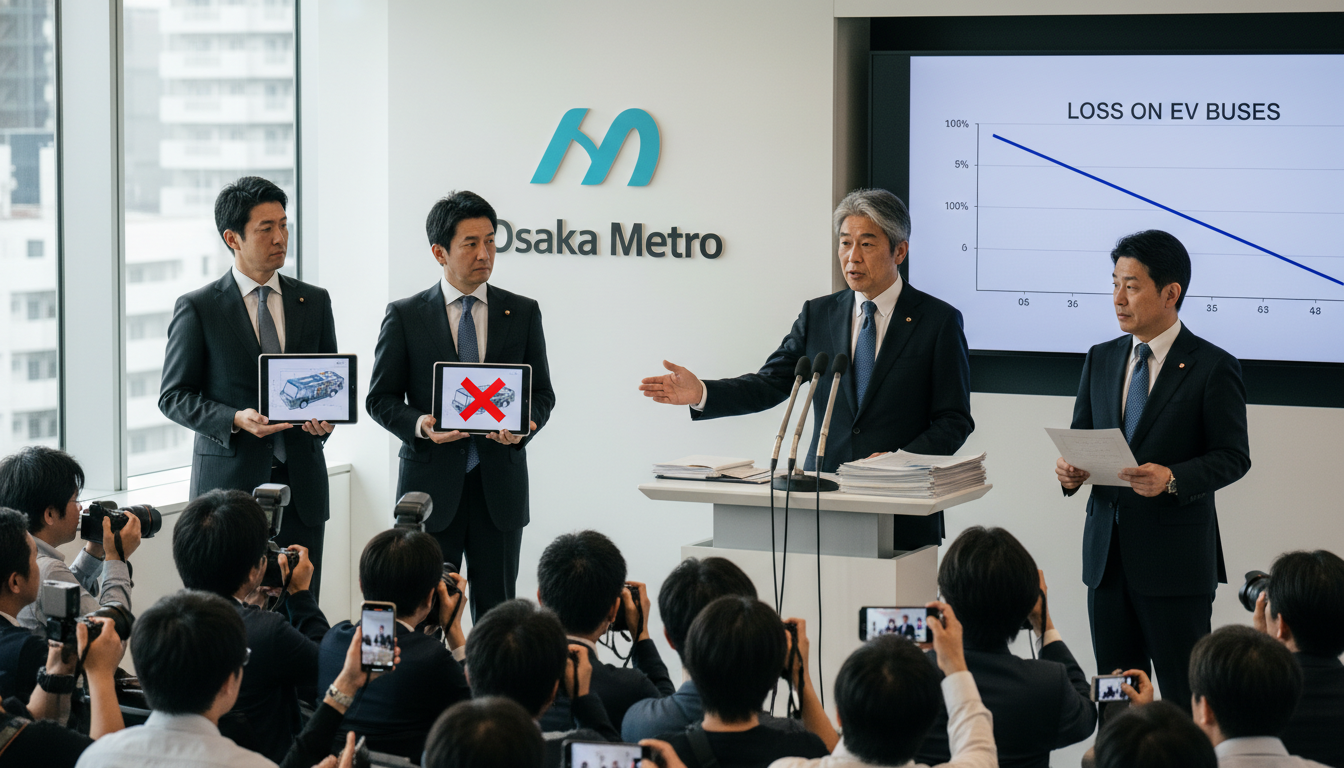
Osaka Metro to Scrap 190 Expo EV Buses, Record Losses as Supplier Dispute and Subsidy Talks Escalate
Osaka Metro will stop using 190 EV buses acquired for the Osaka-Kansai Expo and is set to record related losses, officials said as the operator confronts safety, contractual and subsidy issues. The decision affects buses bought between 2022 and 2024 that were deployed around the Expo site and on on-demand routes in the city.
Decision to Halt Use of 190 Expo EV Buses
Osaka Metro announced it will not return the fleet of 190 electric buses to service after inspections uncovered persistent problems. The company plans to recognize losses tied to the vehicles in financial results released on May 14, 2026.
The buses were purchased from EV Motors Japan (EVMJ) and manufactured under contract with a Chinese supplier. About 150 units were used at the Expo venue and nearby areas, while roughly 40 served as on-demand buses in Osaka city routes.
Inspection Findings and Safety Concerns
Routine checks and test runs carried out since January revealed what Osaka Metro described as serious defects and potential latent faults in some vehicles. The operator suspended plans to repurpose the buses for regular routes or for autonomous-driving trials after concluding safety and long-term reliability could not be ensured.
EVMJ notified authorities in November 2025 of a recall covering 85 buses following a series of accidents at the Expo site and other delivery locations. Osaka Metro says 35 of the recalled units were among those used inside the Expo grounds, prompting an intensified inspection program.
Contract Dispute with EV Motors Japan
The technical problems have escalated into a legal and commercial standoff between Osaka Metro and EVMJ over sales, maintenance and warranty responsibilities. Company representatives have met repeatedly but remain at odds about who bears responsibility for remedial work and for the costs of idle vehicles.
Osaka Metro officials have said they detected defects that undermine confidence in the supplier’s ability to deliver a remedial framework guaranteeing safety and longevity. EVMJ, based in Kitakyushu, has maintained that it acted in accordance with manufacturing contracts and that the buses were produced under a subcontract arrangement.
Financial Impact and Subsidy Return Talks
The operator expects to book a substantial charge in the fiscal announcement on May 14, reflecting impairment and other costs tied to the 190 buses. Beyond the immediate write-downs, discussions are underway with national and local authorities about the status of public subsidies tied to the purchases.
Government and municipal subsidy programs contributing to the procurement could total roughly ¥4 billion, according to people familiar with the matter. Osaka Metro and public agencies are in preliminary talks about whether any portion of those subsidies must be returned, potentially increasing the financial hit and sparking wider scrutiny of procurement oversight.
Vehicles Stored and Plans Suspended
Most of the idled buses remain parked on Osaka Metro property in Joto Ward, with license plates removed and systems mothballed. Plans to convert the vehicles for conventional route service were canceled, as were pilots that would have tested advanced driver-assistance and autonomous operation technologies.
Officials said maintenance costs and storage logistics are mounting while options for resale, retrofitting or disposal are evaluated. Industry analysts note that secondhand demand for specialized electric buses remains limited, complicating recovery of value from the grounded fleet.
Regulatory and Reputation Questions for Expo Legacy
The case has triggered broader questions about procurement due diligence and quality control for rapid electrification programs tied to major events. Critics warn that the Expo’s legacy could be tarnished if public funds are used to subsidize vehicles that cannot be safely operated or economically repurposed.
Regulatory authorities and municipal oversight bodies are expected to review the procurement process, certification practices and the administrative handling of subsidies. Lawmakers and consumer groups have already called for transparency on inspection results and for clear responsibility assignments between buyer, seller and manufacturer.
Osaka Metro says it will continue consultations with EVMJ, government agencies and technical experts while completing its financial reporting. The operator provided reassurances that passenger safety remains the paramount concern and that no idled vehicle will be returned to service without comprehensive remediation and certification.
Officials also emphasized the need to determine contractual liabilities and to explore options that mitigate fiscal damage while protecting public interests. As those discussions proceed, the 190 Expo EV buses remain at the center of a dispute that blends safety, commercial responsibility and the fiscal consequences of rapid vehicle procurement.
As investigations and negotiations continue, the outcome will shape not only Osaka Metro’s balance sheet but also how future large-scale EV deployments are contracted and overseen in Japan.

