
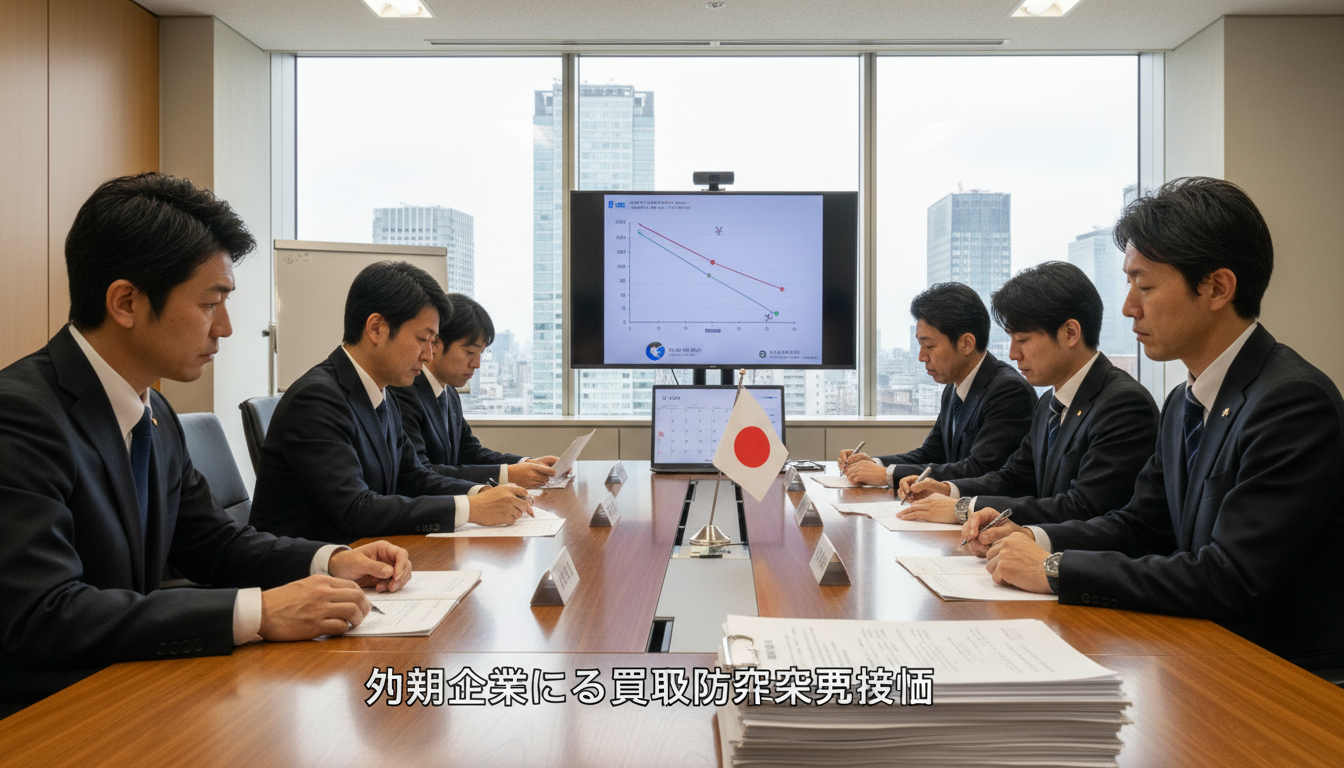
Prolonged Yen Weakness Spurs Japanese Firms to Reassess Takeover Defenses
Prolonged yen weakness is prompting major Japanese companies to review and strengthen takeover defenses as foreign buyers gain relative purchasing power, sparking corporate and regulatory scrutiny.
TOKYO — The sustained yen weakness has led corporate boards across Japan to re-evaluate takeover defenses amid rising concern that a weaker currency increases the appeal of domestic assets to overseas bidders. The yen weakness is changing the acquisition calculus by making Japanese equities and strategic stakes relatively cheaper for foreign investors, officials and executives say.
Yen slide reshapes acquisition math
The yen’s depreciation against major currencies effectively increases the buying power of foreign bidders, lowering the cost in their home currency to acquire Japanese targets. That arithmetic shift can accelerate approaches from private equity firms, strategic buyers and state-backed investors seeking market entry or industrial footholds.
For many listed companies, the new currency environment alters valuations already affected by weak domestic demand and global supply-chain shifts. Boards are recalculating potential takeover scenarios to understand how exchange-rate moves could change who can afford to bid and at what premium.
Corporate boards and advisers intensify defenses
Companies large and small have begun systematic reviews of their existing defensive measures, including cross-shareholding structures, shareholder rights plans and contractual protections. Legal advisers and investment bankers report an uptick in inquiries from corporate counsel seeking to update bylaws, adoption thresholds and block-holding limits to deter hostile approaches.
Some firms are also reassessing disclosure practices and engagement strategies with major shareholders to reduce vulnerability to rapid share accumulation. Strengthened investor communications and pre-emptive outreach to key domestic stakeholders are being prioritized to manage potential frictions before they escalate into contested bids.
Capital flows and foreign interest rise
Global investors searching for yield and strategic assets are increasingly eyeing Japan as the currency drag enhances returns when converted into stronger home currencies. The combination of attractive asset prices and Japan’s deep industrial base makes the market a clear target for outbound capital seeking diversification and growth.
This dynamic has raised questions among corporate managers about the long-term implications for strategic industries, including semiconductors, chemicals and high-value manufacturing. Executives are weighing the risks of losing control over critical technologies against the benefits of foreign partnership and capital inflows.
Regulatory and government attention grows
Japanese regulators and government officials are monitoring the situation closely as the currency-driven surge in foreign interest intersects with national security and industrial policy concerns. Authorities have kept tools at hand to scrutinize acquisitions involving sensitive technologies or critical infrastructure, and a softer yen has renewed debate about whether existing oversight is sufficient.
Policy makers are engaging with business groups to gauge whether adjustments to screening mechanisms or disclosure regimes are warranted. Any regulatory response, however, will need to balance protecting strategic assets with maintaining an open investment climate that supports capital inflows and corporate revitalization.
Market reaction and investor strategy shifts
Institutional investors, both domestic and foreign, are adapting their strategies to account for currency risk and takeover dynamics. Domestic funds are increasingly protective of core holdings, while some global funds view the environment as an opportunity to build positions in undervalued names with strong operational prospects.
Analysts expect heightened volatility around takeover-sensitive stocks, particularly firms with low free float or concentrated shareholder bases. Market participants also foresee more complex deal structures, including minority investments with strategic agreements, rather than straight hostile bids.
Implications for mergers, governance and corporate planning
The renewed focus on takeover defenses is likely to influence corporate governance discussions at annual meetings and board retreats this year. Companies may place greater emphasis on succession planning, shareholder alignment and transparent capital allocation to reduce the risk of unwanted approaches and to demonstrate long-term value creation.
At the same time, some firms could pursue proactive measures such as strategic partnerships, cross-border joint ventures or selective share buybacks to shore up domestic control. Such maneuvers will be evaluated for their impact on corporate finances and on broader market perceptions of openness to foreign capital.
The combination of a prolonged currency slide and evolving global investment patterns is reshaping Japan’s M&A landscape, prompting businesses, advisers and regulators to adapt rapidly to a market where exchange rates are a decisive factor in deal-making.

