
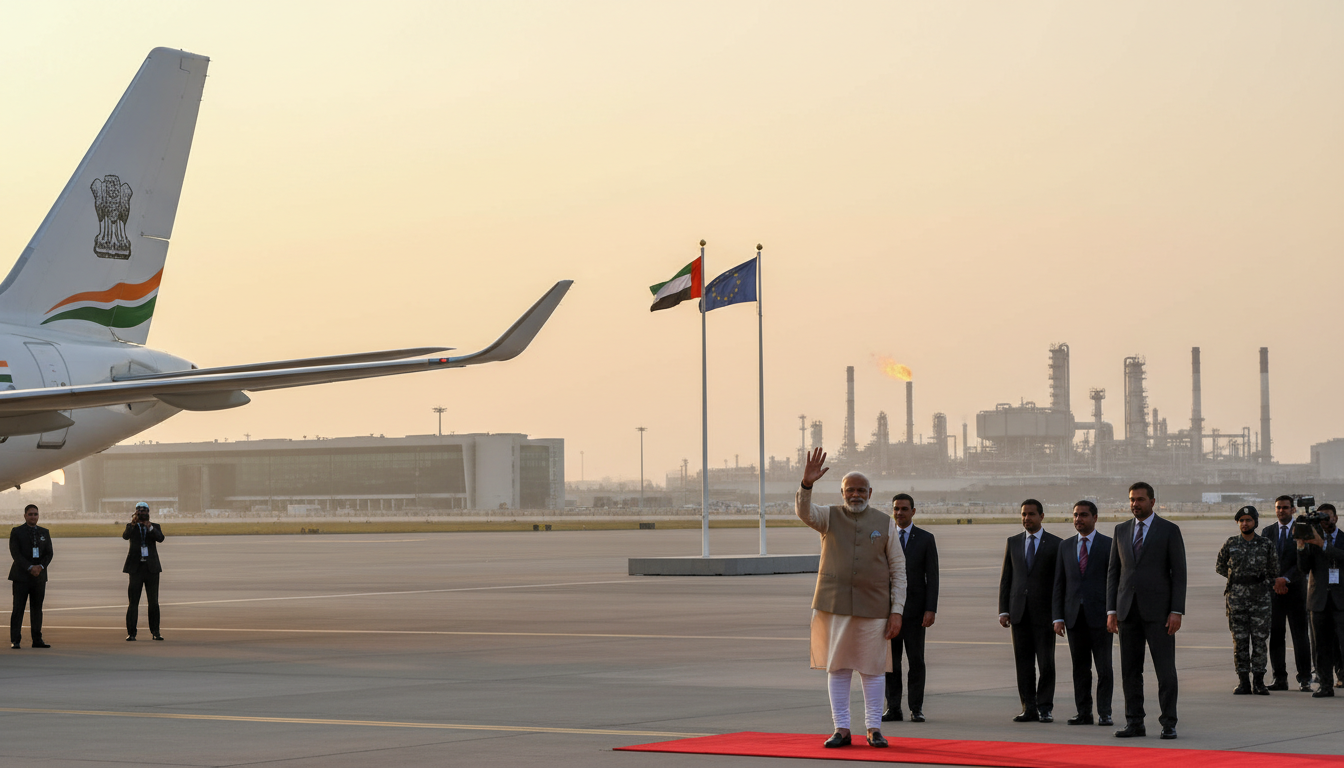
Modi begins UAE and Europe tour to secure energy supplies and bolster India’s global role
Prime Minister Narendra Modi departs on a multi-country tour starting Friday, May 15, 2026, visiting the UAE, Netherlands, Sweden, Norway and Italy to strengthen energy ties and advance India’s diplomatic standing.
Tour itinerary and partner countries
Prime Minister Narendra Modi’s trip begins on Friday, May 15, 2026, and covers five countries across the Middle East and Europe. The itinerary includes the United Arab Emirates followed by visits to the Netherlands, Sweden, Norway and Italy. Officials describe the sequence as a targeted effort to combine energy diplomacy with economic and strategic outreach.
The itinerary reflects India’s expanding global engagement as New Delhi seeks diversified partnerships. Each stop is expected to feature bilateral meetings with heads of state, business delegations and community events aimed at the Indian diaspora.
Primary focus on energy security
A central objective of the tour is to secure energy supplies for India’s growing economy. New Delhi faces an urgency to diversify sources of oil, gas, liquefied natural gas and low-carbon energy partnerships. The prime minister’s engagements are being framed around long-term contracts, investment in energy infrastructure and cooperation on renewable technologies.
Energy discussions are likely to range from traditional hydrocarbons with Gulf partners to clean energy and green hydrogen with European nations. The mixed itinerary signals a strategy to balance immediate supply needs with commitments to low-carbon transition.
Economic and trade agenda
Trade and investment will form a major pillar of the visits, with business delegations accompanying the prime minister to present opportunities in manufacturing, technology and green industries. India is seeking foreign direct investment, supply-chain ties and collaboration on critical minerals and semiconductors. Host countries stand to gain market access, investment opportunities and productive ties with a large consumer economy.
Commercial agreements and memoranda of understanding are expected to be discussed but not all outcomes are likely to be announced immediately. Officials have said the talks aim for durable, commercially viable frameworks rather than headline-driven one-off deals.
Diplomatic positioning amid global turbulence
The tour comes at a time of heightened geopolitical uncertainty, with energy markets and security dynamics in flux worldwide. New Delhi’s outreach is designed to raise India’s diplomatic profile while offering partners a stable market and a pragmatic foreign-policy partner. Modi’s meetings will aim to project India as a constructive actor capable of bridging economic and security interests.
Engagements in several European capitals also provide a platform for India to deepen cooperation on climate action, maritime security and technology governance. The cross-regional nature of the trip underscores New Delhi’s interest in a diversified foreign policy that reduces dependence on any single partner.
Domestic politics and international stature
Domestically, the tour offers Modi an opportunity to demonstrate leadership on the global stage ahead of future electoral cycles. A successful set of agreements or visible progress on energy and investment could strengthen the government’s economic credentials at home. The prime minister’s international profile has been a recurring theme of his tenure, and this tour is expected to be presented as further evidence of India’s global reach.
At the same time, critics caution against overpromising on tangible results and note the need to ensure that international pacts translate into benefits for Indian consumers and industries.
Logistics, diaspora ties and soft power
Each stop on the tour will include engagements with the Indian diaspora, which acts as a bridge for trade and cultural ties. Events with expatriate communities are likely to emphasize investment opportunities, people-to-people links and consular cooperation. Soft-power initiatives such as cultural showcases and institutional exchanges are expected to accompany official talks.
Logistically, the tour bundles countries with complementary strategic value, allowing New Delhi to pursue energy, technology and trade objectives in a compact schedule that maximizes ministerial and business participation.
India’s multi-stop visit to the UAE, Netherlands, Sweden, Norway and Italy combines urgent economic needs with longer-term diplomatic goals. By seeking immediate energy assurances alongside deeper cooperation on clean technology and investment, New Delhi is attempting to navigate a complex international landscape while consolidating its image as a major global actor.
Observers will watch closely for concrete announcements on energy contracts, investment pledges and cooperation frameworks that emerge from the meetings, and for indications of how the tour reshapes India’s ties with the Gulf and European capitals.

