
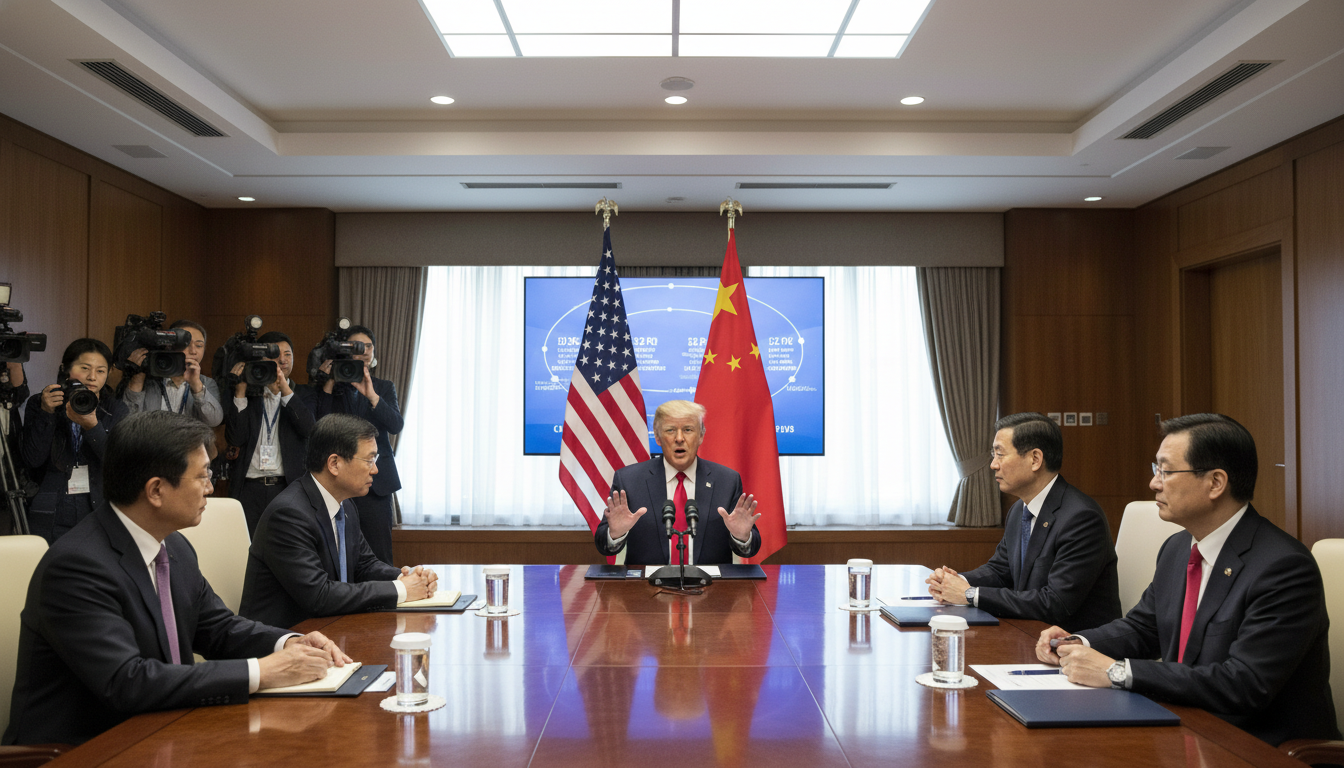
Trump Visit to China Concludes in Beijing After High-Stakes Talks with Xi
Trump’s visit to China in Beijing ends as leaders address Taiwan tensions, the Strait of Hormuz, trade pledges and security concerns in high-level talks.
President Donald Trump wrapped up a two-day trip to Beijing on Friday, calling the bilateral relationship “good and getting better” even as sharp differences on Taiwan, Iran and security issues persisted. The Trump visit to China featured meetings with Chinese leader Xi Jinping and senior officials, private conversations at the Great Hall of the People and scheduled time at Xi’s residence before the U.S. delegation departed. White House aides said the administration pressed for concrete commitments on trade purchases, energy and the flow of precursor chemicals tied to fentanyl production.
Trump frames U.S.-China ties as improving
Trump repeatedly described the meetings with Xi in upbeat terms, saying the Chinese leader congratulated him on his administration’s “tremendous successes” and praising the tone of their conversations. He used social media and a Fox News interview to underscore a personal rapport and to suggest substantive progress on commercial and strategic issues.
Chinese officials portrayed the talks as frank and constructive even as they emphasized Beijing’s core interests. Both sides stressed a desire for stable relations, but officials acknowledged that deep disagreements remain and will require further diplomacy.
Taiwan dispute remains a central flashpoint
Chinese leaders warned that missteps over Taiwan could escalate into severe confrontation, framing the island as a core interest that shapes Beijing’s broader approach to the United States. Xi reportedly cautioned Trump in private that tensions over Taiwan risked producing “clashes and even conflicts” if not handled carefully.
U.S. officials, including Secretary of State Marco Rubio, reiterated that American policy on Taiwan was unchanged and warned China against using force. Washington has announced an $11 billion arms package for Taiwan, though many shipments have not yet been fulfilled, and the Trump administration has pressed Taipei to invest in U.S. semiconductor factories and to increase defense spending.
Iran and the Strait of Hormuz were on the agenda
The leaders discussed the ongoing Iran conflict and the economic fallout from disruptions to shipping through the Strait of Hormuz. Trump told U.S. media that Xi privately expressed a desire to see the strait reopened and offered to help where possible, though the precise form of Chinese assistance remained unclear.
About one-fifth of global oil flows used the strait before the war, a fact officials cited to underline the economic stakes. Chinese officials openly opposed any tolls on vessels passing the waterway, and Beijing’s role as Iran’s largest trading partner gives it leverage even as China weighs its strategic ties to Tehran.
Trade pledges and potential commercial deals
Trade was a prominent thread of the visit, with the White House seeking commitments from China on agricultural and energy purchases and possible large-scale commercial contracts. Trump said Xi had indicated a Chinese intent to buy 200 Boeing jets, and U.S. officials pushed for increased Chinese purchases of soybeans and beef.
Both governments discussed establishing a Board of Trade to address bilateral commercial disputes and to expand investment opportunities. Chinese Premier Li Qiang met with members of the U.S. business delegation, including executives from major technology and automotive firms, and urged continued cooperation to stabilize economic ties.
Security concerns extend beyond geopolitics to narcotics
U.S. officials also raised national security concerns tied to the flow of precursor chemicals used to produce illicit fentanyl in Mexico, urging China to tighten controls and enforcement. The White House has identified Chinese-made precursors as a significant factor in a drug crisis that has devastated communities in the United States.
Beijing has shown limited public appetite for taking on direct responsibility for policing end-use beyond existing export and chemical controls. U.S. national security aides signaled they would continue to press Chinese counterparts for stronger measures following the visit.
Diplomatic balance and next steps
Trump and Xi scheduled follow-up engagements, and the two leaders spent additional time at Xi’s official residence before the U.S. president departed for Washington. Administration officials said they will monitor any Chinese commitments and seek details on purchase schedules, security cooperation and enforcement mechanisms.
Analysts noted the trip underscored a pragmatic approach: both capitals appear willing to compartmentalize disputes and pursue narrow areas of cooperation while preparing for continued strategic competition. The visit produced public gestures and tentative commercial promises, but many of the most consequential questions — from Taiwan deterrence to Iran’s future and control of chemical exports — will require further negotiation and verification.
The outcome of the trip left both sides claiming progress while keeping open the possibility of renewed friction, and Washington signaled it will press China for measurable actions in the weeks ahead.

