
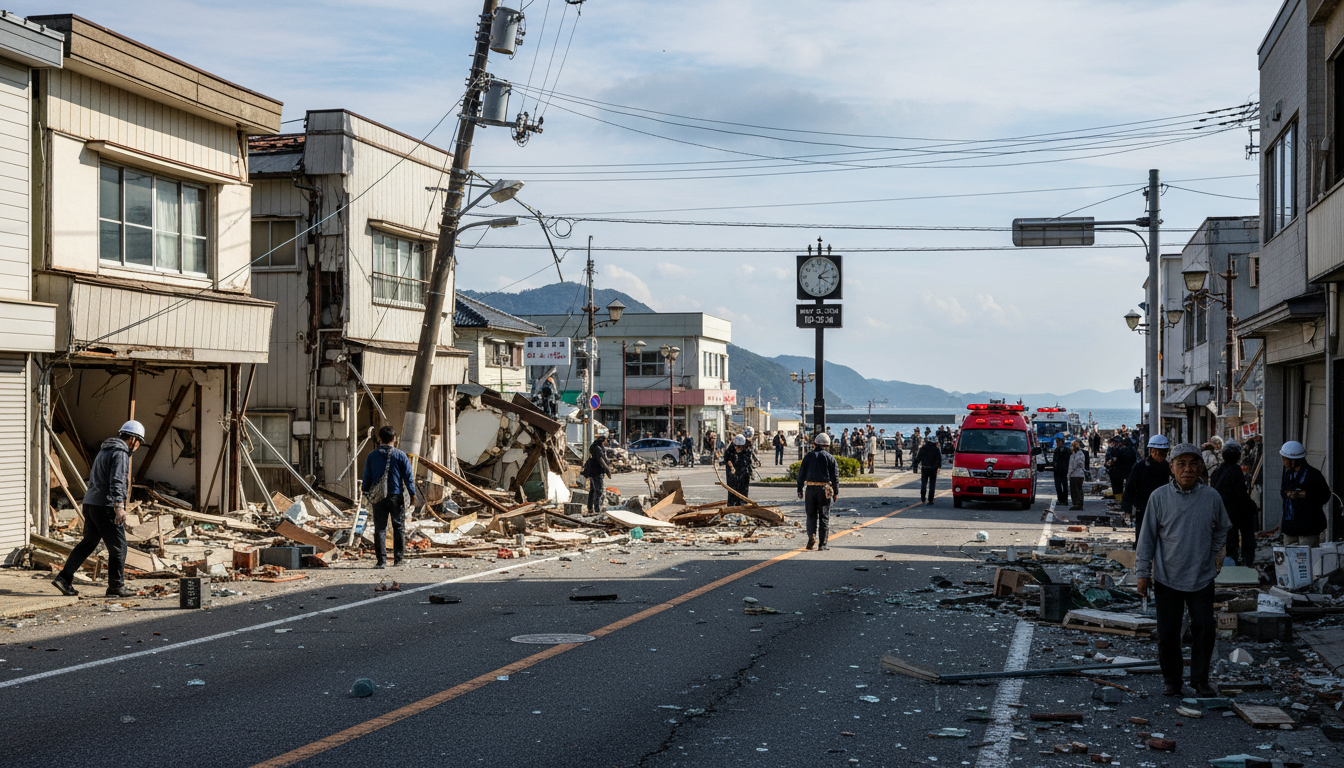
Miyagi earthquake at 8:22 p.m. on May 15: Shindo 5− in Ishinomaki, Tome and Osaki; no tsunami warning
Miyagi earthquake off the coast at 8:22 p.m. on May 15, 2026 shook Ishinomaki, Tome and Osaki (shindo 5−) and was felt across Tohoku; no tsunami warning.
The earthquake struck off the coast of Miyagi Prefecture at 8:22 p.m. Japan Standard Time on May 15, 2026, producing strong shaking in parts of northeastern Japan. The Miyagi earthquake registered seismic intensity shindo 5 lower in several municipalities, while tremors of varying strength were recorded across multiple prefectures.
Epicenter and timing of the quake
The tremor’s epicenter was located offshore of Miyagi Prefecture and occurred at 20:22 JST on May 15, 2026. The precise depth and magnitude were determined by regional seismic networks, which placed the strongest shaking close to the Miyagi coastline.
The timing coincided with evening hours when many residents were at home, prompting immediate reports of shaking and emergency checks by local authorities. Monitoring agencies continued to register smaller seismic activity in the hours after the initial event.
Municipalities reporting Shindo 5 lower
Ishinomaki, Tome and Osaki in Miyagi Prefecture recorded seismic intensity shindo 5 lower, indicating strong shaking capable of causing unsecured furniture to topple and light structural damage. Local officials in the affected cities began rapid assessments following the event.
Emergency services issued standard safety reminders to residents in these municipalities, advising them to check for hazards such as fallen objects, gas leaks and damage to infrastructure. Public shelters and municipal hotlines were put on alert as a precaution.
Wider regional shaking observed
Shindo 4 shaking was observed in parts of Iwate and Miyagi prefectures, including Morioka, Ofunato and Hanamaki in Iwate, and Kesennuma, Natori and Iwanuma in Miyagi. Weaker shaking, between shindo 1 and 3, was reported across a broad area spanning Tohoku, Kanto–Koshinetsu, Hokkaido and as far south as Shizuoka Prefecture.
Residents from multiple prefectures reported furniture movement, rattling windows and transient power fluctuations in immediate aftermath. Transit operators and utility companies monitored lines and systems for interruptions while prioritizing safety checks at key facilities.
Tsunami advisory and official notifications
Authorities reported that there was no tsunami warning or advisory issued in connection with the quake, and no tsunami danger was expected for coastal areas. Officials emphasized that the absence of a tsunami alert does not eliminate the need for caution near the shoreline, especially in areas prone to local sea disturbances.
Regional disaster-management centers continued to disseminate updates through municipal channels and broadcast media to ensure residents received verified information. Emergency hotlines and municipal websites remained active for damage reports and guidance.
Infrastructure checks and service impact
Following the earthquake, transportation and utility operators conducted inspections of rail lines, roadways and power networks to identify any immediate damage. Preliminary checks by service providers focused on ensuring the safety of bridges, tunnels and rail tracks in zones that experienced stronger shaking.
While some commuters reported delays on local routes, there were no widespread reports of major infrastructure failure at the time of initial reporting. Local governments urged residents to report visible damage and to follow instructions from municipal offices regarding safety and utility restoration.
Public guidance and preparedness reminders
Officials advised residents in affected and neighboring areas to remain alert for possible aftershocks, secure loose items, and check gas valves and electrical appliances before resuming normal activities. Citizens were reminded to keep emergency kits accessible, confirm evacuation routes and follow municipal advisories for sheltering if needed.
Community leaders and neighborhood associations were encouraged to check on elderly and vulnerable residents and to coordinate support for those who might need assistance. Authorities said updates would be provided as damage surveys and technical analyses proceeded.
Rescue and inspection teams continued to work in the strongest-hit municipalities to assess structural safety and to prioritize any necessary immediate responses.
In the hours following the event, regional monitoring agencies and local governments maintained surveillance for aftershocks and released information through official channels to keep the public informed and to coordinate response efforts.

