
LDP Prioritizes Adopting Male-Line Descendants in Talks on Imperial Succession
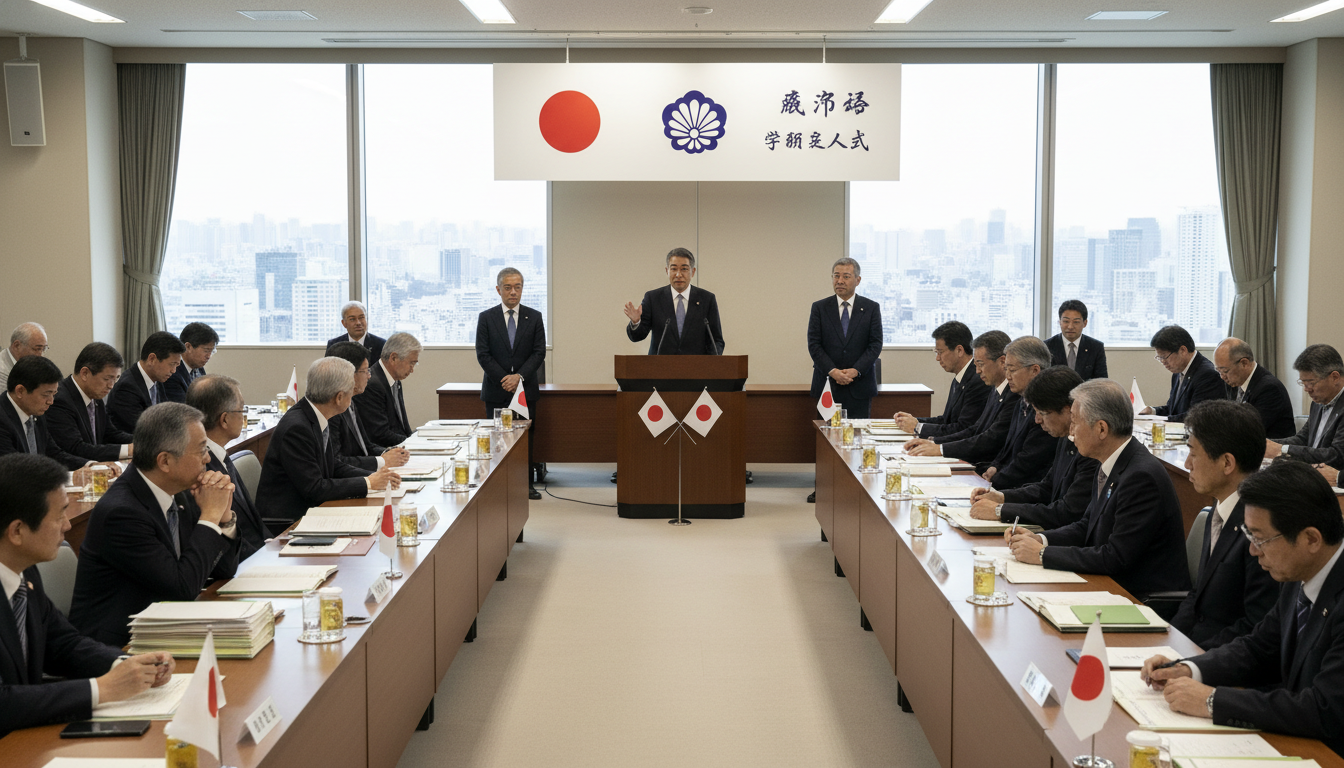
May 15 talks on imperial succession: party leaders debated options while the LDP prioritized adopting male-line descendants from former imperial branches.
Japan’s political parties met at the House Speaker’s official residence on May 15 to discuss measures to secure a stable imperial succession, with the ruling Liberal Democratic Party (LDP) designating the adoption of male-line descendants from former imperial branches as its first priority. Party representatives expressed shared concern about the shrinking number of Imperial Family members and the need to resolve succession uncertainties. The meeting underscored both the political sensitivity of imperial succession and the narrow window for legislative action.
Meeting at the Speaker’s residence
Representatives from multiple parties convened at the official residence of the House Speaker to review proposals and seek areas of agreement. The session was led by the presiding officers of both chambers, who described the talks as a concerted effort to narrow differences ahead of potential legislation. Officials said the goal was to assess which options could command sufficient political support to be advanced during the current Diet session.
Attendees acknowledged the demographic pressures facing the Imperial Family and emphasized urgency, but they also noted deep differences on constitutional, legal and symbolic questions. Several parties signaled a willingness to continue negotiations through working groups and expert hearings before any formal bill is drafted.
LDP backs restoration of male-line members as priority
The LDP informed other parties that, as a matter of priority, it favors bringing male-line descendants of former imperial branches back into the Imperial Family by recognizing them as imperial members through adoption or equivalent legal means. Proponents argue this approach preserves the male-line lineage that has guided imperial succession for centuries and addresses the most immediate shortage of male heirs.
Party representatives said the LDP’s stance reflects outreach to conservative voters and long-standing views within sections of the party that resist measures seen as breaking male-line continuity. Observers and LDP officials signaled that the proposal would be refined in consultation with legal scholars to clarify implementation and constitutional compatibility.
Earlier support for married female retainment and the shift
When deliberations began in May 2024, a widely discussed compromise was to allow female members of the Imperial Family to retain their imperial status after marrying commoners. That measure was viewed by some participants as a pragmatic way to sustain the family’s numbers without redefining succession principles. In August 2024, then-House Speaker Fukushiro Nukaga publicly noted there appeared to be a broad, if tentative, consensus in favor of that option.
However, the married-female retainment proposal generated unease among conservative lawmakers and segments of the public who feared it could be a step toward accepting a female-line emperor. That political calculus has helped shift emphasis back toward options that maintain agnatic (male-line) continuity, according to multiple party sources.
Conservative pressure and internal party dynamics
Conservative factions within and around the LDP have exerted sustained pressure to prioritize male-line solutions, framing them as essential to preserving tradition and the symbolic continuity of the monarchy. Senior party figures and influential backers have been cited by participants as shaping the LDP’s public posture on the issue. Those dynamics make compromise politically delicate for the ruling coalition.
At the same time, some LDP legislators counseled caution, saying that any proposal must withstand public scrutiny and legal review. Internal debate is likely to focus on the mechanics of restoring former imperial branches, the legal status accorded to any returned members, and how such changes would be received by the Imperial Household itself.
Path to legislation and outstanding obstacles
Ruling coalition officials said they aim to advance revisions to the Imperial Household Law during the current Diet session, asserting that major points have been aired and are ready for resolution. Proponents argue that a clear legislative timeline is needed to avoid succession crises as the existing pool of imperial members ages. The legislature faces competing pressures to act swiftly while ensuring broad political and public consensus.
Yet significant obstacles remain: constitutional interpretation, the preferences of the Imperial Household, and public opinion all weigh on the process. Legal experts will be asked to examine whether restoring former imperial branches through adoption or other measures is consistent with the postwar constitutional framework and existing family law.
Emboldening a course of action on imperial succession will require political will, painstaking legal work and, likely, outreach to the public to explain the rationale and implications. The coming weeks are expected to see working-group sessions, expert testimony and further interparty negotiation as policymakers try to translate competing priorities into an actionable bill.

