
Sanja Matsuri in Asakusa: Essential Guide to the Third-Weekend May Festival
Sanja Matsuri in Asakusa: essential guide to the third-weekend May festival—schedule, mikoshi rituals, crowd tips, transport info and visitor etiquette.
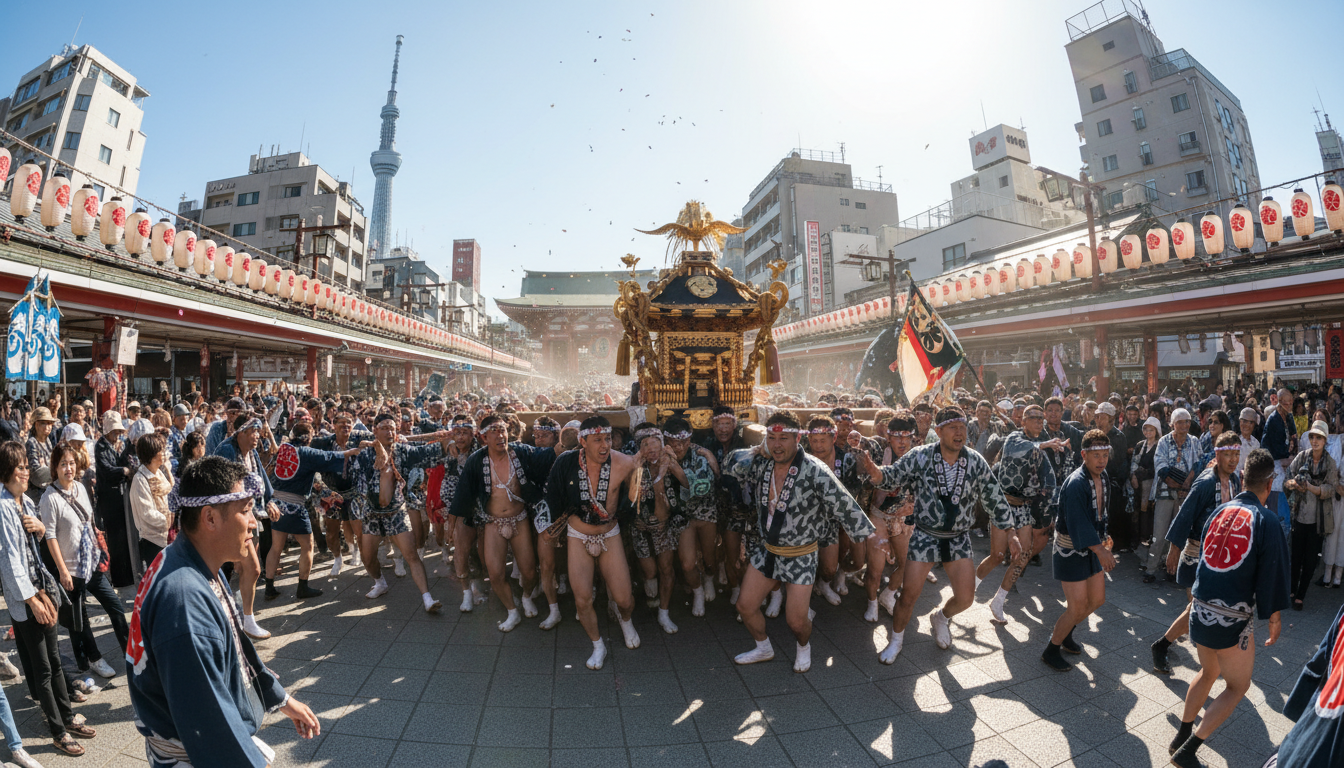
Sanja Matsuri drew large crowds to Asakusa this year as one of Tokyo’s most energetic Shinto festivals, bringing ritual processions, mikoshi parades and street performances across the district. The Sanja Matsuri, held annually over the third weekend of May, is known for its vigorous mikoshi carrying and draws millions of spectators to the area around Sensōji and Asakusa Shrine. Organizers staged multi-day events including processions, shrine dances and neighborhood mikoshi circuits that concentrate activity from morning until late afternoon on the festival’s busiest day. Local authorities, shrine officials and community groups coordinated to manage public safety, transport restrictions and crowd flow through the historic streets.
Sanja Matsuri draws visitors to Asakusa
Sanja Matsuri is counted among Tokyo’s three great Shinto festivals and serves as a focal point for religious observance and popular celebration in Asakusa. The festival centers on Asakusa Shrine and the surrounding neighborhood, where portable shrines and traditional floats move through routes that have been used for generations. For many attendees the festival is both a religious rite and a communal spectacle, combining ritual, performance and the physical intensity of mikoshi carrying. The event’s reputation for rowdy, high-energy displays has made it a major draw for domestic and international visitors alike.
Sanja Matsuri typically attracts an estimated two million spectators across its multi-day schedule, with the final day usually the most crowded and lively. That peak day often features extended hours of mikoshi circuits that thread through narrow streets, commercial arcades and temple gates, concentrating both participants and spectators. The density of people during those hours changes the character of the neighborhood, imposing traffic regulations and temporary closures around major access points such as Asakusa Station and Nakamise Street. Visitors should expect a festival atmosphere that alternates between ritual solemnity and boisterous celebration.
Festival program and daily schedule
The Sanja Matsuri program runs across three main days, beginning with an opening procession and culminating in all-day mikoshi parades on the final day. Early in the festival a longer procession departs from areas north of Sensōji, moves past Asakusa Station and proceeds along Nakamise and adjacent streets to Asakusa Shrine. That procession includes dancers, musicians, and elaborately decorated floats that mark the ceremonial opening and set the tone for subsequent days. Shrine dances and performances are scheduled throughout the weekend, with certain time slots dedicated to ritual observances at Asakusa Shrine.
On the middle day, local neighborhood groups bring forth their community mikoshi for parading and shorter circuits that keep crowds concentrated around neighborhood crossroads. Performances by shrine maidens and taiko drumming typically feature in afternoon and early evening programs, adding staged cultural displays to the street-level activity. The final day begins early and runs through the afternoon; mikoshi may begin their rounds before dawn and continue into the late afternoon, with ceremonial stops at key shrine locations. Exact start times and route details are released by shrine and municipal sources ahead of the festival each year, and visitors should consult official schedules for the current year to plan their visit.
Mikoshi carrying and the competitive rituals
The mikoshi—portable Shinto shrines carried on wooden poles—are the central symbol and spectacle of Sanja Matsuri, and the manner of their handling sets this festival apart. Across Asakusa, teams of participants shoulder the heavy, lacquered mikoshi and move them through streets in rhythmic, often forceful motion intended to amuse the gods and energize the community. At Sanja Matsuri the carrying style is especially vigorous, with bearers chanting and coordinating shouts while accelerating, tilting and jostling the shrine. This energetic handling is often described as playful yet intense, and it requires significant physical strength and local skill.
A contested element of the festival is the confrontational aspect sometimes seen when teams bring mikoshi into proximity with one another. In certain areas, bearers attempt to maneuver their mikoshi in ways that challenge other teams, creating moments of near-collision and dramatic movement. Although shrine officials and police discourage dangerous behavior, these competitive episodes persist as a traditional, crowd-rousing element. Visitors should respect the space around mikoshi and avoid positioning themselves in front of moving shrines, as sudden shifts can produce unpredictable motion and potential injury.
Crowd control, transport changes and safety measures
Given the volume of visitors, city authorities put in place extensive crowd control and temporary traffic regulations during Sanja Matsuri’s busiest hours. Major access roads and approaches to Sensōji and Asakusa Shrine are often closed to private vehicles, and designated pedestrian corridors are established to channel foot traffic safely. Public transport hubs such as Asakusa Station experience heavier throughput and may operate controlled entry or alternative routing to ease congestion. Shoppers and commuters should expect delays and plan extra time for travel on festival days.
Safety measures include visible police patrols, volunteer marshals from local neighborhood associations, and temporary medical stations at key junctions. Festival signage, barriers and loudspeaker announcements help direct crowds and advise on safe viewing points, particularly where mikoshi routes narrow. Visitors are advised to carry identification and basic supplies, remain aware of announcements, and maintain situational awareness in dense areas. For those with mobility concerns, the festival’s crowds and uneven surfaces can make navigation difficult, so alternative viewing options or quieter days of the program are recommended.
Practical visitor tips and cultural etiquette
Visitors to Sanja Matsuri should balance the desire to view lively processions with respect for shrine customs and local residents who host the event. Appropriate festival conduct includes refraining from touching religious objects, avoiding loud or disrespectful behavior within shrine precincts, and observing requests made by shrine staff or neighborhood marshals. Photographing the festival is common, but visitors should be mindful when shooting portraits of participants or sacred rites and ask for permission when possible. When mikoshi are passing, keep a safe distance and resist the urge to step into the procession path for a closer shot.
To improve the festival experience, plan arrival times strategically: early mornings or the first day’s procession can offer clearer sightlines, while the busiest final day delivers the fullest spectacle but also the greatest crowding. Bring compact, secure storage for valuables, stay hydrated, and dress for warm weather and extended standing. If you prefer a less intense visit, seek vantage points on adjacent side streets, elevated steps, or cafés that face the route, and consider rejoining the procession in calmer neighborhoods further from Sensōji. Carrying modest cash helps for quick purchases from food stalls, and visitors should prepare for cash-only vendors in some areas.
Local economy, vendors and community participation
Sanja Matsuri is not only a religious and cultural event but also a significant economic moment for Asakusa’s businesses, vendors and artisans. Street stalls line festival routes selling traditional festival foods, souvenirs and local crafts, generating concentrated sales for small merchants over the weekend. Restaurants, ryokan and retail shops in the neighborhood see increased patronage, and many establishments adjust hours or menus to accommodate festival crowds. Neighborhood associations that maintain local mikoshi play a central role in organizing participants and coordinating festival logistics, reinforcing ties between commerce and community celebration.
The festival’s influx of visitors prompts both short-term commercial gains and a complex set of logistical challenges for residents. Trash management, noise and temporary shopfront changes are typical concerns addressed by municipal services and volunteer groups. Local businesses often benefit from cooperative planning that schedules deliveries and staffing around expected peak times, minimizing disruption while maximizing revenue. For visitors who wish to support the neighborhood directly, patronizing family-run stalls and nearby small shops provides immediate benefit to the communities hosting the festival.
Sanja Matsuri remains a defining seasonal event in Tokyo’s cultural calendar, offering a concentrated display of ritual, music and communal energy in Asakusa. Whether attending for religious observance, cultural interest or photographic opportunity, visitors should prepare for dense crowds and energetic processions centered on the mikoshi. Respecting local customs, following official guidance on routes and timing, and choosing appropriate viewing locations will improve both personal safety and the experience of other attendees. For a memorable visit, plan ahead, arrive early on less-crowded days if possible, and allow sufficient time to navigate transport adjustments around Asakusa Shrine and Sensōji.
The festival continues to evolve each year, but its core elements—the mikoshi, neighborhood participation and shrine ceremonies—remain constant, sustaining Sanja Matsuri’s role as a living tradition in Tokyo.

