
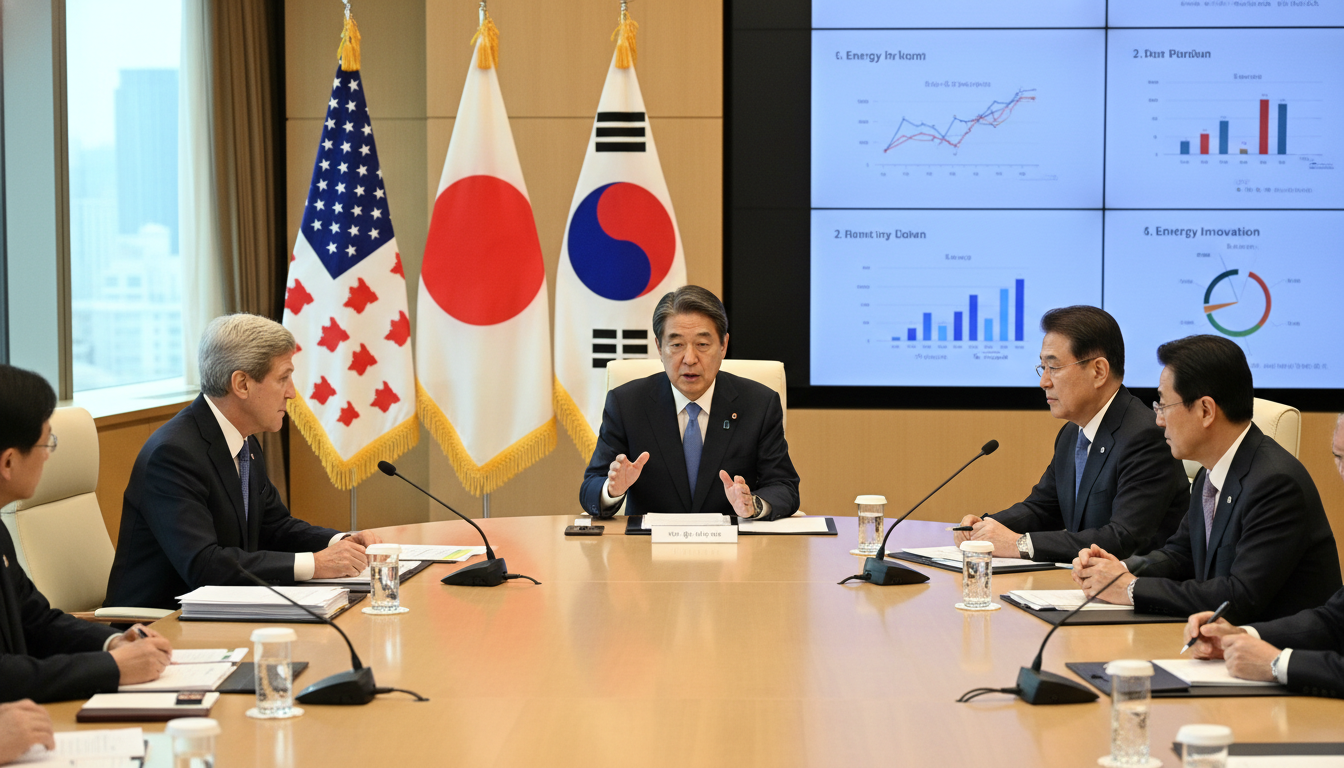
Japan-South Korea summit in Andong focuses on energy security, AI and trilateral ties
May 19, 2026 Japan-South Korea summit in Andong saw leaders pledge deeper cooperation on energy security, AI and trilateral ties with the United States.
Japan-South Korea summit in Andong on May 19, 2026 produced a pragmatic set of commitments as Prime Minister Sanae Takaichi and President Lee Jae Myung agreed to deepen cooperation on energy security, artificial intelligence and trilateral coordination with the United States.
The meeting, their highest-level encounter since tensions eased earlier this year, signalled renewed momentum in a relationship long strained by historical and diplomatic disputes.
Officials said the talks sought to convert strategic alignment into concrete workstreams while managing domestic political sensitivities in both capitals.
Takaichi and Lee pledge joint work on energy security
The leaders made energy security a headline priority at the Japan-South Korea summit, citing global volatility in fuel markets and the need to stabilize supply chains.
Both governments agreed to accelerate information-sharing on energy infrastructure risks and to explore coordinated responses to disruptions in LNG and electricity markets.
Officials described the measures as aimed at reducing short-term vulnerability while building more resilient, long-term cooperation on clean energy transitions.
Artificial intelligence cooperation to include research and standards
Artificial intelligence emerged as a central theme during the talks, with Tokyo and Seoul committing to strengthen collaborative research and ethical standards.
Leaders agreed to establish channels for policy coordination on AI governance and to encourage partnerships between universities, private tech firms and government labs.
The Japan-South Korea summit framing for AI cooperation emphasised interoperability, safe deployment in industry and mechanisms to guard against misuse in critical sectors.
Trilateral coordination with the United States reaffirmed
A key outcome of the Japan-South Korea summit was a pledge to deepen trilateral coordination with the United States on regional security and economic challenges.
Takaichi and Lee stressed the importance of aligning policies with Washington to address shared threats and to support supply chain resilience across the Indo-Pacific.
Officials indicated further trilateral meetings and working-level exchanges will be scheduled to translate broad commitments into operational plans.
Economic drivers and trade-related cooperation discussed
Economic considerations underpinned much of the summit’s agenda, with both leaders noting the benefits of closer industry and trade ties.
The discussions covered trade facilitation, semiconductor supply-chain risk mitigation and mutual support for investment in strategic technologies.
While no new trade accords were announced, the Japan-South Korea summit produced a commitment to deepen government-to-government and business-to-business dialogues to reduce friction.
Regional security context shaped the talks
Security dynamics in Northeast Asia provided the backdrop for the summit, prompting candid exchanges on deterrence and crisis management.
Though specifics on military coordination were limited, both leaders acknowledged the need for clearer communication channels to prevent escalation in emergencies.
The summit’s public emphasis on trilateral cooperation with the United States reflected concerns about missile proliferation and broader strategic competition in the region.
Implementation plan and follow-up mechanisms outlined
To ensure the Japan-South Korea summit’s commitments move beyond statements, officials detailed plans for working groups and timelines.
Ministries responsible for energy, technology and foreign affairs will convene joint task forces to draft concrete projects and monitor progress.
Leaders set a timetable for follow-up meetings and directed officials to report back on deliverables, signaling an intent to hold both sides accountable.
The summit in Andong also carried symbolic weight as a demonstration that Tokyo and Seoul can prioritize shared interests despite lingering historical sensitivities.
Analysts noted that practical cooperation on energy and AI offers low-risk avenues for building trust while delivering tangible benefits to citizens and industries.
With working groups now launched, the effectiveness of the Japan-South Korea summit will be measured by how quickly commitments translate into coordinated policies and operational cooperation.

