
Tokyo events in June 2026: festivals, hydrangeas, fireflies and Pride
June events in Tokyo 2026 bring a measured lull before high summer, offering a compact calendar of traditional matsuri, Pride gatherings, seasonal blooms and night-time spectacles across the city and neighboring ports. This guide consolidates the major June events in Tokyo 2026 — dates, highlights and practical advice — so readers can plan visits to processions at Hie Shrine, hydrangea paths, firefly viewings, Pride activities at Yoyogi Park and more.
Sanno Festival returns to Hie Shrine (Jun 7–17, 2026)
The Sanno Festival, one of Tokyo’s three major Edo-era festivals, stages daily performances at Hie Shrine with its principal procession on the festival’s opening Friday. The event is notable for its ornate floats, musical ensembles and elaborately dressed participants winding through central Tokyo neighborhoods.
Because the Sanno procession is staged only in even-numbered years, crowds tend to be larger and the atmosphere particularly ceremonial when it occurs. Evening Bon dance events in the second half of the festival invite public participation in circular dances around a raised stage, welcoming visitors of any experience level to join.
Spectators should allow extra time to reach Nagatachō and Akasaka, where police and event staff operate crowd-control routes for the march. Expect road closures and temporary platforming; viewing from designated points is recommended for both safety and photo opportunities.
Torigoe Festival features the Senkan-Mikoshi (Jun 6–9, 2026)
The Torigoe Festival in Taitō showcases a more compact, intense neighborhood celebration anchored by the Senkan-Mikoshi, a four-ton portable shrine that is widely regarded as Tokyo’s largest. The procession begins in the early morning on the main day and continues into the evening, transforming the area with lantern-lit spectacle.
Night-time activity is a highlight, when the mikoshi is hung with lanterns for the miya-iri return ceremony, a visually dramatic moment that draws enthusiastic local crowds. The festival combines rowdy, communal procession energy with intimate shrine rituals, providing a contrast to the larger, more formal Sanno event.
Visitors attending the Torigoe Festival should arrive early on the main day, wear comfortable shoes for standing, and respect the carrying teams’ space when the mikoshi is in motion. Photography is common, but be mindful of participants and prioritize unobstructed movement for the shrine bearers.
Tsukiji Lion Dance and Oku Asakusa Bon Odori anchor neighborhood summer kicks (Jun 10–14; Jun 27)
The Tsukiji Lion Dance Festival centers on Namiyoke Inari Shrine and features a parade of oversized lion heads carried alongside portable shrines, creating a theatrical procession unique among Tokyo’s June matsuri. The event builds intensity toward the Sunday program, with street stalls and a compact festival atmosphere beginning on Friday to sustain momentum through the weekend.
Later in the month, Oku Asakusa stages an early Bon Odori on June 27 in Sumida Park, a traditional community dance that anticipates the wider summer bon season. Participants and onlookers form a circle around a decorated yagura scaffold, with taiko accompaniment and a welcoming format that encourages visitors to participate.
Both events illustrate how June in Tokyo blends shrine ceremonies with neighborhood entertainments; they are smaller-scale than Tokyo’s largest matsuri but offer authentic, accessible encounters with local festival culture. For best experience, combine daytime shrine visits with evening attendance to see illuminated floats and lantern displays.
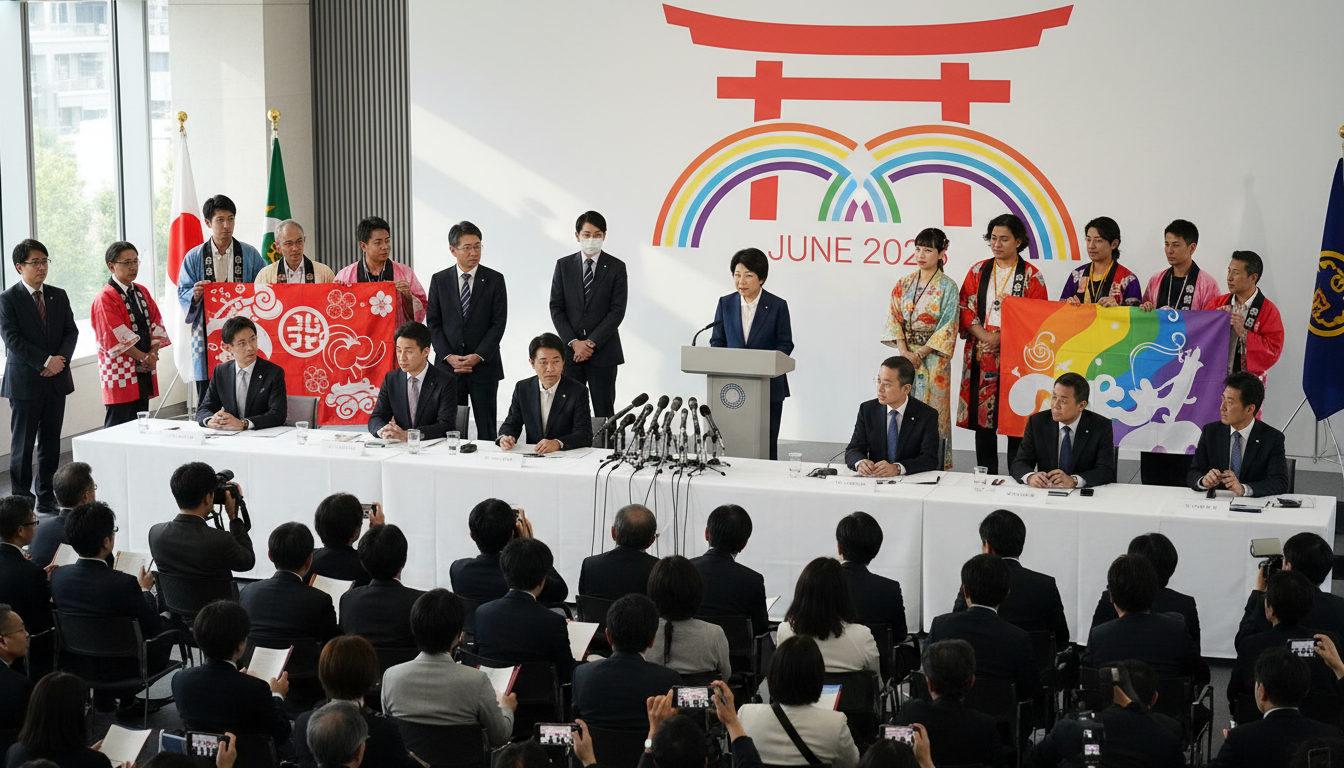
Tokyo Pride programs and parade at Yoyogi Park (Jun 6–7, 2026)
Tokyo Pride’s main events are scheduled for June 6–7 at Yoyogi Park Events Square, with the parade slated to start at noon on Sunday the 7th and proceed through Shibuya. The program this year expands beyond the march to include Youth Pride gatherings, a Queer Art Exhibition and a Human Rights Conference, reflecting a broadened civic and cultural agenda.
The Yoyogi Park festival space typically hosts booths, stage performances and community groups, offering opportunities to engage with advocacy organizations and cultural vendors. Parade routes around Shibuya attract large public crowds and require early arrival for good vantage points, particularly for families and international visitors.
Attendees should prepare for strong pedestrian flow and take advantage of localized amenities such as temporary first-aid stations and information tents. Organizers commonly advise arriving by public transport and carrying minimal baggage to ease movement through crowded streets.
Hydrangea and firefly season draws day-trippers and local walkers (throughout June)
June’s wet season is the traditional time to view ajisai hydrangeas, with several notable festivals and temple walks staged across the city and nearby day-trip destinations. Highlights include the Bunkyō Hydrangea Festival, which concentrates some 3,000 blooms around Hakusan Shrine and Hakusan Park, and Takahata Fudōson’s month-long displays that present roughly 7,500 flowers in expansive temple grounds.
Beyond central Tokyo, popular routes include Kamakura’s Hasedera hydrangea path and Odawara Castle’s combined hydrangea and iris presentations, while the Hakone Hydrangea Train offers illuminated views on a mountain railway later in June. These floral events are well suited to photographers and families seeking outdoor strolls in cooler, rain-softened conditions.
Complementing the floral season, June and into early July are peak months for firefly viewings in less urbanized green spaces. Notable programs around the metropolitan area offer evening displays, with curated viewing spots at hotels, parks and riverside stretches where controlled, low-light conditions reveal the bioluminescent insects. Because many firefly sites lie outside central wards, visitors should plan transit and parking ahead.
Candle Night at Zōjōji and Yokohama Port Festival open summer evenings (Jun 19; Jun 1–2)
Candle Night at Zōjōji Temple near Tokyo Tower is timed with the summer solstice and invites attendees to observe a temporary blackout from around 6:00 p.m. to 8:00 p.m. while hundreds of candles are lit in the temple grounds to promote environmental reflection. The event typically features food stalls and modest evening programming, with the major candle lighting slated to begin in the early evening.
The Yokohama Port Festival on June 1–2 serves as the largest public event in neighboring Yokohama, combining ship boarding opportunities, live performances, and fireworks presentations that draw visitors from Tokyo and Kanagawa. The port festival emphasizes maritime culture and community engagement, and it is often paired with waterfront dining and summer entertainment.
Both Candle Night and the Yokohama program demonstrate how early summer events use evening hours to showcase light-based attractions, from candlelit temple precincts to harbor fireworks. Attendees should budget for travel time between central Tokyo and bayside venues, and verify access points for water-front viewing.
Practical guidance for attending June events in Tokyo 2026
June in Tokyo can be humid and rainy as the seasonal rainy period, or tsuyu, becomes established, so visitors are advised to carry compact rain gear and breathable clothing. Many festivals proceed in light rain, but severe weather can prompt schedule changes or cancellation; checking official event notices on the morning of attendance is prudent.
Crowds cluster around processions, shrine precincts and park stages, and transport hubs nearest event sites will be busier than usual; plan to leave earlier than usual and use IC cards for seamless transit. Cash remains useful at street stalls and local vendors, while medical stations and lost-and-found points are commonly provided at larger gatherings.
Etiquette at shrine events is important: bow briefly, observe directional flow near altars, and avoid obstructing processions or shrine bearers. For photography, be mindful of private rituals and participants’ privacy, and yield space when carrying teams are navigating tight streets.
Visitor safety, accessibility and neighborhood impact
Event organizers typically coordinate with metropolitan police, ward offices and public transport operators to manage safety and crowd flow, but attendees should maintain personal awareness and follow staff instructions. Hydration is essential in humid weather; refillable water bottles and sunscreen for daytime events will improve comfort.
Accessibility accommodations vary by venue; larger festival sites often provide accessible routes and facilities, while smaller neighborhood festivals may present narrow streets or uneven surfaces. Travelers with mobility considerations should consult event information in advance and arrive early to secure accessible viewing areas.
Neighborhoods hosting matsuri and park festivals routinely manage noise, food waste and temporary closures; visitors are asked to respect local residents by cleaning up after themselves and adhering to designated smoking and disposal areas. Responsible behavior helps sustain community partnerships that make these events possible each year.
June in Tokyo offers a concentrated set of cultural and seasonal experiences that differ in scale and mood, from ceremonial Sanno processions to intimate firefly evenings and Pride gatherings. Whether attending a major procession or a local hydrangea walk, advance planning, weather awareness and respect for local customs will ensure a smoother visit.
As always, readers planning to attend specific events should confirm dates and program details with official organizers before traveling, and consider combining festival visits with nearby cultural sites to make the most of early-summer days in and around Tokyo.

