
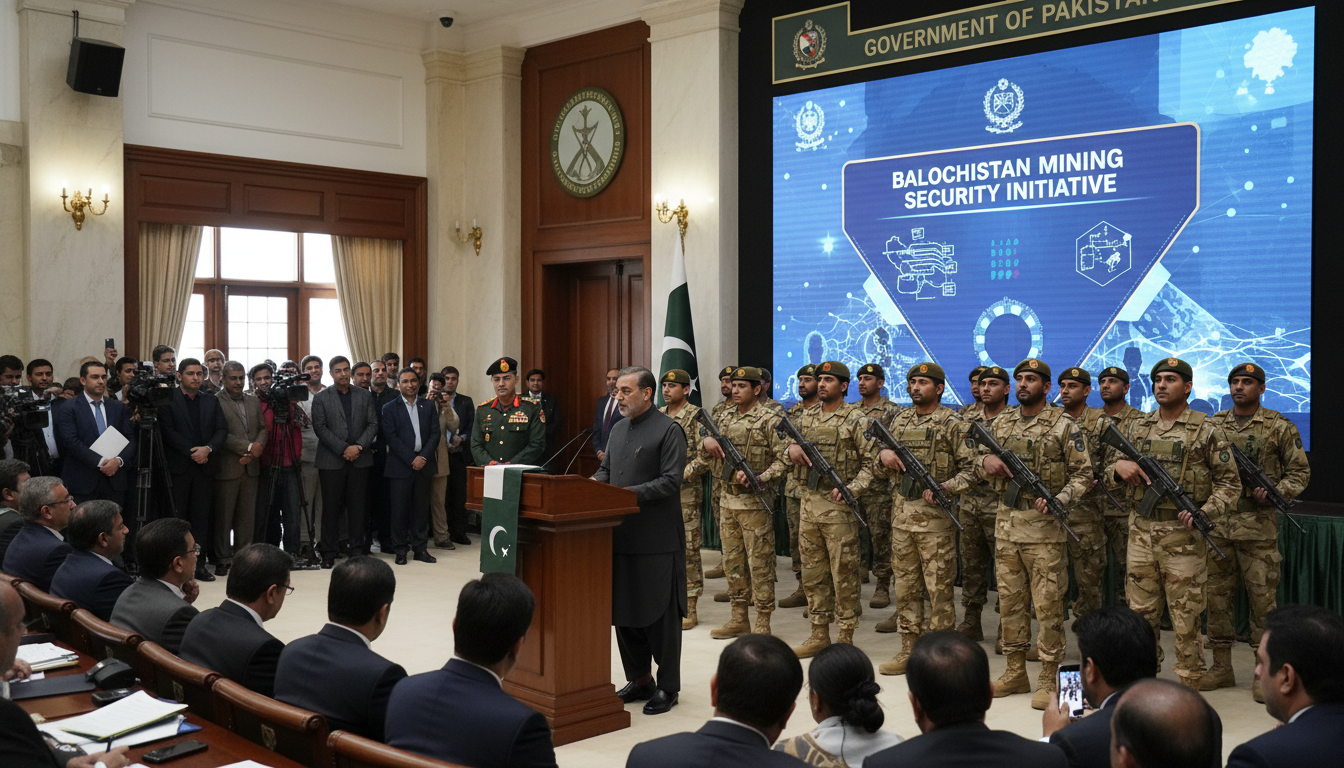
Pakistan to Create Balochistan Security Corridor, Form Paramilitary Force to Protect Mineral Investments
Pakistan plans a dedicated Balochistan security corridor and new paramilitary force to safeguard mining projects and reassure investors amid militant threats.
Government outlines new paramilitary unit
Pakistan announced plans to form a new paramilitary force specifically tasked with protecting mineral resources in its western province of Balochistan. The initiative is framed as the establishment of a dedicated security corridor intended to secure extraction sites, transport routes and foreign investment projects against militant attacks. Officials say the move aims to address persistent security concerns that have deterred global and domestic investors in the mining sector.
Security rationale behind the corridor
Islamabad has argued that a focused security arrangement is necessary because conventional deployments have not produced the stability investors require for long-term projects. By concentrating forces and creating protected transit lanes, authorities intend to reduce the risk of assaults, sabotage and hostage-taking along supply chains. The plan reflects a belief among policymakers that tangible security guarantees are a precondition for unlocking the province’s mineral potential.
Threats to mining projects in Balochistan
Balochistan has long been vulnerable to insurgent groups and militant networks that have targeted infrastructure and personnel over the past decade. Attacks on convoys, security compounds and contractors have periodically interrupted exploration and production activities, prompting companies to reassess operational timetables and insurance costs. The new force is a direct response to those security shocks and to the broader perception of risk that has kept some investors on the sidelines.
Operational scope and command structure
According to government statements, the paramilitary unit will operate along a set of designated routes and at key sites, coordinating with military and provincial law-enforcement bodies. Command arrangements are expected to combine federal oversight with on-the-ground operational control, though details on force size, deployment timelines and rules of engagement remain to be finalized. Officials have emphasized that the unit’s mandate will focus on protection of infrastructure rather than on civil administration or policing.
Economic stakes and investor confidence
The announcement underscores the economic importance Islamabad places on reviving mineral-sector investment, both to attract foreign capital and to boost domestic revenue streams. Authorities see secure, predictable conditions as essential for large-scale exploration, mining contracts and the development of ancillary industries such as transport and processing. By signaling a stronger security posture, Pakistan aims to lower perceived sovereign risk and to encourage international firms to resume or expand activity in the province.
Local dynamics and political sensitivities
The proposed security corridor and new force could heighten tensions between federal and provincial actors, as well as among local communities who have long protested perceived marginalization and environmental impacts from resource projects. Provincial leaders and tribal elders will likely demand consultation and assurances on revenue sharing, local employment and safeguards for civilian areas. Balancing security objectives with community engagement will be critical to avoiding new grievances that could undermine the very stability the force is meant to provide.
Logistical and legal challenges ahead
Implementing a dedicated paramilitary deployment in rugged, sparsely populated terrain presents logistical hurdles, including supply lines, communications infrastructure and sustained personnel rotation. Legal frameworks governing jurisdiction, detention and use of force will need clarification to prevent jurisdictional disputes and to ensure operations conform with national laws. Procurement of equipment and training, along with coordination with police and intelligence services, will determine how effectively the corridor functions in practice.
The government’s proposal marks a significant policy shift that prioritizes security as the principal lever for unlocking Balochistan’s mineral economy, but translating the plan into durable investor confidence will require transparent timelines, robust oversight and meaningful engagement with local stakeholders.

