
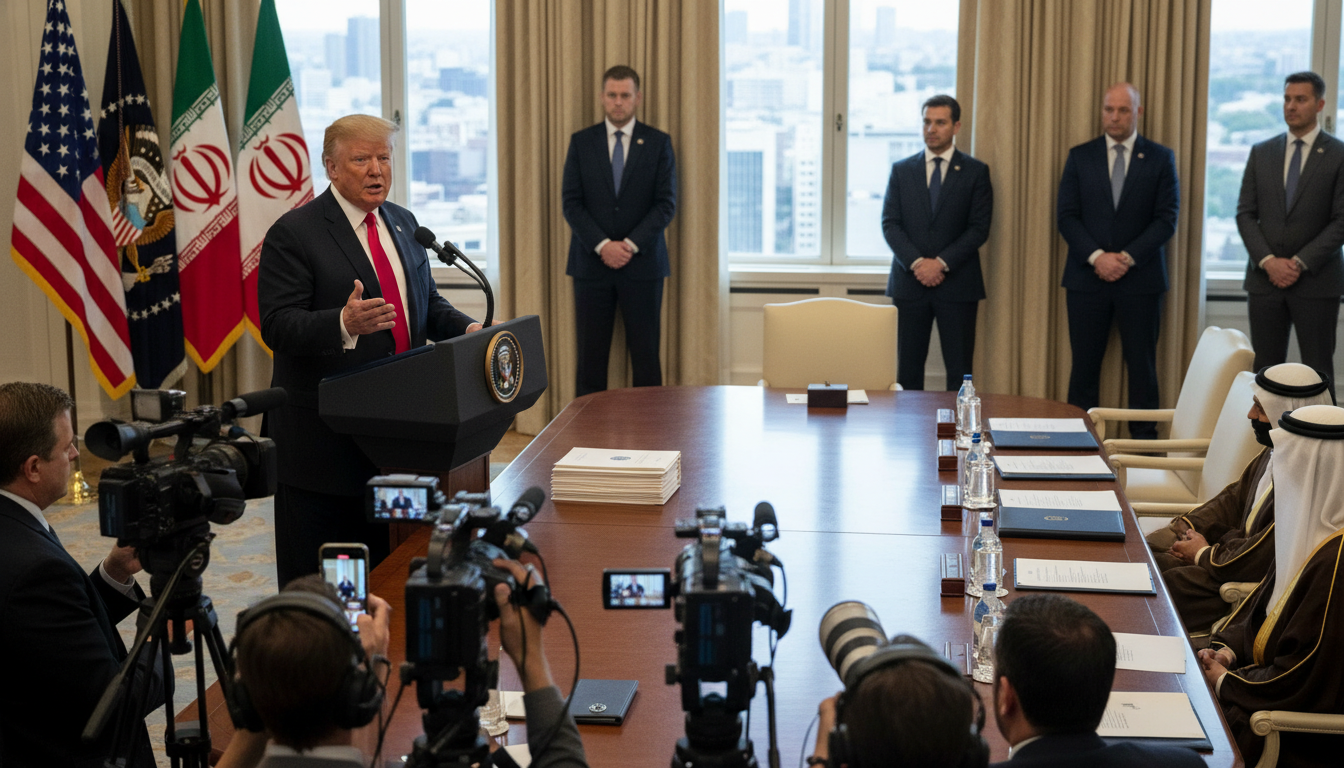
Trump says U.S.-Iran agreement nearly complete, vows Strait of Hormuz will be reopened
Trump says a U.S.-Iran agreement is nearing completion after May 23, 2026 consultations with regional leaders; he also pledged the Strait of Hormuz will be reopened.
President Donald Trump announced on May 23, 2026 that talks over Iran have reached an advanced stage and that a U.S.-Iran agreement is “almost negotiated,” following telephone consultations with leaders across the Middle East and other allied nations. The president made the statement in a post on social media, saying final adjustments were being made between the United States, Iran and participating countries. He also declared that the strategic Strait of Hormuz “will be opened,” signaling an intended resolution to recent tensions that have affected maritime traffic. The announcement sets expectations for a formal statement in the near term, though officials have not yet provided a timeline or text of any agreement.
Trump Announces Consultations with Regional and Global Leaders
Mr. Trump said he had held telephone conversations with heads of state and government from the Middle East and other allied countries to discuss developments surrounding Iran. He described the exchanges as comprehensive, covering “everything related to Iran and the memorandum on peace” without naming all participants.
The president framed the consultations as part of a coordinated diplomatic push, stating that most negotiation work was complete and only final coordination remained. No official transcript or list of interlocutors has been released by the White House at the time of his social media post.
Claims of a ‘Peace Memorandum’ Near Finalization
In his post, Mr. Trump referred to a “memorandum” relating to peace with Iran and said parties had exchanged views on all matters connected to it. He asserted that the agreement had been largely negotiated and was in a stage of final adjustment among the United States, Iran and other countries that took part.
The use of the term “memorandum” suggests the framework may be a political or interim document rather than a formal treaty, but details on scope, security guarantees, verification mechanisms or sanctions relief were not provided. Analysts caution that without text or corroborating statements from other governments, the claim remains unilateral.
Strait of Hormuz Reopening Promised by President
Mr. Trump explicitly stated that the Strait of Hormuz would be reopened, a pledge likely to attract close scrutiny from regional governments and maritime operators. The strait is a chokepoint for global oil shipments and has been a flashpoint in prior confrontations between Iran and Western navies.
Opening the Strait of Hormuz would require agreement on security arrangements and operational measures to ensure safe passage, steps that historically involve multiple state actors and international organizations. Practical implementation will depend on whether participating parties accept the measures and whether on-the-ground conditions align with diplomatic assurances.
Possible Participants and Regional Response
While the president said multiple countries took part in the calls, he did not list them; regional capitals may include Gulf Cooperation Council states, as well as European and Asian partners with interests in stability and energy transit. Those nations have in past months engaged in shuttle diplomacy over Iran-related issues and would be central to any enforcement or monitoring arrangements.
Responses from Tehran and other regional governments were not included in the president’s post, and immediate official reactions were not available. Observers expect statements from Iran, Gulf states and NATO or EU intermediaries in the hours or days following the U.S. announcement.
Security and Economic Implications for Maritime Trade
A credible U.S.-Iran agreement that secures the Strait of Hormuz could reduce insurance premiums for ship operators and restore confidence in energy markets that have been sensitive to regional instability. Conversely, ambiguity or an absence of verification could leave markets jittery and prolong heightened security costs for commercial carriers.
Military and diplomatic planners will need to clarify who will monitor compliance, what forces or rules of engagement will be in place, and how disputes will be handled at sea. The logistics of reopening a contested maritime corridor typically require phased confidence-building measures and independent verification.
Timing, Transparency and Next Steps
The president indicated the agreement would be announced soon, but offered no fixed date or schedule for publication of terms. U.S. officials have historically required interagency sign-off and consultations with partners before publicly releasing sensitive diplomatic agreements.
Observers say transparency will be crucial to lend credibility to any announcement; publication of the agreement’s text, verification provisions and a roster of endorsing states would help determine whether the claims reflect a durable settlement or a preliminary political understanding. Until such documentation is shared, questions will remain about enforcement and the buy-in of key stakeholders.
If the president’s account proves accurate and other governments confirm the terms, the announcement could mark a significant shift in regional dynamics and ease immediate maritime tensions. Verification, allied coordination and public disclosure will determine whether the claimed U.S.-Iran agreement translates into sustained security for commercial shipping and a measurable de-escalation in the region.

