
Narita Airport new runway: Chiba and nine municipalities agree to support NAA’s compulsory land acquisition application
Chiba and nine municipalities agreed on July 10 that Narita Airport new runway land requires NAA to seek compulsory acquisition under land expropriation law.
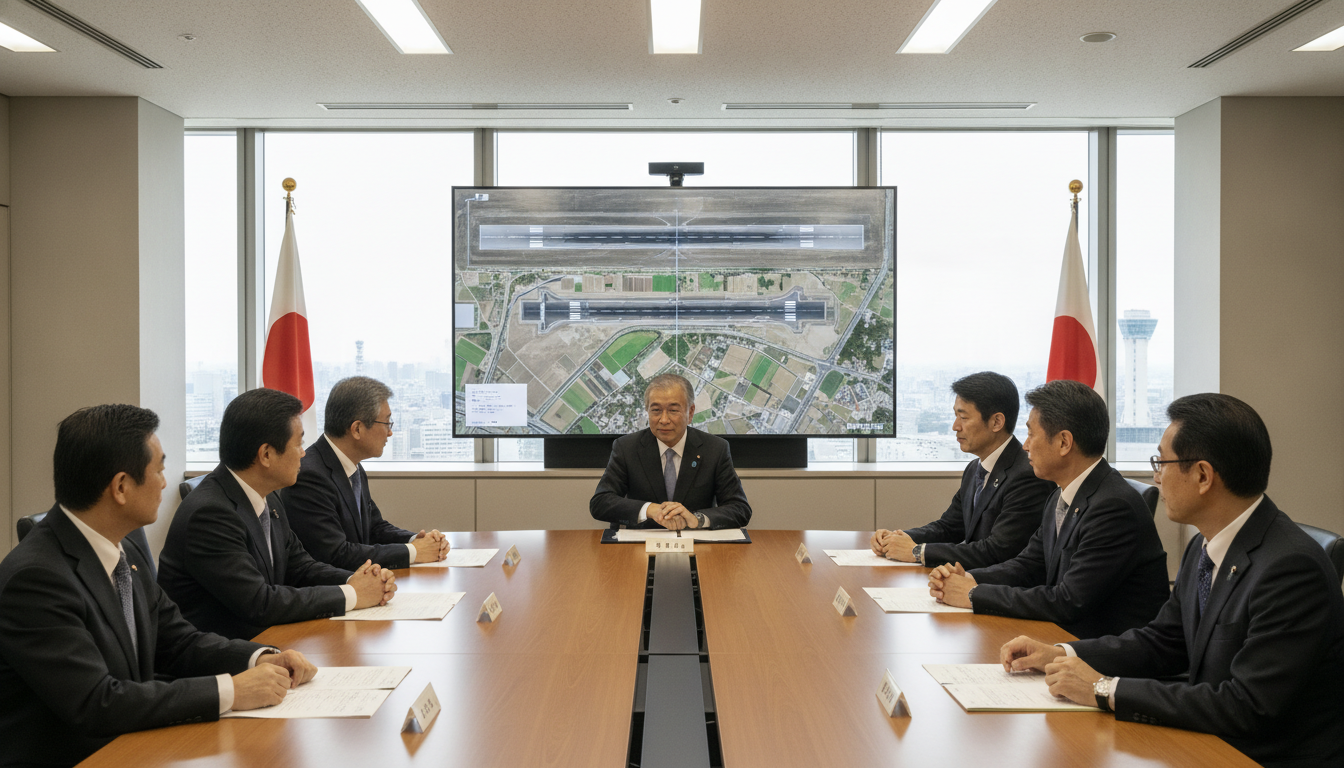
The prefecture of Chiba and nine surrounding municipalities on July 10 agreed to allow Narita International Airport Corporation (NAA) to apply to the national government for compulsory land acquisition to complete the Narita Airport new runway project. The decision, reached in a four-party council that includes the national government and NAA, follows prolonged difficulty in securing privately held parcels needed for runway expansion. Local officials said the move was necessary after voluntary negotiations failed to deliver the remaining plots within a timeframe compatible with project needs.
Regional Leaders Approve NAA’s Request for Compulsory Acquisition
Chiba Prefecture and the nine municipalities signaled that, given the current impasse, use of the land expropriation mechanism is unavoidable. Officials said they reached the decision after assessing progress in voluntary negotiations and the risk that the project could stall without formal legal measures.
Some municipalities that had previously taken a cautious approach shifted position during talks, citing the inability to confirm timely acquisition of the parcels that make up the airport expansion footprint. The joint statement framed the consent as a reluctant but pragmatic response to preserve the broader schedule and infrastructure goals.
Acquisition Shortfall Leaves 9.6% of Land Unsecured
NAA reported the overall land procurement rate rose slightly from 89.7 percent at the end of March to 90.4 percent, but about 9.6 percent of the required area remains unacquired. Of that remaining share, roughly half currently has no prospect of reaching voluntary agreements, creating the core justification for seeking compulsory acquisition.
Authorities highlighted that the unresolved plots are critical for the layout and safety clearances of the planned runway. Officials stressed that even a small percentage of holdouts can jeopardize the geometry and operational certification needed for full runway use.
Delay of Full Operation Originally Set for March 2029
The new runway project has already faced delays, pushing back the initial target of March 2029 for full operation. NAA first indicated in March that it was considering expropriation as an option, acknowledging the protracted nature of negotiations and the potential impact on timelines.
Project managers and local governments have said the shift toward compulsory acquisition is meant to prevent further slippage of the delivery schedule. Still, officials warned that invoking the land expropriation process will itself require time for legal procedures and administrative review.
NAA’s Negotiation Efforts and Local Briefings
NAA has continued voluntary negotiations with landowners while preparing for potential formal procedures, holding more than 50 explanatory meetings for residents across 11 municipalities in Chiba and Ibaraki prefectures. The company emphasized efforts to secure consent and to explain compensation and relocation arrangements to affected residents.
Despite these outreach steps, a significant portion of the remaining landowners have not reached agreements, according to municipal sources. Authorities described persistent concerns among some residents about compensation levels, relocation impacts, and the long-term effects of airport expansion on local communities.
Government Role and Legal Review Ahead
The four-party council—composed of the national government, Chiba Prefecture, surrounding municipalities and NAA—said the next step will be formal submission to the central government under the Land Expropriation Act. That submission will initiate a review process in which the government determines whether compulsory acquisition is justified in the public interest and whether procedures can proceed.
Ministry officials had previously instructed careful local engagement, with Transport Minister Yasuyuki Kaneko directing NAA to "carefully obtain local understanding" when exploring compulsory measures. Municipal leaders said they will continue to press for detailed explanations and safeguards for affected residents during any national review.
Local Opposition, Historical Sensitivities and Community Impact
The decision revives a difficult history of resistance around Narita Airport expansion, where past land disputes and protests left deep community scars. Local leaders acknowledged the sensitivity and underscored the need for transparent, legally sound processes and fair compensation.
Community groups and some residents are expected to scrutinize the expropriation application, and municipal governments indicated they will seek mitigation measures for social and environmental impacts. Officials said balancing national infrastructure needs with local rights remained a central challenge.
The move to pursue compulsory acquisition reflects a shift from prolonged negotiation toward formal legal remedies to complete the Narita Airport new runway project. Authorities caution that while the agreement clears a political hurdle, the legal process to secure disputed parcels will take time and careful management to address residents’ concerns and to keep the wider expansion program on track.

