
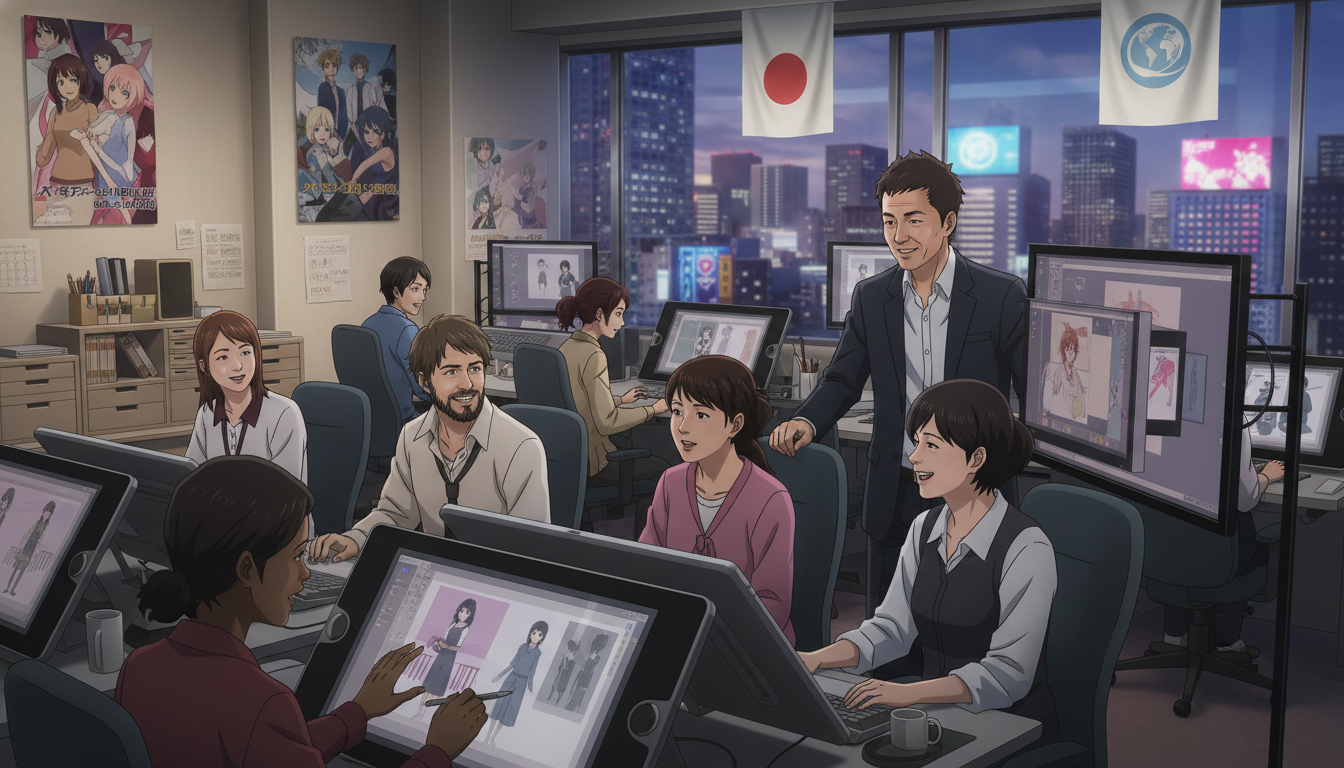
Foreign animators in Japan reshape anime production and global reach
Foreign animators in Japan bring new skills and networks to studios, boosting production capacity while expanding the industry’s international ecosystem and audience.
Growing role of foreign animators in Japanese studios
Foreign animators in Japan are increasingly visible across television and film projects, working alongside domestic staff on key production stages. Many arrive after completing Japanese vocational programs or apprenticeships, and studios say the extra hands are helping meet tight deadlines and complex workloads.
Their presence is not limited to entry-level tasks; a growing number of non-Japanese artists contribute to character animation, background art and digital compositing. This shift reflects both a labour shortage in the domestic sector and studios’ strategic interest in diverse creative input.
Training pathways and attraction to Japan
Language-specific schools, animation colleges and industry internships have become common gateways for international talent to enter Japan’s anime industry. Students often move to Japan driven by long-standing cultural interest, with some, like Russian-born animator Anita Kim, citing a love of anime as the decisive factor in relocating and training domestically.
These institutions offer courses that combine technical instruction with industry placements, giving foreign trainees practical experience inside studios. The structured training avenues smooth the transition into Japanese workflows and help foreign artists meet the local standards that studios require.
Creative exchange and stylistic influence
The arrival of foreign animators has encouraged a two-way creative exchange that subtly alters aesthetics and storytelling methods. Foreign artists bring differing visual traditions and technical approaches that can be integrated into projects, enriching the palette of contemporary anime.
Studios report that this cross-cultural collaboration can lead to fresh ideas in color design, compositing techniques and character movement. International sensibilities also help productions anticipate global audience tastes, which has become an asset as companies market series beyond Japan.
Operational pressures and visa constraints
Despite the benefits, the influx of foreign artists has exposed operational challenges, most notably around visas, work permits and employment stability. Foreign animators must navigate immigration rules that can limit the types of contracts they accept and the duration of their stays.
Smaller studios, which often rely on short-term contracts, find it difficult to guarantee long-term employment that satisfies visa requirements. This mismatch can create precarious work conditions for foreign staff and complicate studios’ planning for ongoing series production.
Studios adapt recruitment and retention strategies
In response, several mid-sized and larger studios have introduced more formal hiring policies and longer-term employment packages aimed at retaining foreign talent. These measures include language support, clearer career pathways and assistance with administrative processes tied to residency.
Producers also say that investing in training for foreign hires has practical returns: better retention reduces time lost to onboarding and improves continuity on serial productions. This strategic shift helps studios stabilize their workforce while maintaining the fast-paced schedules demanded by broadcasters and streaming platforms.
Economic and international ecosystem effects
The integration of foreign animators in Japan contributes to an expanding international ecosystem around anime, involving education providers, recruitment intermediaries and overseas streaming partners. Remittances, cross-border collaboration and the return of trained artists to their home countries increase the global circulation of skills and influence.
As more foreign artists trained in Japan take leadership roles abroad, they carry technical know-how and networks that further internationalize anime production. That outward flow deepens the industry’s global footprint and can lead to co-productions and shared markets.
Audience reach and cultural diplomacy
Foreign animators who work in Japan also serve as cultural ambassadors for anime, translating production practices and storytelling techniques into their home markets. Their careers often generate attention that draws new viewers to Japanese animation and opens channels for cultural exchange.
Streaming platforms and international festivals amplify that effect by showcasing works that reflect diverse creative teams, which can make anime feel more accessible to global audiences. The result is a feedback loop in which broader interest attracts more talent, which in turn fuels further expansion.
The growing number of foreign animators in Japan is reshaping the industry’s labour model and creative output, as studios balance the operational realities of visas and employment with the strategic benefits of a diversified talent pool. As international trainees continue to take up roles across production, anime’s global ecosystem is likely to grow more interconnected and commercially resilient.

