
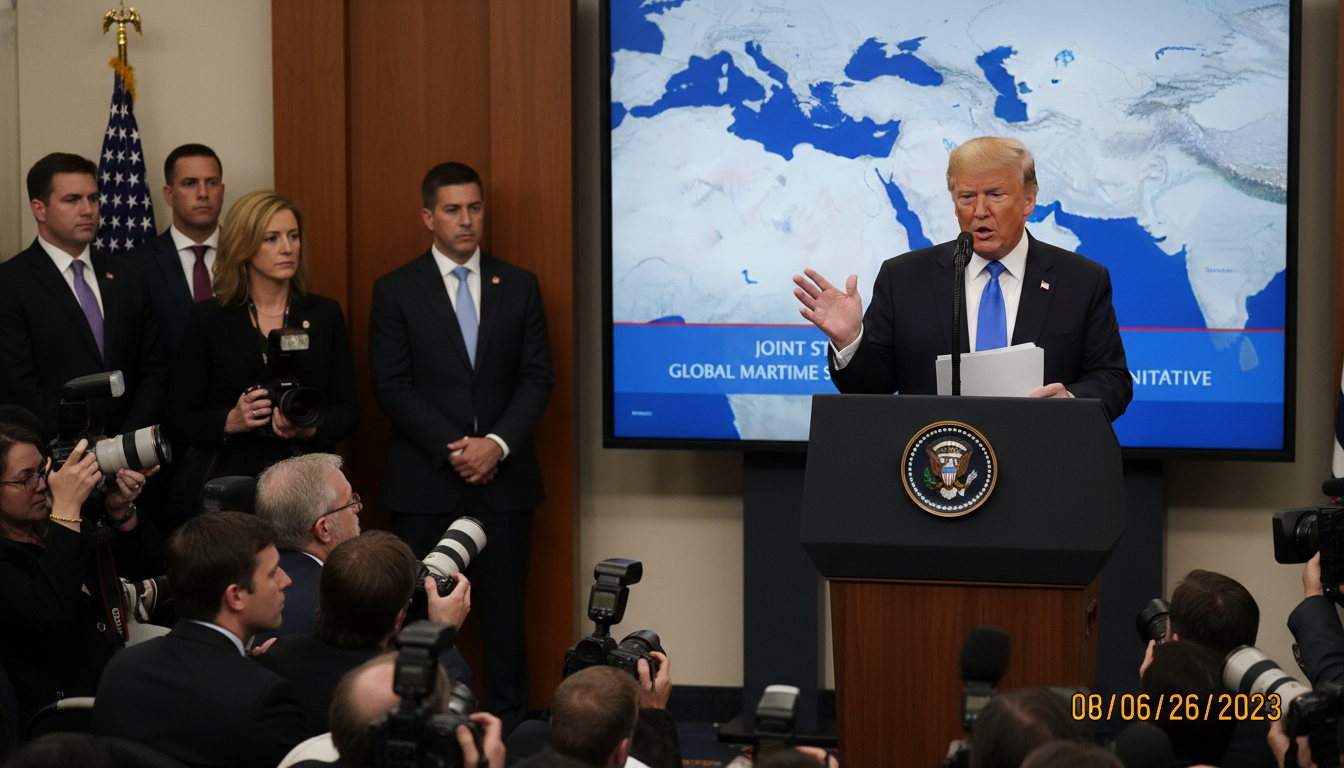
Trump Says Iran Negotiations Largely Complete, Includes Strait of Hormuz Opening
Donald Trump tweeted on May 23, 2026 that “most” of the Iran negotiations have been completed and are in final stages, claiming the plan would include reopening the Strait of Hormuz to commercial traffic.
President Donald Trump said on May 23 that diplomatic efforts to prevent renewed hostilities with Iran have reached a stage where “the bulk of the agreement” has been negotiated and only final adjustments remain. He wrote that the package — which he said also covers measures to reopen the Strait of Hormuz — was under active discussion and would be announced soon. Trump said he had held phone consultations with several Gulf and regional leaders and spoke separately with Israeli Prime Minister Benjamin Netanyahu.
Trump Announces Progress on Iran Negotiations
In a terse social media post, Trump characterized the talks as being in their “final adjustment” phase but offered no text of any agreement or timeline for formal signing. He framed the talks as a broad regional effort intended to avert a return to open conflict between the United States and Iran.
The statement did not identify negotiators, the location of talks, or specific security guarantees, leaving key details unconfirmed by the White House or the State Department at the time of his announcement. Officials in Washington and allied capitals said they had not yet released formal briefings to corroborate the president’s account.
Multilateral Calls with Gulf and Regional Leaders
According to Trump’s post, he spoke by phone on May 23 with leaders from Saudi Arabia, the United Arab Emirates, Qatar, Pakistan, Turkey, Egypt, Jordan and Bahrain about a “memorandum on peace.” The president said those calls were part of a coordinated diplomatic push he described as necessary to stabilize the region.
Trump also noted a separate discussion with Israeli Prime Minister Benjamin Netanyahu, underscoring the central role Israel plays in any regional security compact and reflecting the administration’s effort to involve multiple interest holders simultaneously.
Strait of Hormuz Included in Diplomacy, Trump Says
The president specifically singled out the Strait of Hormuz, asserting the agreement would include steps to reopen the waterway for commercial shipping. The narrow chokepoint, through which a significant share of the world’s oil shipments pass, has been a frequent flashpoint in tensions between Iran and Gulf states.
Reopening or securing transit in the strait is typically understood to require operational guarantees and confidence-building measures among naval forces, as well as assurances that attacks on commercial vessels will be deterred or punished.
Details Remain Unpublished and Verification Pending
Trump’s claim arrived without accompanying documents or a public timetable, leaving outside observers to await confirmation from U.S. officials, regional governments or independent monitors. Analysts cautioned that political leaders may speak optimistically about progress while substantive disputes remain unresolved behind closed doors.
Senior diplomats and security analysts told reporters they had seen no public draft or signed memorandum as of May 23, and that verification would require either formal statements from participating governments or the release of a text outlining the commitments involved.
Potential Regional and Global Implications
If credible and durable, an agreement that limits direct military confrontation and ensures free passage through the Strait of Hormuz would lower the immediate risk to commercial shipping and could take pressure off global energy markets. Reduced tensions would likely ease insurance and security costs for shipping lines and could moderate oil price volatility tied to fears of supply disruptions.
However, the durability of any arrangement would depend on enforcement mechanisms, monitoring provisions and the willingness of local actors to abide by commitments over time. Observers noted that past understandings in the Gulf have often required persistent diplomacy and international backing to survive political shifts.
Next Steps and Diplomatic Uncertainties
The president said the “final agreement” and its details were still being worked out and promised an announcement “soon,” a timetable that left open how quickly concrete steps might follow. Regional capitals and international bodies are expected to monitor follow-up moves closely, seeking clarity on verification, timelines and contingency plans.
For now, the announcement serves as a signal of intensive diplomatic activity but falls short of the transparent, signed accord that would be necessary to alter the operational landscape in the Gulf and provide durable assurances to commercial and military actors.
Trump’s May 23 statement highlights a flurry of high-level calls and a White House effort to portray meaningful progress in talks with Iran and regional partners, but outside confirmation and the content of any memorandum remain outstanding as governments and markets await further detail.

