
Lisa Su: China Remains a Key Market, but Not for Advanced AI Chips
AMD CEO Lisa Su says China is a key market but not a destination for the company’s most advanced AI chips, while forecasting a large CPU market expansion over five years.
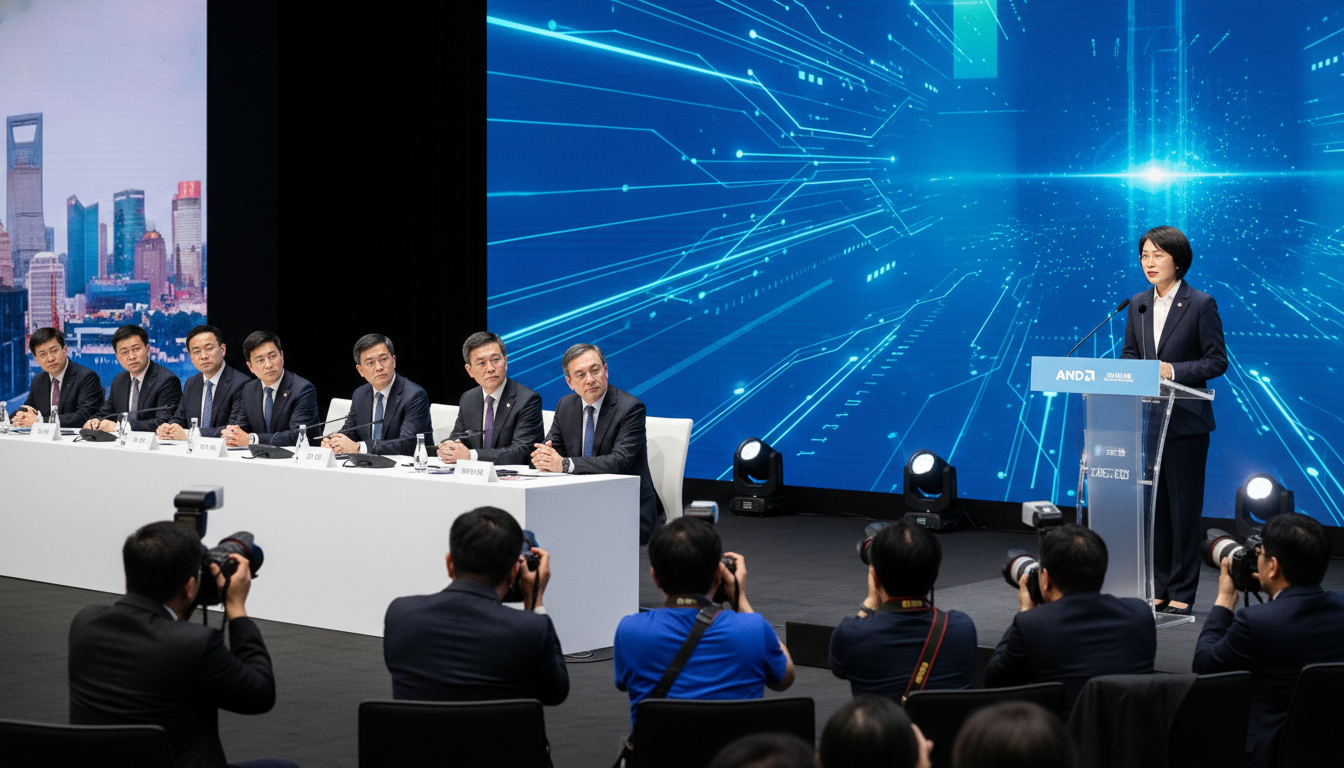
AMD chief executive Lisa Su told a forum in Taipei on May 22 that China will remain an important commercial market, but that the company will not be selling its most advanced AI chips there. She also predicted the market for central processing units will expand dramatically over the next five years amid a global rush to build AI infrastructure.
AMD CEO Forecasts Strong CPU Growth
Lisa Su said the CPU market is set for massive expansion as data-center operators and cloud providers scale up to support artificial intelligence workloads. She told attendees that demand has outpaced expectations and that few in the industry anticipated the current surge.
The company’s outlook positions traditional processors as central to broader AI systems, supporting not just model training but also inference, orchestration and legacy enterprise workloads. Su’s comments underscore AMD’s view that CPUs and specialized accelerators will coexist in a rapidly evolving compute landscape.
China Is Important but Not for Top-Tier AI Chips
Su emphasized that China remains a critical market for AMD’s business across consumer, enterprise and embedded segments. At the same time, she said the firm’s most advanced AI accelerators will not be sold to the Chinese market, reflecting commercial and regulatory boundaries around cutting-edge chip exports.
Her remarks reflect a balancing act for multinational chipmakers that depend on Chinese demand while navigating export controls and national-security sensitivities. Industry observers say the stance underscores how geopolitics and trade rules are shaping commercial decisions for high-performance semiconductors.
AI Infrastructure Driving Unexpected Demand
Executives and executives’ peers in the semiconductor industry have described the current uptick in orders as driven by a rapid roll‑out of AI infrastructure at cloud providers, hyperscalers and enterprise data centers. Su noted that the speed and scale of deployments have surprised suppliers and customers alike.
The knock-on effects include accelerated server purchases, rising demand for components across the supply chain and pressure on manufacturing schedules. For chipmakers that can supply both CPUs and accelerators, the evolving mix of workloads presents revenue opportunities and operational challenges.
Implications for Supply Chains and Capacity
A larger CPU market over the next five years will prompt a reevaluation of capacity planning from foundries to packaging and testing services. AMD and its peers must coordinate wafer allocations, node migrations and supply contracts to keep pace with shifting demand patterns.
Analysts caution that while increased investment can relieve bottlenecks, it also raises capital intensity and exposes companies to cyclical swings. For companies with broad product portfolios, managing inventory and forecasting accurately will be critical to capturing growth without eroding margins.
Competitive Dynamics and Product Strategy
Su’s public assessment signals AMD’s intention to compete across multiple layers of the compute stack while adhering to market and regulatory constraints. The company faces competition from other chipmakers that are also targeting AI workloads, each with different combinations of CPUs, GPUs and bespoke accelerators.
Observers expect AMD to continue refining its roadmap for both general-purpose processors and purpose-built chips, aiming to serve cloud providers, enterprises and OEMs. How the company sequences product rollouts and partnerships will influence its share in servers, edge devices and specialized AI systems.
Regulatory and Geopolitical Context
Comments about restricting advanced AI chip sales to certain markets come amid a broader global debate over export controls and technology transfer. Governments and regulators are increasingly active in defining which technologies can be traded internationally and under what conditions.
Industry participants say these rules are reshaping long-term planning and commercial strategies for companies that operate across multiple jurisdictions. Firms must balance compliance with commercial objectives while maintaining relationships with customers in major regional markets.
AMD’s chief executive framed the company’s approach as pragmatic: maintaining access to large, strategic markets while respecting legal and policy limits on certain high-performance products. That posture highlights the complex environment in which chipmakers now operate as demand for AI-capable systems accelerates.
Looking ahead, firms across the semiconductor ecosystem will weigh rising CPU demand and constrained access to certain AI accelerators when shaping investment, partnerships and go‑to‑market plans. The coming five years are likely to see intensified competition, tighter integration between CPUs and accelerators, and continued interplay between commercial opportunities and regulatory frameworks.

