
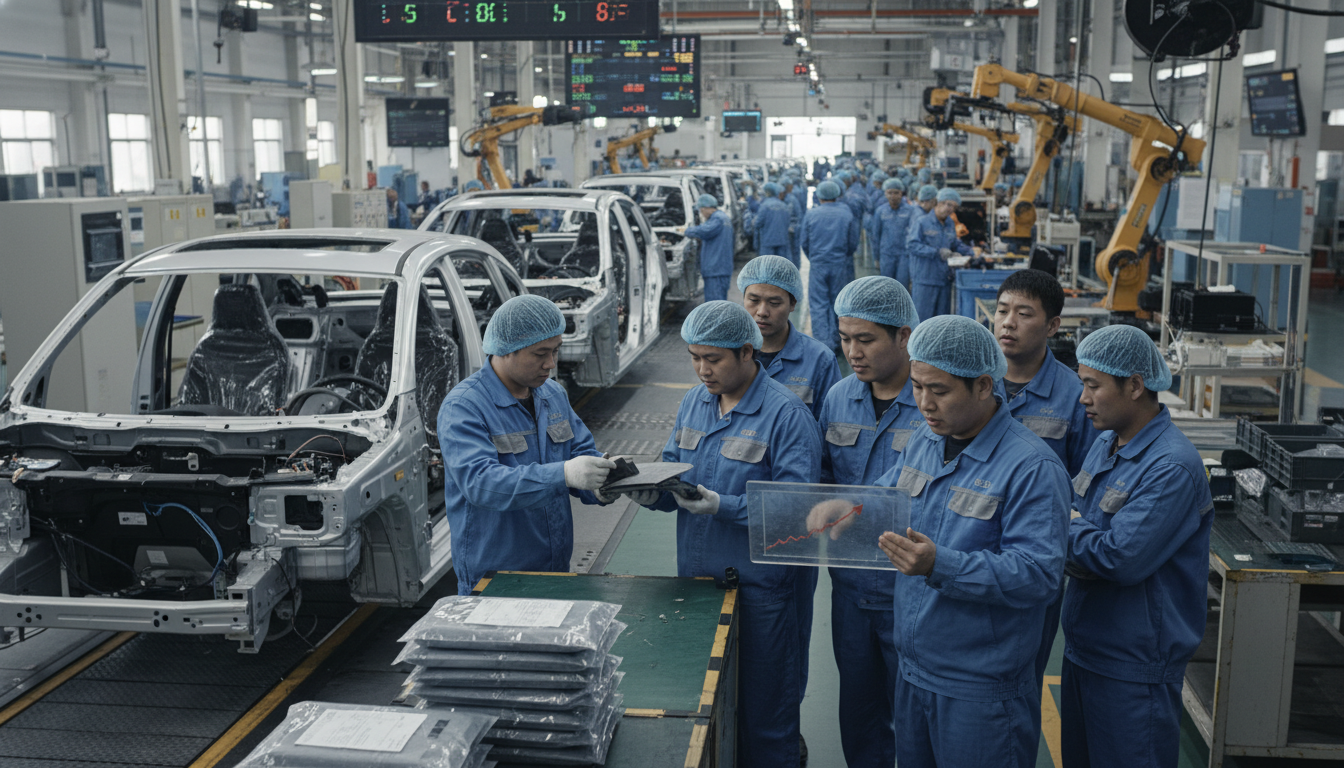
Memory chip shortage squeezes Chinese automakers amid AI-driven demand surge
Memory chip shortage forces Chinese EV makers to juggle costs and supply as AI data‑centre demand diverts DRAM and HBM production, threatening margins and delivery targets.
HONG KONG — A global memory chip shortage is rippling through China’s auto industry, forcing manufacturers to scramble for parts as demand from AI data centres pulls scarce DRAM and HBM away from vehicle suppliers. The memory chip shortage is compounding an already brutal price war among Chinese automakers and further squeezing profit margins on software‑rich electric vehicles. (archive.ph)
Memory chip crunch hits Chinese automakers
Chinese EV makers from Xpeng to BYD and smaller challengers are reporting higher procurement costs and longer lead times for memory components that power infotainment, driver‑assist systems and vehicle servers. These suppliers rely on commodity DRAM and emerging high‑bandwidth memory (HBM) for advanced in‑car compute, and shortages are translating into either higher bills or delayed features. Industry analysts say the problem is not isolated to start‑ups; legacy groups and parts suppliers are feeling the squeeze too. (newser.com)
AI demand redirects DRAM capacity to data centres
Chipmakers have been reallocating wafer area and production capacity to service surging orders from hyperscalers and AI accelerator vendors, prioritising HBM and server‑grade DRAM with richer margins. That structural shift has tightened supplies of the legacy DRAM families used in embedded automotive applications, creating shortages that were unforeseen at the start of the year. Producers’ focus on AI memory is a major factor behind the current reallocation of supply across device categories. (spglobal.com)
Rising costs squeeze margins and pricing strategies
Higher memory prices are arriving at a sensitive moment for Chinese automakers, many of which have competed on price to capture market share. The increase in component costs is eating into already thin margins on EVs and connected cars, prompting some manufacturers to reconsider aggressive discounting and subsidy‑led tactics. Financial analysts warn that without new supply or long‑term purchase contracts, automakers may face a sustained margin squeeze that could reshape pricing across the sector. (spglobal.com)
Manufacturers pursue short‑term mitigation and sourcing shifts
Companies are taking immediate steps to blunt the impact, including buying memory ahead through longer‑dated contracts, redesigning software to use less volatile RAM, and qualifying alternative suppliers domestically. Several PC and device makers have already begun evaluating Chinese DRAM producers as stopgaps, and automakers are reported to be doing the same while negotiating for priority allocations. Nonetheless, qualifying new suppliers or redesigning systems can take months and may not fully offset immediate production risks. (tomshardware.com)
Capacity ramp and longer‑term supply outlook
Some industry voices say the shortage should ease as new capacity in mainland China and elsewhere comes online, though timing is uncertain. Former executives and market watchers predict that a notable increase in Chinese manufacturing capacity could begin to rebalance the market by late 2027 or into 2028, while major memory firms signal tight conditions will persist beyond 2026. That outlook implies a multi‑year window where vehicle makers must manage constrained supply and elevated pricing for memory components. (pcgamer.com)
Aftermarket and consumer implications
Dealers and customers may feel the effects through higher vehicle prices, delayed delivery slots for feature‑rich models, or the temporary removal of non‑essential digital options from lower‑margin trims. For buyers, the immediate risk is less about availability of the basic drivetrain and more about software, in‑car connectivity and advanced driver assistance being deferred or offered only in premium configurations. The longer the memory chip shortage persists, the more likely it is that consumer choice will narrow in certain segments. (spectrum.ieee.org)
Automakers and suppliers in China now face a strategic decision: secure costly long‑term memory contracts and preserve product roadmaps, or defer investment in advanced features until supply normalises. Either path will shape the pace at which software‑defined, memory‑intensive vehicles are rolled out to mass markets in the coming quarters.

