
Right-wing populism rises on immigration and China divides Western policy
Immigration concerns are driving right-wing populism across Western democracies, reshaping party politics and complicating governments’ approaches to China. Voter anger over migration has created openings for hard-line movements, while responses to Beijing remain fragmented between trade priorities and strategic caution.
Immigration Drives Voter Shifts in Western Democracies
Immigration has become a central mobilizing issue for right-wing populism in many Western countries, attracting voters who feel traditional parties have failed to control borders or protect social services. Political campaigns that emphasize migration and cultural identity have gained traction by promising swift policy changes and stronger enforcement.
This shift is not solely the result of short-term migration spikes; it reflects longer-term anxieties about economic insecurity, cultural change and perceptions of government competence. As mainstream parties adapt, some have moved rightward on immigration while others seek to blunt populist gains through targeted policy responses.
London Rally Highlights Grassroots Mobilization
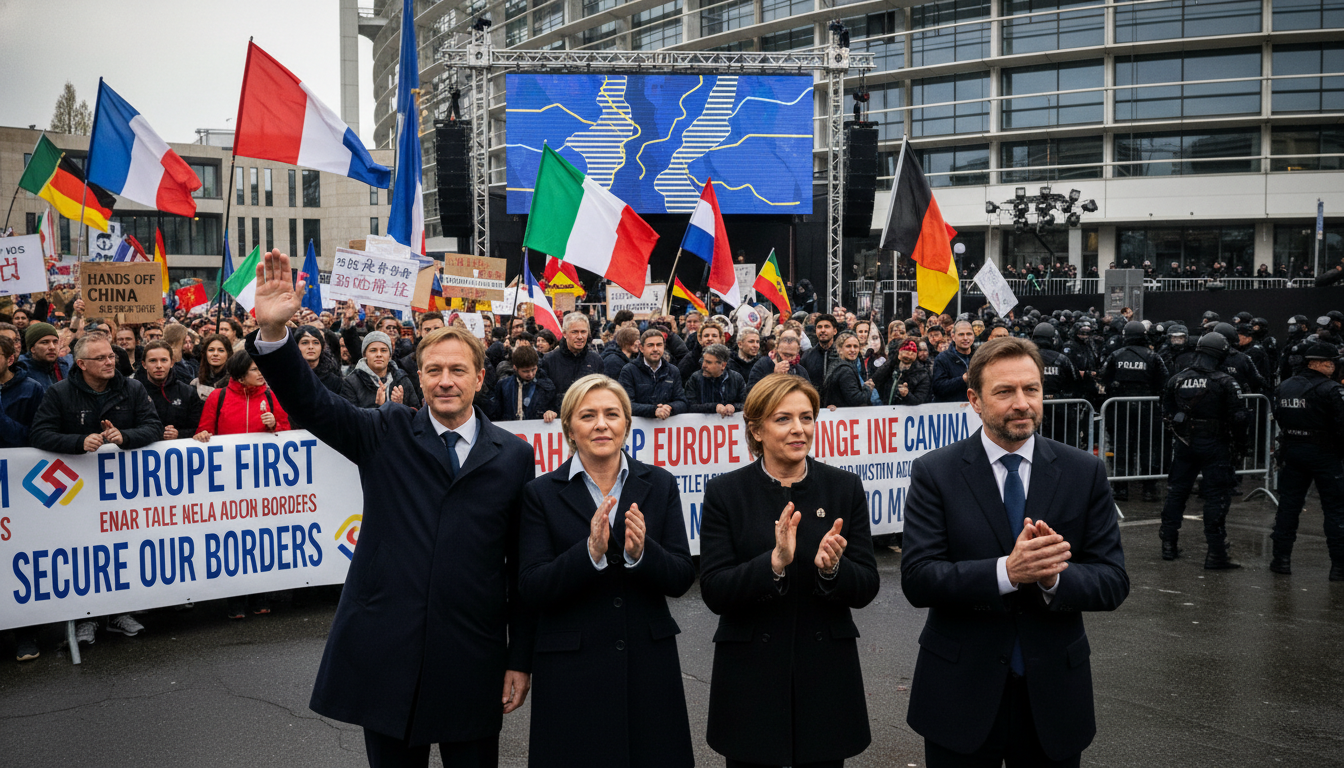
Recent street-level events in the United Kingdom illustrate how the issue can be translated into visible political action. Demonstrations organized by high-profile figures such as Stephen Yaxley-Lennon, known publicly as Tommy Robinson, have drawn supporters and generated confrontations that underscore the potency of anti-immigration messaging.
These rallies serve both as recruitment grounds for smaller movements and as pressure points for established parties, forcing local and national politicians to respond to heightened public attention. The visibility of such events can amplify fringe voices and harden debate around migration policy.
United States Emphasizes Trade Friction with China
In the United States, concerns about China have been framed largely around economic competition and trade imbalances, with successive administrations treating the China relationship through a commercial lens. U.S. policy emphasis on tariffs, supply-chain security and reducing the bilateral trade deficit has appealed to voters worried about manufacturing losses and economic displacement.
That economic framing has at times aligned with broader nationalist rhetoric, creating space for right-wing populists to link immigration concerns with trade and national sovereignty. The U.S. approach contrasts with parts of Europe where China policy has generated more intraregional disagreement than consensus.
European Parties Split Over Beijing Policy
Across Europe, parties diverge sharply on how to engage with Beijing, reflecting differences in economic ties, security assessments and domestic politics. Some governments prioritize continued trade and investment links, arguing that supply chains and export markets make cooperation necessary.
Other parties and member states, alarmed by technology transfer, human-rights issues and strategic competition, press for tougher measures including investment screenings and restrictions on sensitive technologies. That divergence complicates the European Union’s ability to present a unified stance toward China.
Electoral Impact and Policy Trade-offs
The rise of right-wing populism tied to immigration has forced mainstream parties to confront difficult trade-offs between electoral survival and policy coherence. Concessions to populist rhetoric can blunt short-term losses at the ballot box but risk alienating centrist voters and complicating coalition-building on other issues.
Moreover, attempts to combine tougher immigration rules with pro-business policies toward China create tensions in policy messaging that opponents exploit. Voters increasingly evaluate parties on how they balance border control, economic growth and international alliances.
Political Strategy and Media Dynamics
Media coverage and social platforms have amplified the narratives that sustain right-wing populism, enabling rapid dissemination of emotive stories about migration and economic dislocation. Targeted messaging and grassroots organizing allow smaller movements to punch above their weight, shaping agendas that larger parties must then respond to.
At the same time, mainstream parties are experimenting with communication strategies that emphasize competence, policy detail and cross-border cooperation to counteract populist appeal. Success will depend on convincing voters that concrete policy solutions, not just slogans, can address their concerns.
The weeks and months ahead will test whether appeals based on immigration and trade blunt populist momentum or further entrench it within Western political systems. Voter priorities appear reshaping party platforms and international alliances, and the outcome will influence both domestic policy and how Western democracies approach China.

