
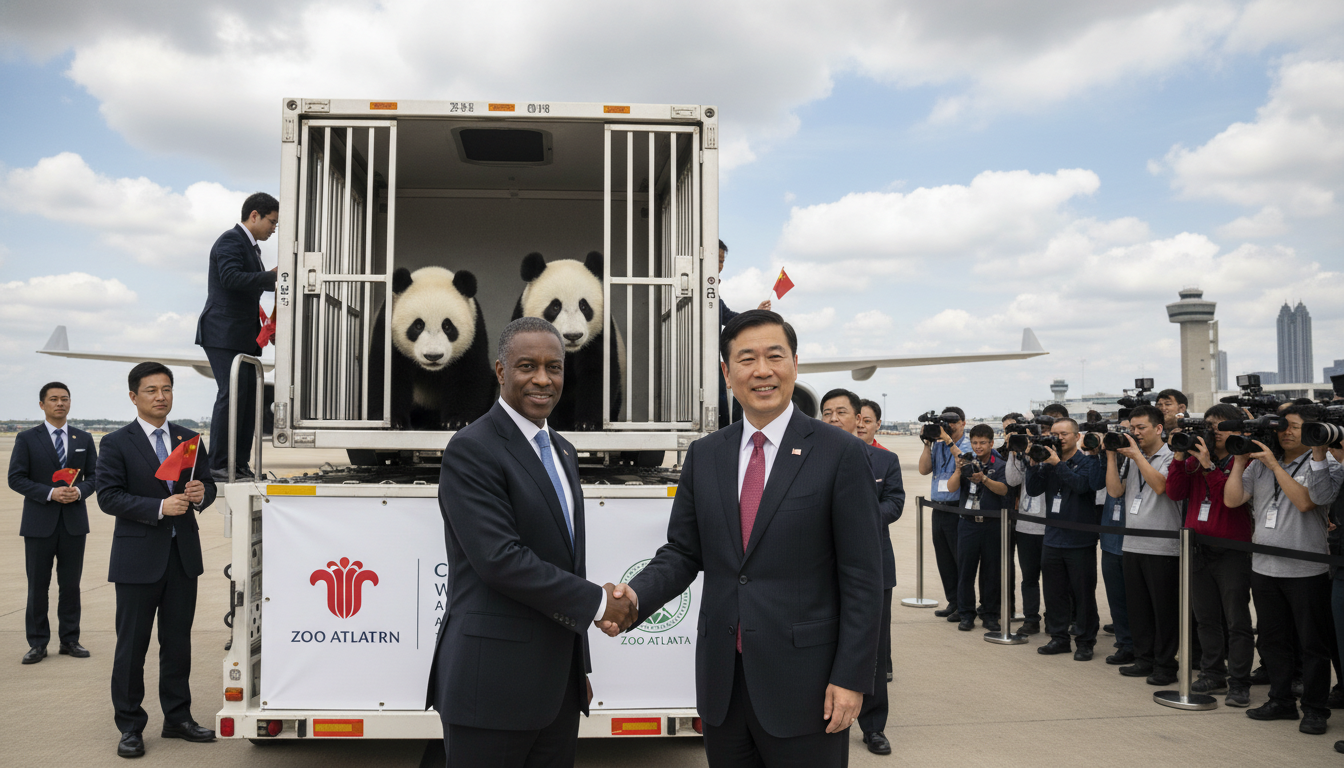
China Lends Two Giant Pandas to the U.S., Destined for Zoo Atlanta
China will lend two giant pandas to the United States for display at Zoo Atlanta; timing not announced. Analysts say the move signals warming diplomatic ties.
China has announced it will lend two giant pandas to the United States, with the animals slated to join the collection at Zoo Atlanta, though no transfer date has been disclosed. The decision to send pandas has been interpreted by some observers as a diplomatic gesture amid broader efforts to stabilize bilateral relations. Zoo officials have confirmed the zoo as the receiving institution and emphasized that logistics and animal welfare planning are underway.
Pandas Assigned to Zoo Atlanta
Zoo Atlanta has been identified as the recipient institution for the two giant pandas, according to the announcement accompanying the news. The zoo will be responsible for housing, veterinary care, and public exhibition once the animals arrive. Officials said the specifics of the pandas’ arrival, including quarantine arrangements and exhibit preparations, remain to be finalized.
Zoo Atlanta expects the pair to become a focal point for public education and conservation programs, pending the completion of transport and acclimatization steps. The animals are expected to be integrated into the zoo’s existing conservation messaging and research collaborations with wildlife specialists.
Timing of Transfer Not Announced
Chinese authorities did not provide a firm timetable for the transfer, and Zoo Atlanta has not confirmed an arrival date. Organizing an international animal loan of this scale typically involves months of preparation, including health checks, permits, and quarantine protocols. That uncertainty means the public and stakeholders should expect movement on a multi-week to multi-month schedule once details are set.
Zoo officials have signaled they will release specific timing once logistical and regulatory steps are complete, but they stressed that animal welfare and compliance with international standards will dictate the pace. The lack of a set date has not dampened local interest, which is already mounting among conservationists and zoo visitors.
Panda Diplomacy and U.S.-China Relations
Observers and analysts have framed the loan within the context of “panda diplomacy,” a longstanding practice in which China uses the iconic animals as tokens of goodwill. Some experts say the decision to lend two pandas to a major American city can be read as a deliberate diplomatic signal aimed at easing tensions. Others caution that cultural and conservation dimensions often outweigh strictly political motives.
The announcement follows a period of complex interactions between the two countries, and the pandas’ transfer is likely to be interpreted on multiple levels by policymakers, media, and the public. Regardless of intent, the move will draw attention to how cultural diplomacy intersects with conservation and international collaboration.
Conservation, Research and Care Commitments
Beyond symbolism, modern panda loans are typically tied to conservation collaboration, research partnerships, and funding for breeding programs in China. Institutions receiving panda loans commonly participate in joint studies and contribute to efforts aimed at protecting the species in the wild. Zoo Atlanta has indicated it will adhere to veterinary and husbandry standards required for international conservation partnerships.
Specialized care for giant pandas involves dedicated facilities, trained personnel, and sustained dietary and medical support, underscoring the resource commitments necessary for such loans. Experts note that these arrangements can also provide important scientific data to support wider species recovery efforts.
Local Impacts and Public Interest
The prospect of a new panda pair is already generating anticipation among Atlanta residents and the tourism sector, where pandas historically attract significant visitor interest. Cultural attractions that host iconic species can see measurable boosts in attendance and related revenue, benefits that zoos often channel back into conservation and educational programming. City officials and zoo leaders are likely to coordinate on outreach and infrastructure planning ahead of the animals’ arrival.
Community engagement initiatives typically accompany high-profile animal arrivals, including educational exhibits, school programs, and public-facing research updates. Zoo Atlanta has suggested it will expand its interpretive programming to highlight panda biology and broader conservation challenges once the pandas are on-site.
Precedents and International Practice
China’s practice of lending pandas to foreign zoos has a long precedent and is usually governed by formal agreements that stipulate care standards, scientific cooperation, and sometimes financial terms. These arrangements have evolved over decades into structured conservation partnerships rather than purely ceremonial gifts. Receiving institutions are expected to meet rigorous criteria related to enclosure design, veterinary capacity, and research collaboration.
The announcement that two pandas will join a U.S. zoo follows that established international framework and highlights the continued role of species diplomacy in global cultural and scientific exchanges. Institutions involved often emphasize conservation outcomes and research output as core measures of success.
The loan of two giant pandas to Zoo Atlanta will be watched closely as an event with cultural, conservation and diplomatic dimensions, and officials on both sides say details will be released as preparations progress.

