
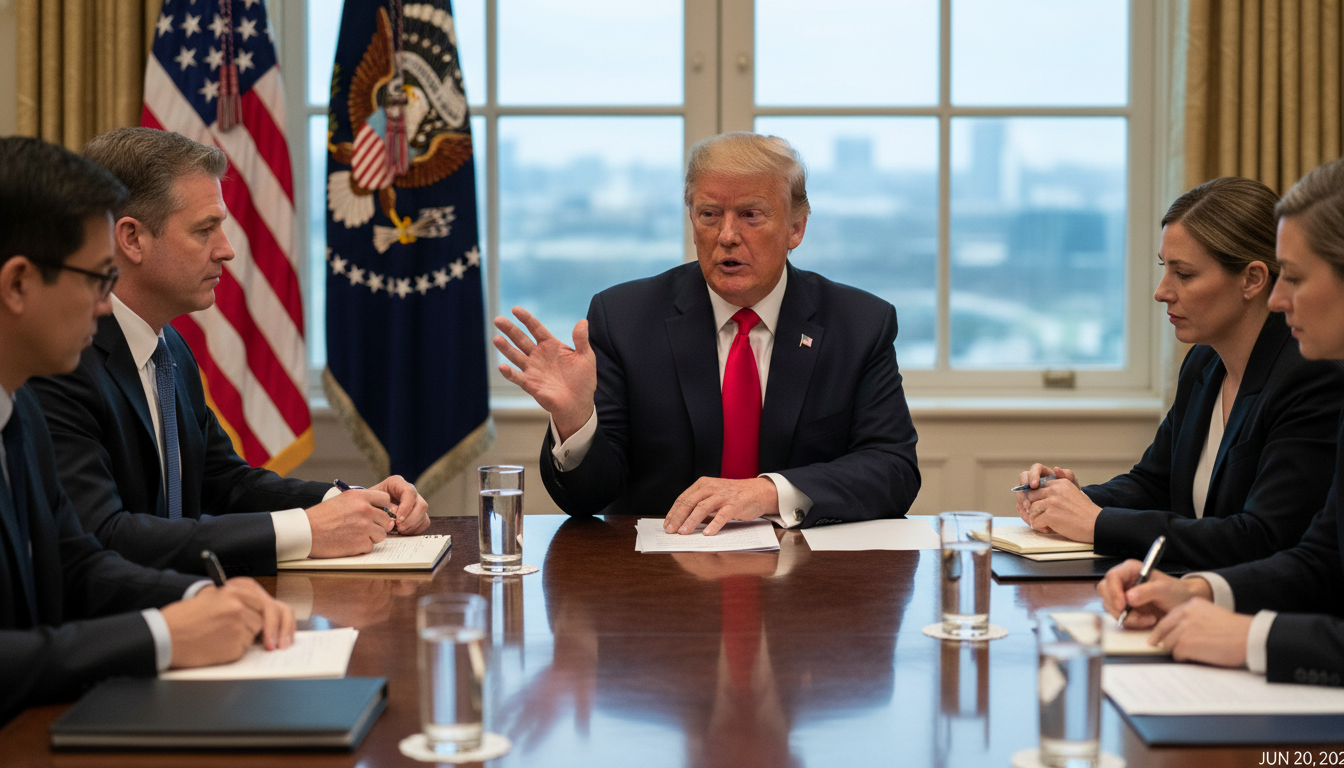
Trump Urges Patience, Tells Delegation Not to Rush Iran Agreement
Trump told U.S. negotiators on May 24, 2026, not to rush an Iran agreement, saying talks require time as officials warn approval could take days and may still fail.
Trump’s instruction to negotiators
President Trump posted on X on May 24, 2026, that he had instructed the U.S. delegation not to hasten an Iran agreement. He framed the directive as a call for deliberation, saying both sides should take sufficient time to ensure the deal is “right” and that failure is not an option.
The change in tone followed an earlier message from the president in which he described talks with Iran as in a final adjustment phase. The reversal highlighted the fragile, high-stakes nature of diplomacy as officials assess the feasibility of a negotiated end to hostilities.
U.S. officials outline the proposed pact
U.S. government sources, speaking to news outlet Axios, described the broad contours of what a deal would involve if finalized. The officials said the United States would lift a maritime blockade while Iran would reopen the Strait of Hormuz for commercial shipping as part of reciprocal steps to de-escalate maritime tensions.
According to the same accounts, Iran would also commit in principle to dispose of its stockpile of enriched uranium, a provision aimed at addressing proliferation concerns. Officials emphasized that details and verification mechanisms remained subject to negotiation and approval.
Signs of Iranian approval and lingering uncertainty
Reports indicated that Iran’s leadership had given tentative approval to the framework’s broad outlines, but U.S. officials cautioned that formal ratification on the Iranian side could require “several days.” That timeline raised the possibility that internal Iranian deliberations or regional reactions might derail the effort.
Administration sources warned that agreement was not guaranteed, and a collapse remained a realistic outcome. The president’s directive to slow the process appeared designed to allow negotiators to build tighter guarantees and to reduce the risk of a premature announcement that could unravel.
Israel’s response and regional security concerns
Prime Minister Benjamin Netanyahu confirmed he had consulted with President Trump and said Israel and the United States agreed on the need to eliminate Iran’s nuclear threat. Netanyahu characterized that objective as requiring the dismantling of enrichment facilities and removal of enriched nuclear material from Iranian territory.
Israel’s public statement reflected longstanding regional anxieties about Iranian nuclear capabilities and underscored how any U.S.-Iran understanding will be scrutinized by key allies. Analysts say Israeli concerns could shape the political environment around the talks and influence how negotiators frame verification and enforcement measures.
Political and strategic calculations in Washington
The White House faces competing pressures: to seize a diplomatic opening that could calm volatile waters and to ensure any accord satisfies domestic political constituencies skeptical of concessions to Iran. By instructing negotiators not to rush, the president signaled sensitivity to both strategic risks and political optics.
Officials briefed the press on contingency planning, noting that economic and military options would remain under consideration if talks fail. The administration emphasized that the core redline — preventing Iran from developing nuclear weapons — would remain central to U.S. policy regardless of the diplomatic trajectory.
Practical hurdles and verification questions
Even if Tehran and Washington reach a political understanding, implementing the pact would present technical and logistical challenges. Verifying disposal of enriched uranium and dismantlement of enrichment infrastructure requires credible, sustained inspections and transparent accounting of materials.
Maritime arrangements to secure the Strait of Hormuz would likewise demand coordination with regional partners and commercial actors to restore confidence in shipping lanes. Experts warn that ambiguous timelines or weak verification could quickly erode trust and prompt a return to containment policies.
International reaction and next diplomatic steps
Diplomatic channels in Europe and the Gulf were reported to be monitoring the talks closely, with allied capitals urging careful verification while welcoming signs of de-escalation. Senior envoys are expected to continue shuttling between Washington, Tehran and regional capitals as negotiators refine text and conditions.
U.S. officials said they would await formal approvals from both sides before announcing any definitive agreement, and the president’s instruction suggests a preference for a durable, not hurried, outcome.
The situation remains fluid, with key decisions expected over the coming days as negotiators seek clear authorizations from their capitals and try to translate a political framework into implementable commitments.

