
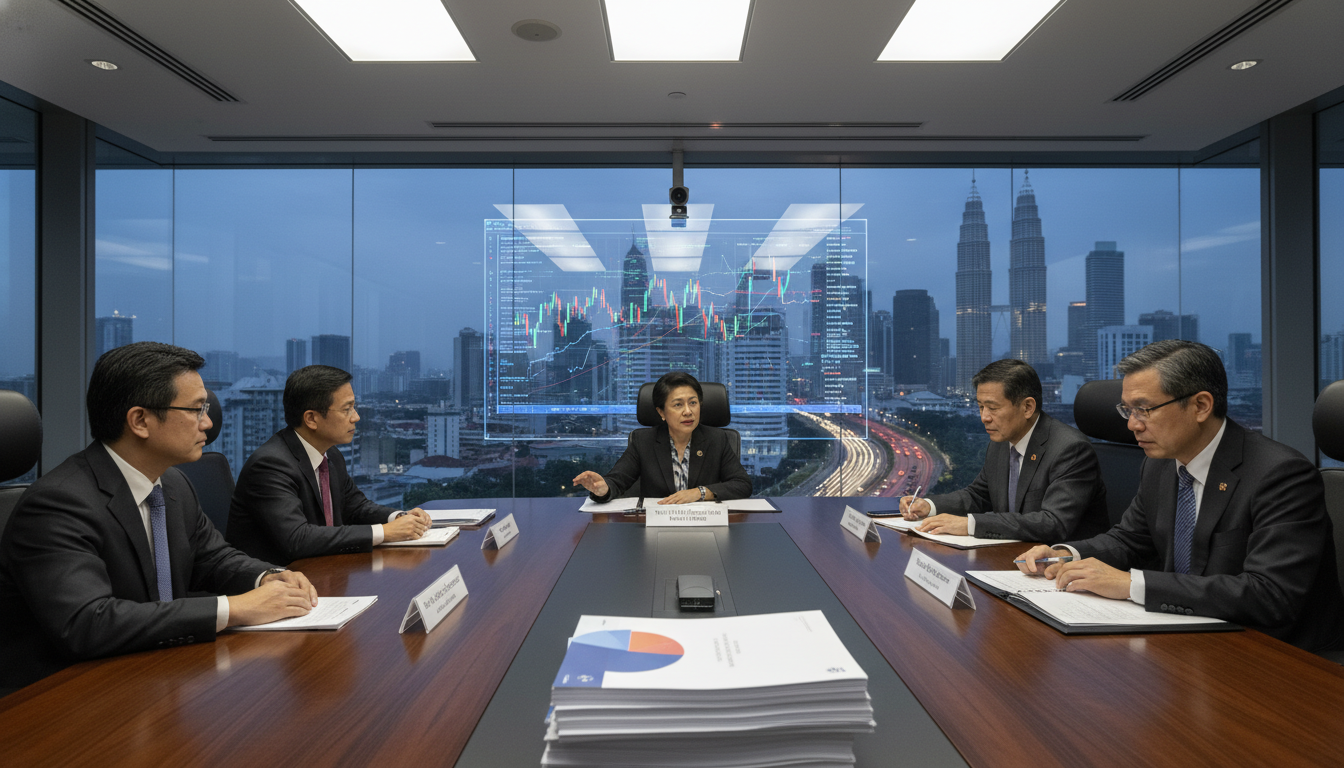
AI-Powered Stock Trading Prompts Regulators to Tighten Oversight in Asia and Beyond
Regulators are increasing scrutiny of AI-powered stock trading as firms deploy complex machine learning models across markets, raising questions about market stability and transparency.
The rapid rollout of AI-powered stock trading tools has prompted exchanges, supervisors and trading firms to reassess controls and disclosure practices. Market participants say the models—ranging from high-frequency strategies to predictive analytics used by asset managers—are influencing liquidity and trade patterns more visibly than in past technology waves. Officials worry that opaque model behavior, faster trade execution and cross-market linkages could amplify volatility during stressed conditions.
Wider AI adoption among trading firms
Many quantitative hedge funds and algorithmic desks have accelerated investment in machine learning over the last two years, seeking an edge in signal generation and trade execution. These systems process massive alternative datasets and execute orders at speeds that can magnify small prediction errors into market-moving flows.
Asset managers and proprietary trading firms are also experimenting with reinforcement learning and generative models to optimize execution and risk. As more firms integrate these capabilities, the aggregate effect on order books and price discovery has become a focus for both private risk teams and public supervisors.
Regulators step up surveillance and inquiries
Supervisory agencies have expanded monitoring programs to capture machine-driven trading patterns, requesting model inventories, incident reports and details on human oversight. Regulators say they need better visibility into how models make decisions and how firms test them against extreme market moves.
Some authorities have issued guidance urging stronger governance, model validation and documentation standards. Compliance teams are being asked to demonstrate backtesting rigor, limits on model drift and procedures that ensure humans can intervene when algorithms behave unexpectedly.
Exchanges test new pre-trade and kill-switch measures
Several exchanges have piloted enhanced pre-trade risk controls, dynamic throttles and faster circuit-breaker mechanisms designed to isolate disruptive automated flows. These measures aim to prevent a single model or firm from triggering cascades across linked venues.
Market operators are also trialing new surveillance analytics that flag unusual clustering of algorithmic orders or synchronized strategy activation across participants. Early results indicate these tools can identify emergent risks, but operators caution that fine-tuning is required to avoid false positives that could impede normal liquidity.
Firms strengthen model governance and explainability
Trading firms report expanding teams dedicated to model risk management, combining data scientists, risk officers and compliance specialists to oversee AI systems. Many are adopting layered controls: thorough out-of-sample testing, simulated stress scenarios and manual approval gates for model deployment.
There is growing investment in explainability tools that translate model decisions into human-readable rationales. Traders and risk managers say these tools do not eliminate uncertainty but improve the ability to diagnose misbehavior quickly and to take calibrated mitigation actions when needed.
Market risks from model herding and liquidity gaps
Analysts warn that similar training data and shared objectives can lead AI models to converge on comparable strategies, increasing the risk of collective exits from positions during shocks. Such "model herding" could deepen price moves and widen bid-ask spreads when liquidity providers step back.
Liquidity fragmentation is another concern: algorithms optimized for narrow execution metrics may neglect broader market depth, creating transient gaps. Combined with cross-asset linkages, these gaps can propagate stress across equity, derivatives and fixed-income markets, complicating margining and settlement processes.
Calls for common standards and cross-border coordination
Industry groups and some regulators are advocating for more harmonized standards on model validation, incident reporting and transparency around algorithmic strategies. Cross-border coordination is viewed as essential because algorithmic flows routinely span multiple jurisdictions and execution venues.
Proposals on the table include standardized stress-test templates, minimum documentation for deployed models and agreed timelines for reporting disruptive events. Proponents argue that consistent expectations will reduce regulatory arbitrage and improve market resilience.
The diffusion of AI-powered stock trading is reshaping market structure and supervision simultaneously, forcing a balance between innovation and safety. As firms refine internal controls and supervisors enhance oversight, markets will test whether these measures can keep pace with accelerating model complexity and speed.

