
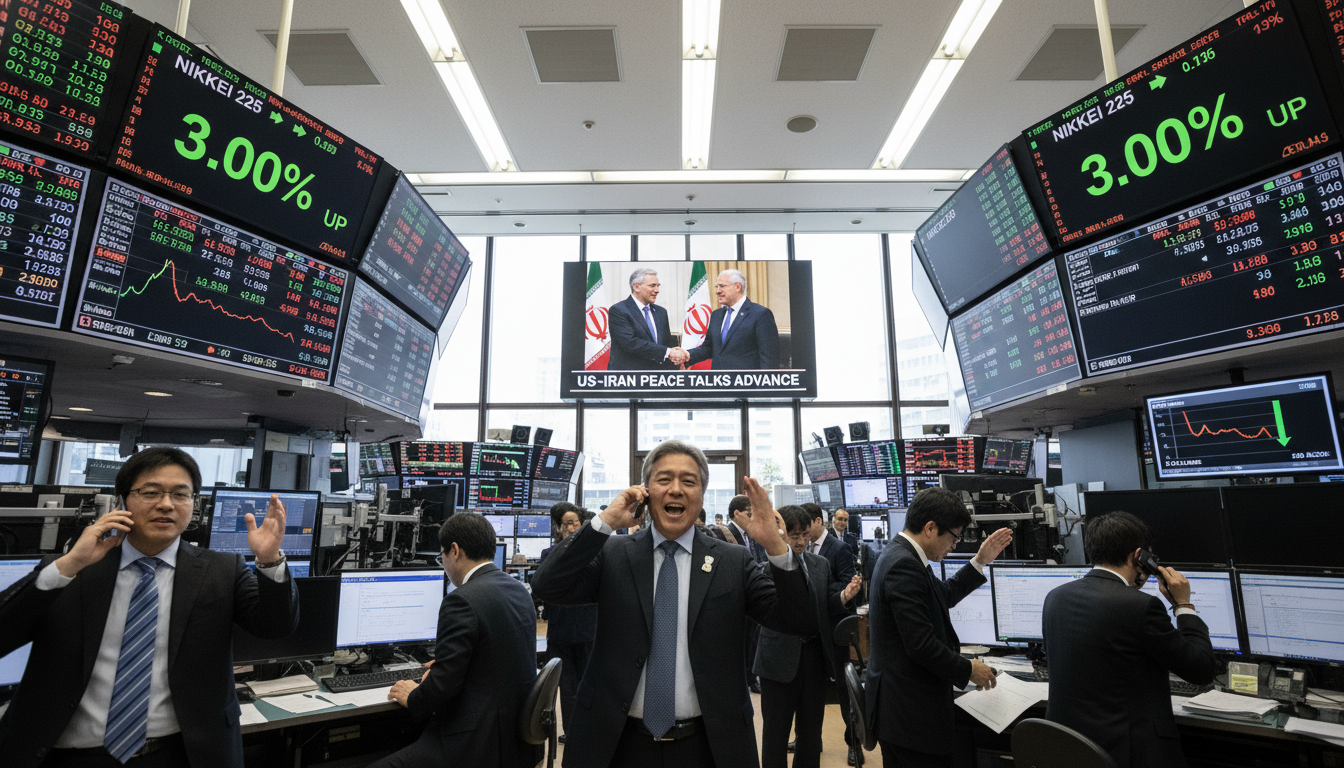
Nikkei Rises 3% as U.S.-Iran Peace Optimism Pushes Topix to Intraday Record
Nikkei climbs about 3% on May 25, 2026 as U.S.-Iran peace optimism drives oil prices lower, lifting Tokyo stocks and sending Topix to an intraday record.
TOKYO — Japanese equities surged on May 25, 2026, with the Nikkei rising roughly 3% as investors embraced riskier assets after reports of progress in peace talks between the United States and Iran. The rally coincided with a drop in oil prices that eased inflation concerns and supported broad market participation. Market participants said the optimistic tone pushed the Tokyo Stock Price Index (Topix) to a new intraday high during morning trading.
Nikkei Gains on Geopolitical Optimism
The Nikkei advance reflected a shift in investor sentiment toward cyclical and export-oriented names as geopolitical uncertainty eased. Traders reacted quickly to media reports suggesting substantive dialogue between Washington and Tehran, prompting a rotation out of safe-haven assets. The move was reinforced by lower energy costs, which market analysts identified as a key catalyst for the day’s gains.
The positive sentiment was evident across market capitalizations, with mid- and small-cap stocks joining the ascent alongside large exporters. Portfolio managers cited a combination of headline-driven flows and technical buying as contributors to the strength. Several trading desks reported higher-than-usual volumes as domestic and international investors repositioned portfolios.
Topix Reaches Intraday Record in Tokyo Session
Topix touched an all-time intraday high during the morning session, underscoring the breadth of the rally across sectors. The milestone reflected sustained buying pressure and a favorable earnings backdrop for many listed firms. Market commentators noted that the intraday record was an important psychological signal for investors watching valuations and momentum.
Despite the intraday peak, analysts cautioned that records can be fleeting and that confirmation would require follow-through in subsequent sessions. Some investors said they would watch corporate guidance and macroeconomic data scheduled later in the week for confirmation of the rally’s durability. For now, the Topix record served as a focal point for market optimism.
Oil Prices Ease as Peace Prospects Improve
Oil prices fell on the reports of progress in U.S.-Iran negotiations, reducing a major source of near-term inflation risk for Japan’s import-heavy economy. The decline in crude alleviated concerns about input-cost pressure for manufacturers and retailers, which in turn gave investors more confidence in cyclical sectors. Analysts observed that lower energy costs often translate into better profit outlooks for non-energy companies in Japan.
Energy sector stocks were outliers during the session, lagging the broader market as oil prices retraced. Traders said profit-taking in oil-related names contributed to sector weakness even as the overall market climbed. The relationship between commodity prices and equity performance remained a central theme for portfolio managers assessing sector allocation.
Sector Breadth and Market Leadership
Market breadth was strong, with gains recorded across technology, automobiles, and financial stocks, supporting the view of a broad-based rally. Exporters benefited from stronger global demand sentiment, while domestic-oriented names picked up momentum as consumer-facing firms rallied on easing cost pressures. Banking and insurance stocks were buoyed by improved risk appetite and expectations for higher trading activity.
Investment flows appeared diverse, with both institutional and retail accounts participating in the move higher. Several brokerage reports noted increased call-option activity and margin buying, signaling constructive positioning ahead of key corporate earnings releases. Market strategists emphasized the need for caution, suggesting that elevated positioning could amplify near-term volatility.
Currency Trends and Monetary Policy Considerations
Currency movements influenced the market’s sectoral performance, with traders noting that a softer yen tends to support exporters’ earnings in yen terms. Market participants said any sustained currency weakness would be a positive for large-cap exporters but could heighten concerns about imported inflation further down the road. The Bank of Japan’s policy stance and upcoming minutes were cited as important cross-currents that could shape currency and equity trends.
Investors remained attentive to central bank communications globally, as shifts in policy outlooks can rapidly alter risk sentiment. While lower oil prices eased some inflationary pressure, officials’ guidance on interest rates will be watched closely for signals that could affect equity valuations. Analysts recommended monitoring rate-sensitive sectors for early indications of monetary policy impact.
Risks, Volatility and What Investors Are Watching Next
Despite the upbeat session, market participants flagged several risks that could temper gains, including the possibility of renewed geopolitical tensions and unexpected economic data. Elevated equity valuations combined with concentrated positioning could lead to sharp reversals if sentiment shifts. Investors said they would look for confirmation through earnings results, macro releases, and further diplomatic developments.
Upcoming corporate earnings, manufacturing data, and central bank commentary were identified as the immediate catalysts that could either reinforce or reverse the rally. Portfolio managers emphasized diversification and risk controls amid a market environment driven by headline sensitivity. For now, the market’s reaction to improving U.S.-Iran ties and lower oil prices marked a notable, but closely watched, repricing of risk in Tokyo.
The Nikkei’s jump on May 25 underscores how quickly markets can respond to geopolitical cues and commodity moves, with the intraday Topix record highlighting renewed investor appetite for Japanese equities amid easing external pressures.

