
Japan supplementary budget to be passed early, Takaichi says, with fuel subsidies and no net new deficit bonds
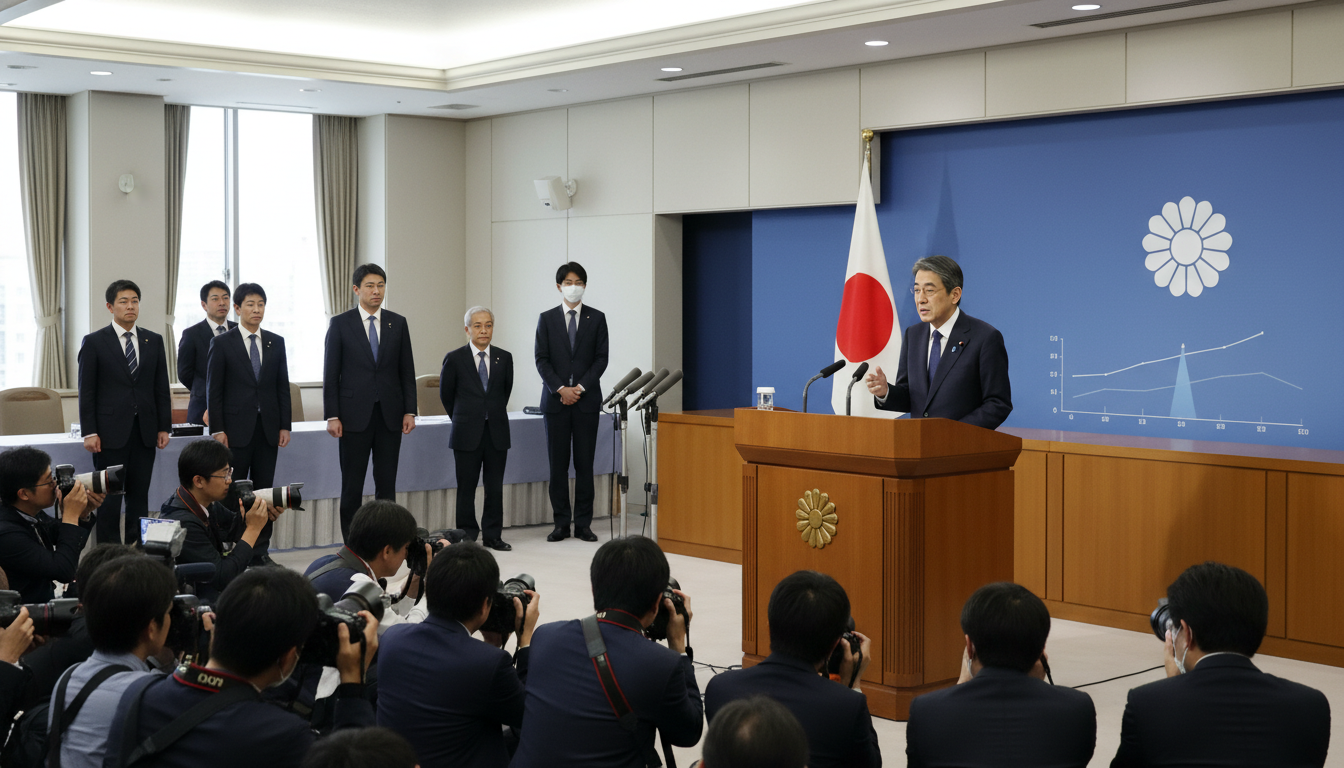
PM Sanae Takaichi says Japan’s supplementary budget will be passed early to fund energy relief, incl. fuel subsidies, and avoid net new deficit bonds, May 25.
Japan’s supplementary budget will be submitted for early passage, Prime Minister Sanae Takaichi said on May 25, 2026, as the government moves to blunt a surge in household and business energy costs. The cabinet chief reiterated that the package will not include additional deficit-financing bonds on a net basis, while preserving subsidies intended to hold gasoline prices near the equivalent of $1 per liter. Officials say the extra funding is designed to provide immediate relief from higher gas and energy prices that have been exacerbated by the Iran conflict.
Takaichi signals early passage of supplementary budget
Takaichi told reporters the government will prioritize prompt Diet approval for the supplementary budget to ensure funds reach consumers and businesses as quickly as possible. The announcement followed weeks of market pressure on energy prices and public concern over rising household expenditures. Government sources said speed is intended to prevent a deeper cost-of-living shock during the summer months when fuel demand typically rises.
No net issuance of deficit-financing bonds, government emphasizes
The prime minister and finance officials emphasized that the package will avoid issuing additional deficit-financing bonds on a net basis. Officials explained this means any new bond issuance tied to the supplementary measures will be offset by other fiscal adjustments or repayments within the fiscal framework. The government framed the approach as a way to balance urgent relief needs with long-standing commitments to fiscal sustainability.
Fuel subsidies to cap gasoline prices near $1 per liter
Central to the package are subsidies aimed at stabilizing retail gasoline prices at roughly the equivalent of $1 per liter, government officials confirmed. The measure seeks to shield motorists and logistics operators from sudden price spikes that ripple through food and goods prices. Policymakers argued these targeted subsidies are a cost-effective short-term tool to ease inflationary pressure without broad-based tax cuts.
Funds targeted at energy shock from Iran conflict
Government briefings linked the supplementary funding directly to energy market disruptions stemming from the Iran war, saying the measures are calibrated to address price rises caused by supply anxieties. Officials noted that global oil and liquefied natural gas markets have been volatile, and Japan — as a major importer — is vulnerable to external shocks. The emergency relief is intended to be temporary, designed to bridge households and firms through acute volatility while longer-term adjustments proceed.
Parliament timetable and coalition dynamics
The government plans to table the supplementary budget in the Diet soon after final cabinet approval, seeking an expedited review and vote. Ruling coalition cooperation will be necessary to clear the package quickly, and ministers have signalled coordination with party leaders on procedural steps. Opposition lawmakers have indicated they will scrutinize both the scope of subsidies and the absence of net new debt issuance, foreshadowing debate in committee sessions.
Fiscal trade-offs and medium-term outlook
Fiscal authorities stressed that preserving fiscal discipline remains a priority despite the emergency measures, noting that Japan’s public debt level necessitates careful management. Analysts say the decision to avoid net new deficit bonds is partly aimed at reassuring markets and credit observers that the relief does not signal a return to open-ended borrowing. At the same time, some economists cautioned that repeated short-term interventions can complicate medium-term consolidation unless paired with structural measures to enhance energy security and reduce import vulnerability.
Implementation plans call for detailed spending items and eligibility rules to be finalized before funds are disbursed, and ministries are preparing administrative steps to move subsidies into effect quickly. The Finance Ministry and relevant agencies are expected to present the operational timetable alongside the budget when it is formally submitted to the Diet.
The government’s next steps will be watched closely by households, businesses and markets, as swift passage and effective implementation are seen as critical to tamping down inflationary pressures and stabilizing public sentiment.

