
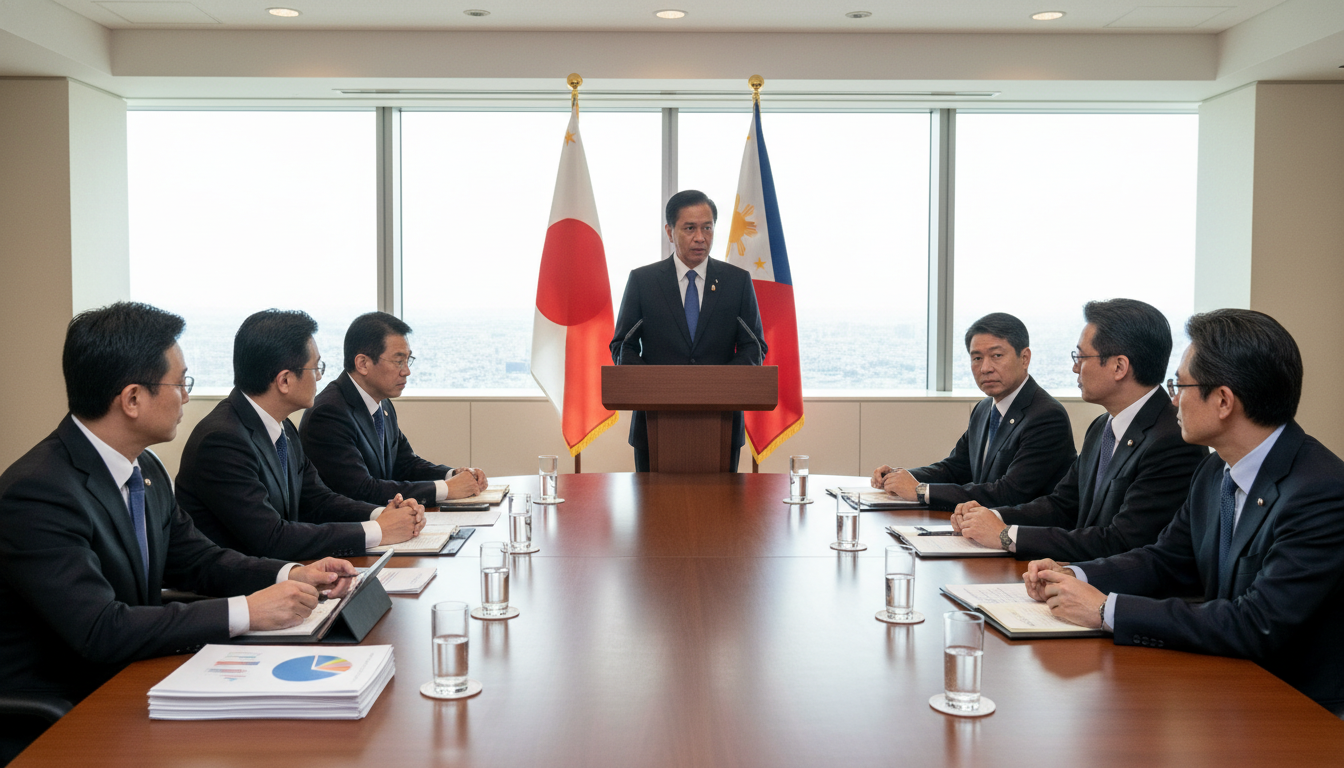
Marcos Jr. state visit to Japan highlights security gains as tax and corruption fears dampen investor enthusiasm
Marcos Jr.’s state visit to Japan on May 26, 2026 seeks deeper security ties, but tax and corruption concerns are making Japanese investors hesitant now.
President Ferdinand Marcos Jr. arrived in Tokyo on May 26, 2026 for a four-day state visit aimed at strengthening bilateral ties and advancing security cooperation with Japan. The Marcos Jr. state visit to Japan will include talks with Prime Minister Sanae Takaichi and meetings with senior officials and business leaders. While both governments have signalled an intent to accelerate strategic collaboration, Japanese companies operating in the Philippines remain cautious about expanding investment due to persistent tax and corruption worries. The contrast between diplomatic momentum on security and hesitation among investors frames the central challenge of the trip.
State visit schedule and meetings with Takaichi
Marcos is scheduled to hold a series of high-level bilateral talks with Prime Minister Takaichi, beginning with a formal tête-à-tête and followed by working-level sessions. Officials say agenda items include defence cooperation, regional security, economic ties, and plans for joint initiatives in maritime safety and intelligence sharing. The president will also attend business roundtables and public events designed to showcase the Philippines as an investment destination. These engagements are intended to deliver tangible outcomes that reinforce both strategic and economic aspects of the partnership.
Security cooperation to be front and centre
Both Tokyo and Manila have emphasized that deepening security ties is a priority of the visit, reflecting regional concerns over stability in East and Southeast Asia. Japanese and Philippine officials are expected to discuss stepped-up defence consultations, capacity-building assistance, and coordination on maritime domain awareness. Observers say that security cooperation offers clear, near-term deliverables that are politically salient for both capitals. Those priorities, however, may not directly translate into immediate commercial commitments from private-sector investors.
Japanese executives remain wary over taxes and corruption
Despite the diplomatic emphasis on partnership, Japanese executives and business groups have expressed caution about committing fresh capital to the Philippines. Longstanding concerns include unpredictable tax assessments, the prospect of retroactive levies, and bureaucratic hurdles that raise the cost and risk of doing business. Allegations of corruption and opaque regulatory practices further undermine confidence among corporate leaders weighing expansions or new projects. These business sentiments are complicating the government’s pitch that the Philippines is ready to host accelerated foreign investment.
Business roundtables to test investor appetite
Roundtable sessions with Japanese firms are intended to give Marcos a platform to address investor concerns directly and to outline reforms and incentives. Government representatives plan to highlight recent policy measures aimed at simplifying tax procedures and improving transparency. Business leaders, however, are likely to press for clearer guarantees, consistent enforcement, and stronger anti-corruption measures before making long-term commitments. The outcome of these meetings will be closely watched as an indicator of whether Tokyo’s private sector will match official-level enthusiasm with increased capital flows.
Philippine reform agenda and promises to investors
The Marcos administration has repeatedly pledged to advance measures intended to boost investor confidence, including tax administration modernization and anti-corruption initiatives. Officials accompanying the president argue that structural reforms are underway and that political dialogue with Japan can help accelerate implementation. Analysts caution that policy announcements need credible follow-through, measurable timelines, and independent oversight to persuade risk-averse companies. Without demonstrable change, offers of incentives and assurances risk being perceived as short-term rhetoric rather than durable improvement.
Economic ties versus strategic alignment
The trip underscores a divergence: robust momentum in strategic alignment between Tokyo and Manila, contrasted with a slower, more cautious economic response from Japan’s business community. Security cooperation may yield agreements that deepen defence and diplomatic ties, but private-sector investment decisions hinge on commercial and governance realities on the ground. For Manila, closing that gap requires not just headline accords but concrete reforms that address the specific commercial grievances voiced by investors. How the administration responds to those concerns in the weeks after the visit could determine whether diplomatic warmth translates into new investment.
The four-day state visit will therefore be measured on two fronts: the durability of enhanced security cooperation and whether Manila can credibly reduce the governance and tax-related frictions that deter Japanese firms. The immediate diplomatic outcomes in Tokyo may strengthen political ties, but converting political capital into business commitments will depend on follow-up actions, regulatory clarity, and demonstrable anti-corruption enforcement in the Philippines.

