
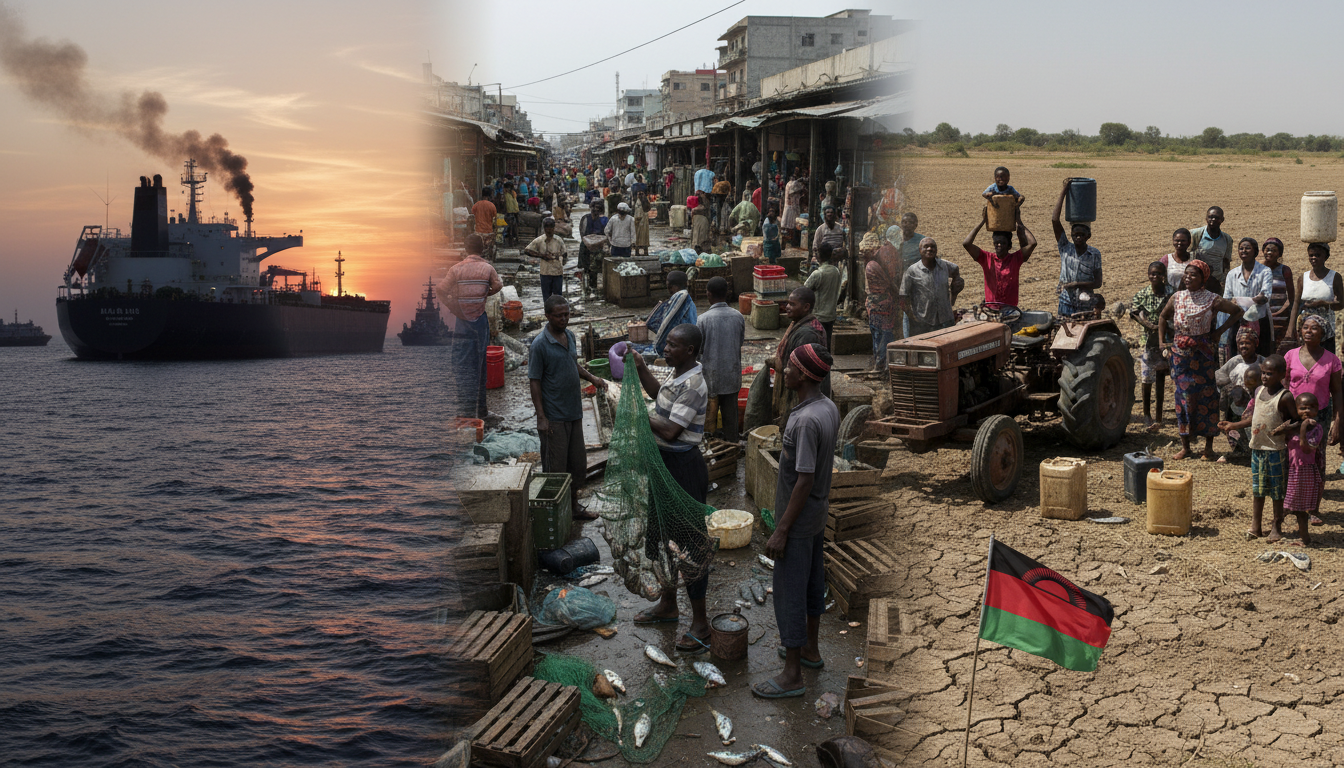
Strait of Hormuz Blockade Ripples Fuel Crisis from Jakarta to Malawi
Three months into the Strait of Hormuz blockade, fuel shortages and price spikes are crippling economies from Jakarta to Malawi and grounding fishing fleets.
The prolonged disruption of energy shipments through the Strait of Hormuz has pushed fuel costs to record levels in many developing countries, undermining livelihoods and straining government coffers. In Southeast Asia, ports that normally bustle with small fishing boats now sit crowded with vessels unable to afford diesel. In parts of Africa, households and businesses face some of the highest pump prices in the world, even as incomes remain among the lowest globally.
Jakarta’s ports clogged as fishermen stay ashore
About 620 fishing vessels have filled Nizam Zakhman fishing port north of Jakarta, according to local officials who spoke with journalists on the scene. Skippers say soaring diesel prices have made it uneconomical to put to sea, leaving crews idle and markets short of fresh catch.
The fuel squeeze has already begun to push retail prices for fish higher, dealers warned, compounding cost-of-living pressures for consumers. Local authorities report that days of inactivity at sea are translating quickly into supply shortages and lost incomes for coastal communities.
Philippine energy emergency and shifting supplier talks
The Philippines declared a national energy emergency at the end of March after fuel reserves dipped and supply routes tightened, officials confirmed during recent briefings. Stockpiles fell to roughly six weeks’ worth in March, prompting Manila to pursue new procurement options while managing rising domestic prices.
President Ferdinand Marcos has signaled a willingness to broaden oil and gas partners, prompting debate at home about cooperation in contested waters. Diplomacy has intensified as Manila balances short-term energy needs against longer-term strategic considerations, including talks with regional and extra-regional partners.
Malawi records one of the world’s highest pump prices
In Lilongwe, Malawi — classified among the world’s poorest countries by international measures — consumers are paying some of the planet’s steepest fuel prices relative to local incomes. Per-capita national income in Malawi remains extremely low, and the cost spike has eroded buying power for ordinary households.
The sharp increase in retail fuel has immediate consequences for transport, agriculture and access to basic services in rural areas. With limited fiscal space, the Malawian government faces difficult choices over subsidies or targeted relief to shield vulnerable populations.
Currencies weaken and supply chains bear the strain
Across Asia, currencies sensitive to trade and commodity flows have weakened against the dollar as oil market anxiety persisted. Indonesia’s rupiah, for example, has fallen noticeably from pre-conflict levels, amplifying the domestic cost of imported fuel and pressuring national budgets.
Beyond exchange-rate moves, shipping patterns and insurance costs have shifted as operators seek to avoid volatile maritime zones. The Strait of Hormuz is a crucial chokepoint for crude and refined product movements; sustained interruption raises freight costs and complicates scheduling for refineries and traders worldwide.
Policy responses and market options to ease shortages
Governments are pursuing a mix of measures to blunt the immediate pain: releasing strategic reserves, negotiating alternative delivery routes, and in some cases preparing temporary consumer subsidies. Japan and other economies have signaled support measures for households and industries facing higher energy bills during peak months.
Market responses have included efforts to diversify crude sourcing and accelerate shipments through less exposed channels, but such adjustments take time and may involve higher costs. Analysts caution that short-term fixes could defer rather than solve structural vulnerability to disruptions in major maritime corridors.
The human consequences are already visible: fishing communities that once depended on a daily catch, public services stretched by higher transport costs, and families forced to choose between fuel and other essentials. As the conflict around the Strait of Hormuz remains unresolved, officials and market participants say the coming weeks will be critical in determining whether relief measures can stabilize supplies or whether deeper, longer-term shifts in energy sourcing are needed to protect vulnerable economies.

