
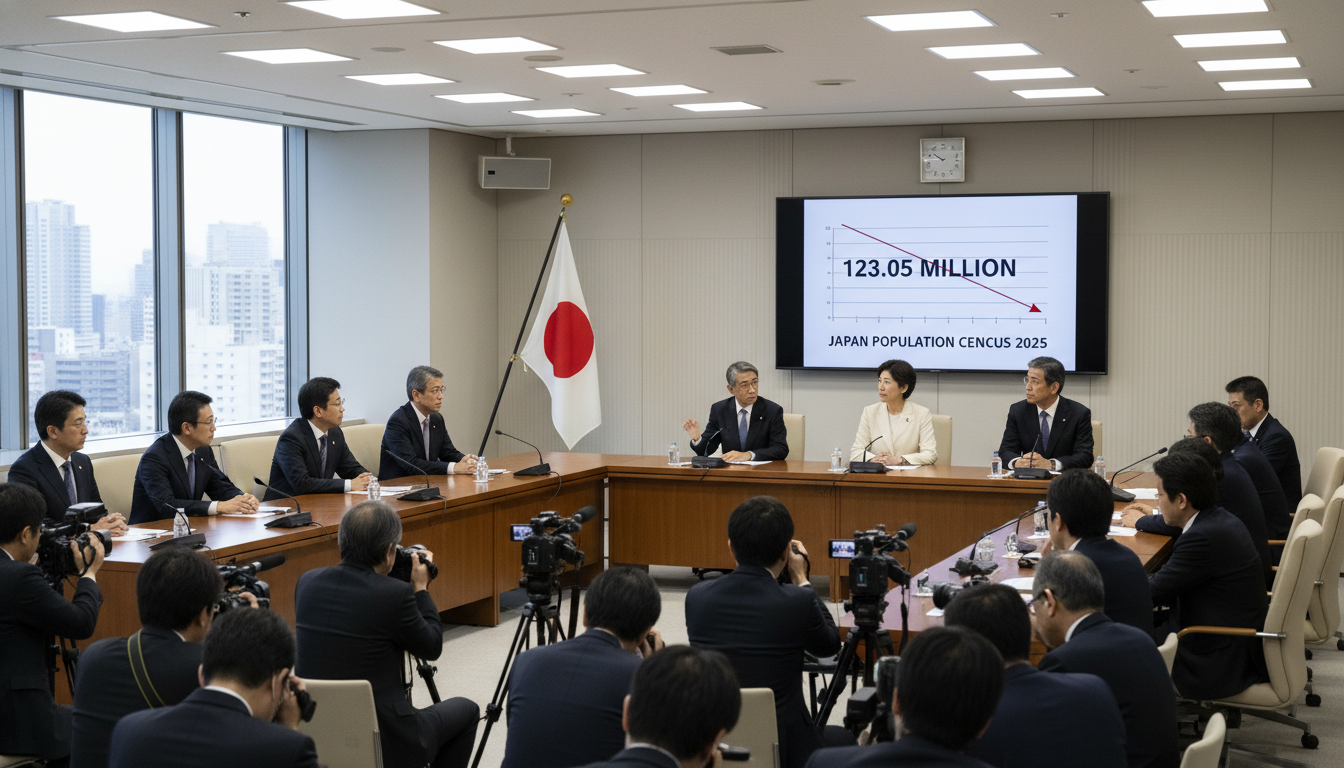
Japan population falls to 123.05 million in preliminary 2025 census, only Tokyo and Okinawa see growth
Japan population drops to 123.05 million in preliminary 2025 census released May 29, 2026; nationwide decline of 3.097 million (2.5%), urban concentration persists.
Japan’s population fell to 123.05 million under the preliminary results of the 2025 national census, the Ministry of Internal Affairs and Communications said on May 29, 2026. The Japan population declined by 3.097 million people, a 2.5% decrease from the 2020 count, reflecting continued low birth rates and an ageing society. The survey, conducted in October 2025, shows population loss across most regions, with only Tokyo and Okinawa recording increases.
Total population and methodology
The ministry released the preliminary census figures for 2025 after field enumeration in October 2025. The aggregated total of 123,050,000 reflects responses collected nationwide and is presented as an initial set of results pending final compilation and adjustments.
Officials said the figure represents a 2.5% decrease from the 2020 census, a reduction of about 3,097,000 people, signaling an acceleration of demographic decline that has been ongoing for decades.
Prefectural trends: gains and reversals
Among Japan’s 47 prefectures, only Tokyo and Okinawa posted net population gains in the five years to 2025. Forty-five prefectures recorded declines, including several that had previously registered increases.
Notably, Chiba, Kanagawa, Aichi and Shiga—prefectures that grew in the prior census—shifted to net losses in this cycle, underscoring a broader geographic reversal beyond long-acknowledged rural depopulation.
Largest absolute and percentage declines
Hokkaido experienced the largest absolute fall, losing about 239,000 residents over the five-year period. Shizuoka reported a decrease of roughly 164,000 people, followed by Hyogo with a reduction of about 141,000.
On a proportional basis, Akita recorded the steepest drop, with an 8.1% decline in population. Those figures point to sharper contractions in some regional and northern prefectures where out-migration and aging populations have been more pronounced.
Urban concentration in the Tokyo metropolitan area
Tokyo remained Japan’s most populous prefecture with approximately 14,246,000 residents, accounting for 11.6% of the national total. The four prefectures that make up the greater Tokyo area—Tokyo, Kanagawa, Saitama and Chiba—together held 30.1% of the country’s population.
Over the five-year period, the combined population of those four prefectures increased by about 71,000, a modest gain that highlights continued internal migration toward the capital region despite nationwide decline.
Municipal shrinkage and global standing
At the municipal level, 1,558 out of 1,719 cities, towns and villages—around 90.6%—saw population declines, indicating that the phenomenon of shrinking communities is widespread across local jurisdictions. The breadth of municipal losses raises questions about the sustainability of public services, local economies and infrastructure in many areas.
Internationally, Japan’s ranking by population fell to 12th in the world from 11th in the previous census, reflecting the country’s relative demographic position as populations in other nations grow while Japan’s continues to contract.
Japan’s population decline presents multifaceted challenges for policymakers at national and local levels. Shrinking tax bases and rising demands for elder care combine with labor shortages to press governments to consider policy responses ranging from family support measures to reforms in regional development.
The preliminary census results serve as a basis for more detailed analysis to follow. Finalized figures, including age and household structure breakdowns, will be released as the ministry completes verification and additional tabulations, providing a fuller picture for planning and policy decisions.

