
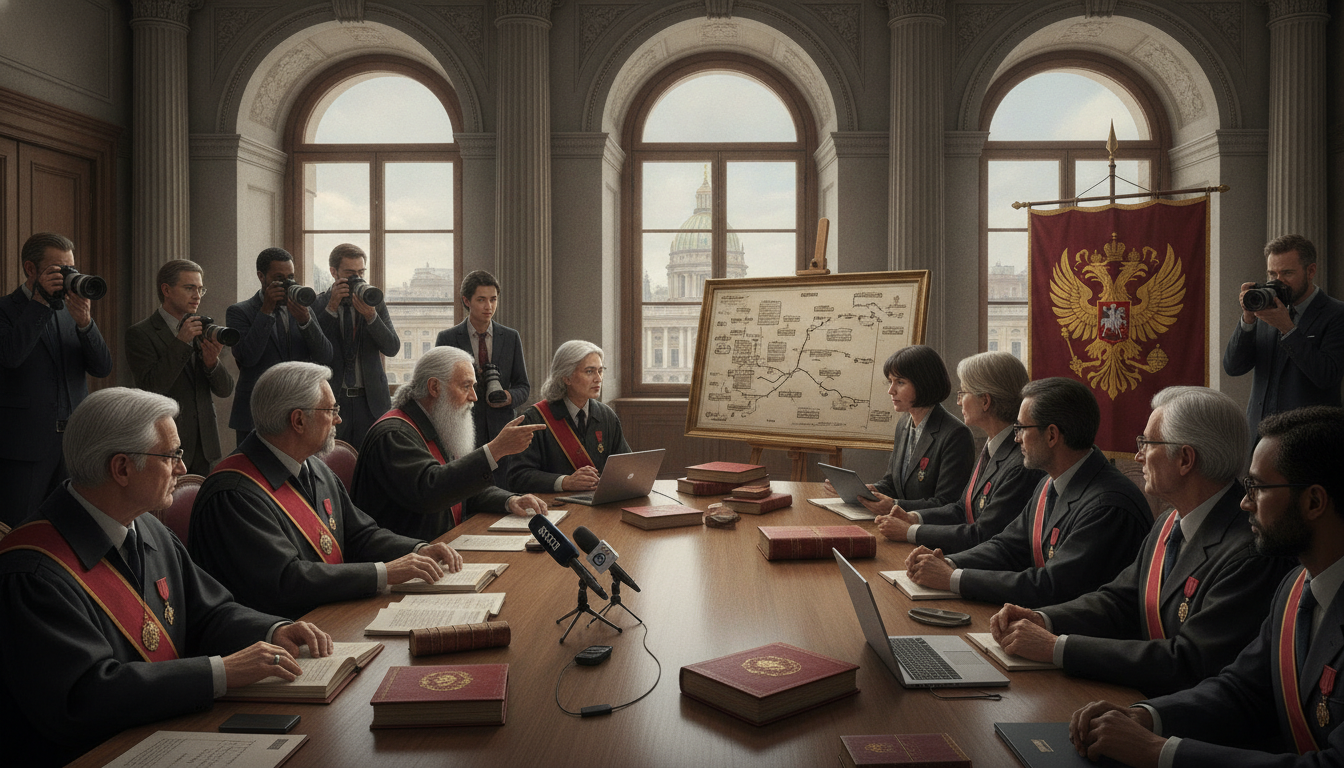
Male-line succession debate enters Upper House as Imperial Household Law amendment begins
Lawmakers open Upper House debate on July 15, 2026 over an amendment to the Imperial Household Law proposing adoption of male-line males from former imperial branches to secure male-line succession.
Japan’s Upper House began formal deliberations on July 15, 2026, over a contentious amendment to the Imperial Household Law that would allow male-line males from former imperial branches to be adopted into the Imperial Family to preserve male-line succession. The proposal, pushed by ruling coalition lawmakers, has reignited a long-standing national debate about the meaning and historical roots of male-line succession. Scholars and opposition figures have challenged the claim that male-line succession is an unbroken ancient tradition, arguing instead that the principle was solidified in the modern era.
Parliamentary debate opens in the Upper House
The special committee in the House of Councillors convened on July 15 to examine the government-backed amendment intended to bolster the number of male heirs in the Imperial Family. Lawmakers from the ruling coalition laid out the government’s rationale at the opening session, emphasizing continuity of the male line as central to their case. Opposition parties and some independent members signaled they would press historical, constitutional and social questions during the upcoming hearings.
Government supporters framed the amendment as urgent because of a shrinking imperial household and the legal constraints under current succession rules. Committee sessions are expected to include testimony from constitutional experts, historians and officials from the Imperial Household Agency, as well as spirited exchanges among party leaders.
Ruling party invokes centuries of tradition
Ruling coalition figures repeatedly argued that male-line succession has been the backbone of the imperial system for millennia, using the language of uninterrupted tradition in committee remarks. At a recent Lower House session, senior party officials asserted that successive generations have preserved a male-line imperial order stretching back thousands of years. Those remarks have been used to justify adopting male-line males from former branches as a way to maintain continuity.
Proponents say the amendment would provide a legally straightforward mechanism to integrate eligible male descendants from formerly cadet branches into the Imperial Family while preserving cultural continuity. They also argue that the change would offer stability at a time when the number of working members of the imperial household is diminishing.
Historians say the male-line narrative was shaped in the Meiji era
Academic historians interviewed for the debate contend that the rigid emphasis on male-line succession is not as ancient or absolute as some lawmakers claim. Makoto Okawa, an intellectual history scholar at Chuo University, told reporters that the current understanding of “male-line” and “female-line” succession was largely crystallized during the Meiji period, when political and ideological efforts sought to standardize imperial legitimacy.
Okawa argues that historically the throne tended to remain within a relatively limited group of imperial lineage branches for political and social reasons, rather than because of an immutable doctrinal rule. From this perspective, male-line succession is better interpreted as the product of historical developments and state policy consolidation, rather than an unbroken spiritual or legal mandate stretching back more than two millennia.
Details of the proposed amendment and adoption mechanism
The amendment under consideration would permit the Imperial Household to formally adopt male-line male descendants from several former imperial branches, restoring them to membership in the Imperial Family for succession purposes. Under current law, succession is limited to male descendants in the male line, and options such as female succession or matrilineal transmission are not permitted.
Supporters say adoption has legal precedent in other contexts and would allow for clear registration of heirs without changing the core principle of male-line inheritance. Critics counter that adoption as a solution raises questions about democratic legitimacy, historical interpretation, and the broader role of the monarchy in contemporary society.
Political and public reactions vary across the spectrum
Responses to the amendment have split along party and generational lines. Some conservative lawmakers and commentators welcomed the proposal as a respectful preservation of imperial tradition. Reformist and opposition voices expressed concern that the approach avoids a fuller public debate about monarchy, gender, and constitutional implications.
Public opinion surveys conducted earlier this year indicated a mix of views among the Japanese public, with significant numbers open to alternative succession arrangements, including female succession, though opinions differ by age and region. Civic groups and gender-equality advocates caution that focusing exclusively on male-line solutions risks sidelining broader discussions about modernization and equality in Japan’s constitutional monarchy.
Next steps and likely trajectory in parliament
Following the opening session, the Upper House committee is scheduled to hold rounds of testimony and debate over the coming days and weeks, with party negotiators seeking to build support for a committee report and potential votes. The timetable remains uncertain and could be affected by cross-party negotiation, public demonstrations, or further scholarly testimony that challenges core factual claims made by proponents.
If the committee approves the amendment, it would proceed to full Upper House consideration and, if passed, return to the Lower House for final action. Lawmakers have signaled both urgency and caution, mindful of the constitutional and symbolic importance of any change to succession arrangements.
The debate on male-line succession has reignited questions about history, law and the role of the Imperial Family in modern Japan, as parliamentarians balance claims of tradition with scholarly challenges and public concerns.

