
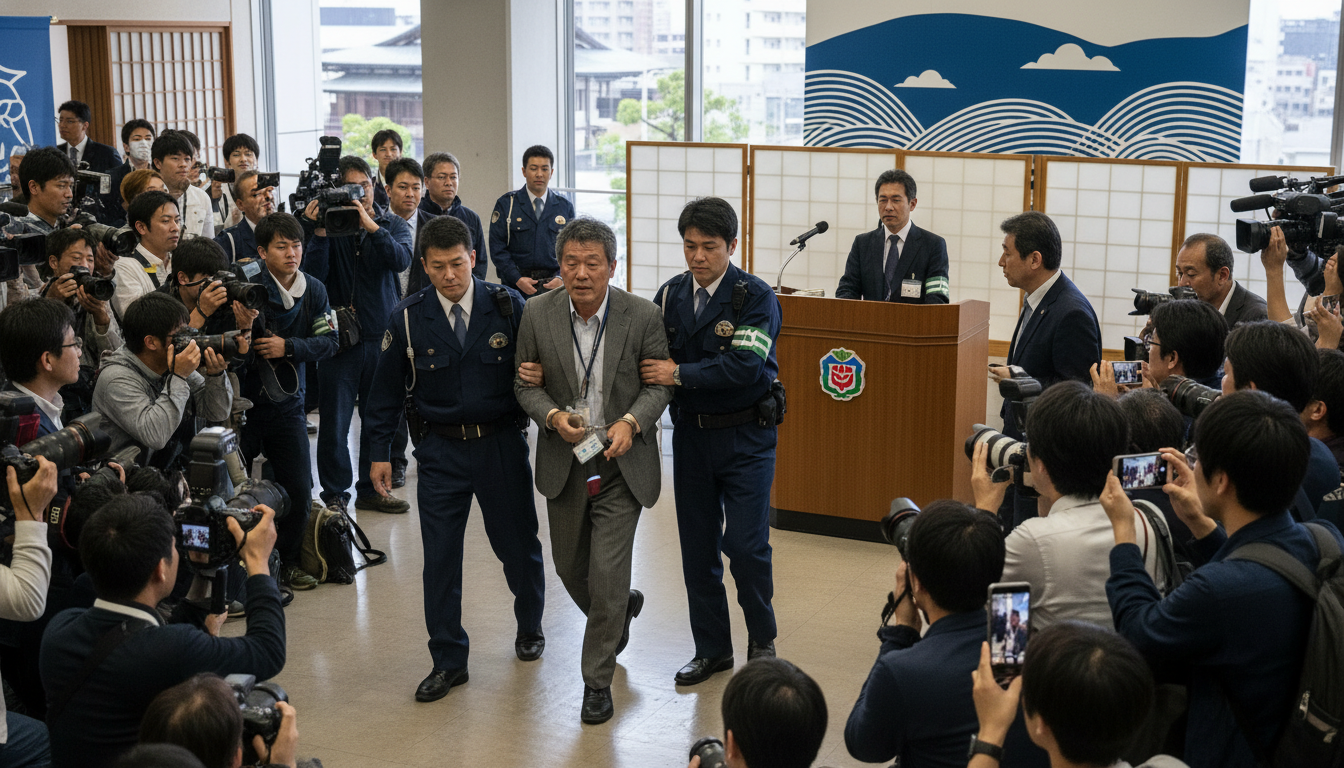
Yatsushiro city hall cash concealment: suspect posed as journalist to probe staff before hearings
A newly arrested suspect in the Yatsushiro city hall cash concealment case is accused of using a false name and posing as a journalist to approach municipal staff, police said. The Yatsushiro city hall cash concealment scandal, involving roughly ¥20 million allegedly diverted into third‑party accounts, has prompted fresh arrests and renewed scrutiny of construction payments tied to the replacement of the city’s disaster‑damaged building. Investigators say the latest arrest on May 28, 2026, raises questions about attempts to influence or gather information ahead of official inquiries.
Re-arrests and the scale of the alleged concealment
Three city councillors were re‑arrested earlier in the investigation on charges that they moved about ¥20 million in cash received from a construction firm into accounts held under other names. Prosecutors allege the transfers were meant to hide payments connected to the rebuilding of Yatsushiro’s new municipal office after damage from the Kumamoto earthquakes. Authorities say the amount and the involvement of elected officials have turned the case into a focal point for broader concerns about procurement and political finance in local government.
New suspect identified as using a false identity
On May 28, a 51‑year‑old suspect was taken into custody after investigators uncovered evidence that he had contacted city employees while presenting himself under an assumed name. Police say the suspect claimed to be a journalist during those interactions, a ruse they believe was designed to obtain internal information or to test the responses of municipal staff. Metropolitan Police investigators are probing the suspect’s contacts and communications to determine whether he sought to influence testimony or the flow of evidence.
Investigation aims at pre‑hearing intelligence gathering
Detectives suspect the false‑identity approaches were intended to learn what witnesses would say to prosecutors and to the city assembly’s special investigative panel known as the Article 100 committee. Officials say there is particular concern that the suspect’s actions could have been meant to shape or undermine testimony before the committee’s hearings. Investigators are examining call logs, emails and meeting records to establish whether the suspect coordinated with other individuals linked to the construction project or to the re‑arrested councillors.
Implications for the Article 100 committee proceedings
The city assembly’s Article 100 committee is set to examine the financing and decision‑making around the new Yatsushiro city hall, and the probe has already drawn significant local attention. Assembly members and legal advisers will need to determine how the suspect’s alleged covert contacts affect the integrity of witness statements and whether hearings should be postponed or their procedures altered. Legal experts say any evidence that witnesses were approached or intimidated could complicate both prosecutorial strategy and the committee’s fact‑finding mission.
Background: rebuild after the Kumamoto earthquakes
The payments under scrutiny stem from the construction of a replacement municipal building erected after the Kumamoto earthquakes caused substantial damage in the region. Contracts awarded for the rebuild and the flow of cash during the project have been central lines of inquiry since allegations first emerged. City officials and the construction firm involved have faced repeated questions about procurement practices, and investigators are mapping financial transactions to identify any irregular payments or intermediaries.
Next steps for police and city officials
Police have indicated they will widen searches for related documents and interview additional staff, councillors and company representatives as the investigation progresses. The Tokyo Metropolitan Police Department, working with local prosecutors, has said it will prioritize establishing links between the newly arrested suspect and any network involved in the transfer or concealment of funds. Meanwhile, the city assembly must manage public confidence by ensuring the Article 100 committee’s hearings proceed with clear protections for witnesses and transparent procedures.
The unfolding inquiry into the Yatsushiro city hall cash concealment case underscores growing public concern about accountability in municipal reconstruction projects. As investigators collect evidence and the Article 100 committee prepares for further hearings, officials face pressure to clarify how funds were handled and to restore trust in local institutions.

