
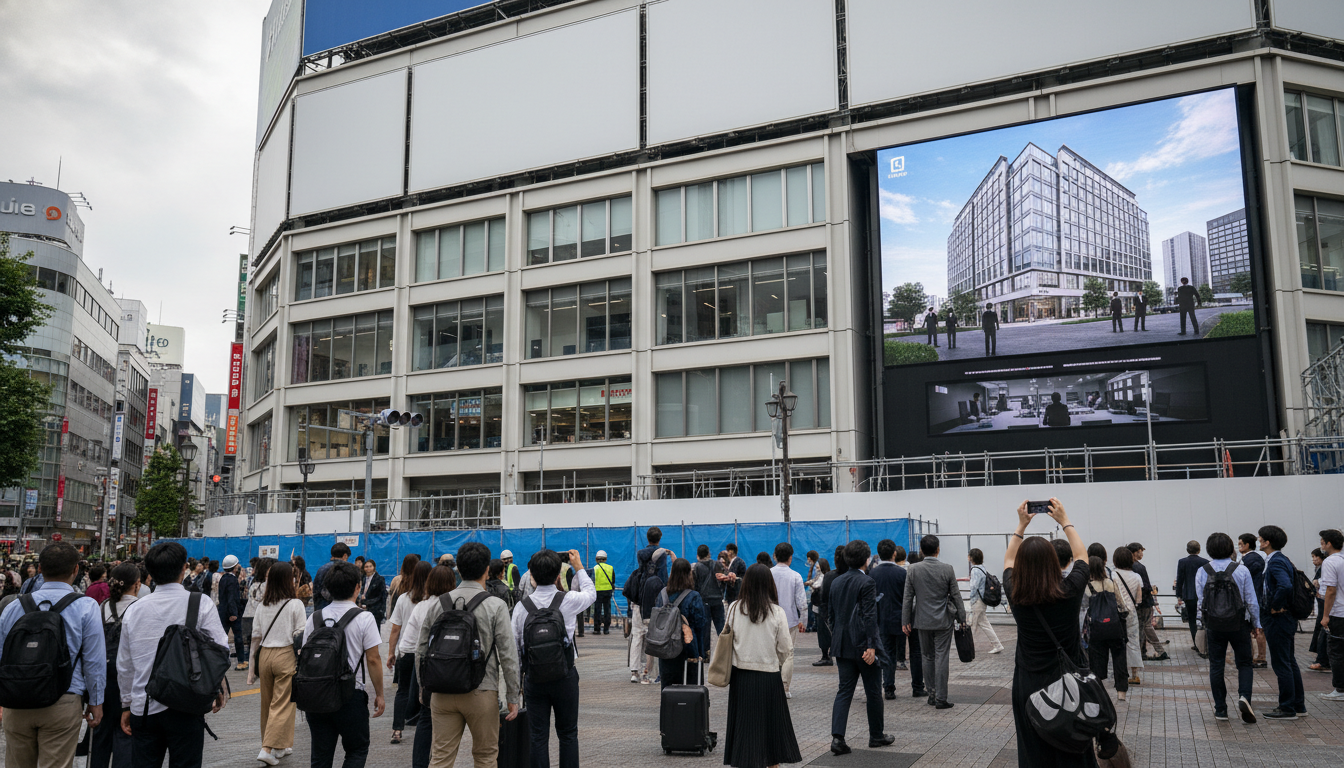
Shibuya hotel redevelopment: Hands store to be converted into new accommodation
Shibuya hotel redevelopment: Hands’ Shibuya store will become a hotel as developers race to add higher-end rooms to serve the district’s foreign visitors.
TOKYO — A prominent household goods store in Shibuya will be redeveloped into a hotel, marking a new push by property firms to expand accommodation in one of Tokyo’s busiest visitor hubs. The Shibuya hotel conversion responds to sustained tourist demand in the area, which attracts roughly 60% of foreign visitors to the capital. Developers say the change aims to capture higher-margin stays and longer visits in a district long known for shopping and nightlife.
Hands site to be redeveloped into a Shibuya hotel
The Hands household goods store in central Shibuya is slated for conversion into hotel accommodation, according to local planning notices and property-sector reporting. The move will replace a retail footprint with guest rooms and services geared toward overnight visitors, a significant change in land use for the block. Real estate companies involved view the redevelopment as part of a broader strategy to convert prime retail locations into lodging to meet tourism demand. Exact project partners and room counts have not been publicly detailed at this stage.
Shibuya draws 60% of Tokyo’s foreign visitors
Shibuya’s draw as a destination concentrates a large share of international arrivals, with the district accounting for around 60% of foreign visitors to Tokyo. That concentration has made the neighborhood attractive to hotel developers seeking steady occupancy and proximity to major attractions, transport links and nightlife. Guests value Shibuya for its walkability and brand-name retail, creating demand for accommodation close to those amenities. The clustering effect has intensified pressure on land use as commercial rents and potential hotel yields rise.
Shortage of high-end hotel rooms in central Shibuya
Despite high visitor numbers, central Shibuya has comparatively few high-end or full-service hotels, a gap that developers now aim to fill. Many existing properties in the district are smaller, design-oriented or budget-focused, leaving limited options for travelers seeking luxury or extended-stay facilities. Redeveloping retail properties into hotels is seen as a way to introduce larger room inventories and upgraded services without expanding into more distant neighborhoods. Market observers say the shift could raise average room rates and change the profile of visitors who choose to stay in Shibuya.
Developers pursue conversions to capture tourism demand
Property firms view conversions of prominent storefronts as a faster route to market than new-build projects on vacant plots, particularly in tightly developed districts like Shibuya. Redevelopment can leverage existing infrastructure and street visibility while repurposing space to meet changing consumer patterns after a multi-year lull in international travel. Investors are targeting higher-margin segments such as premium business and leisure travelers, who can sustain stronger revenue per available room. The strategy has been replicated in other parts of Tokyo where retail underperformance and rising tourism intersect.
Local businesses and community responses
Local merchants and residents have mixed reactions to the wave of hotel conversions in Shibuya, balancing opportunities and concerns. Some small retailers and restaurants expect increased foot traffic and spending from overnight guests, which could offset the loss of a long-standing retail tenant. Others fear the displacement of everyday services and the erosion of neighborhood character if retail space steadily gives way to lodging. City planners and community groups are monitoring the balance between supporting tourism-driven growth and preserving vital retail and social functions.
Planning, approvals and likely timeline
The redevelopment will proceed through municipal planning and building-permit processes, and stakeholders caution that approvals, design work and construction could take several years from announcement to opening. No detailed public timetable or construction start date has been released, and the project will need to meet zoning, safety and design standards set by Shibuya ward and Tokyo metropolitan authorities. Developers typically stage such projects to limit disruption to surrounding businesses while aligning openings with peak travel seasons. Officials say they will evaluate permit applications against local planning guidelines as they are submitted.
The Shibuya hotel conversion underscores a broader shift in Tokyo’s urban landscape where retail, hospitality and real estate interests collide to respond to evolving visitor patterns. As tourism rebounds and demand for higher-quality accommodation grows, more retail-to-hotel repurposing projects are likely to appear in center-city neighborhoods, reshaping where visitors eat, shop and stay in the years ahead.

