
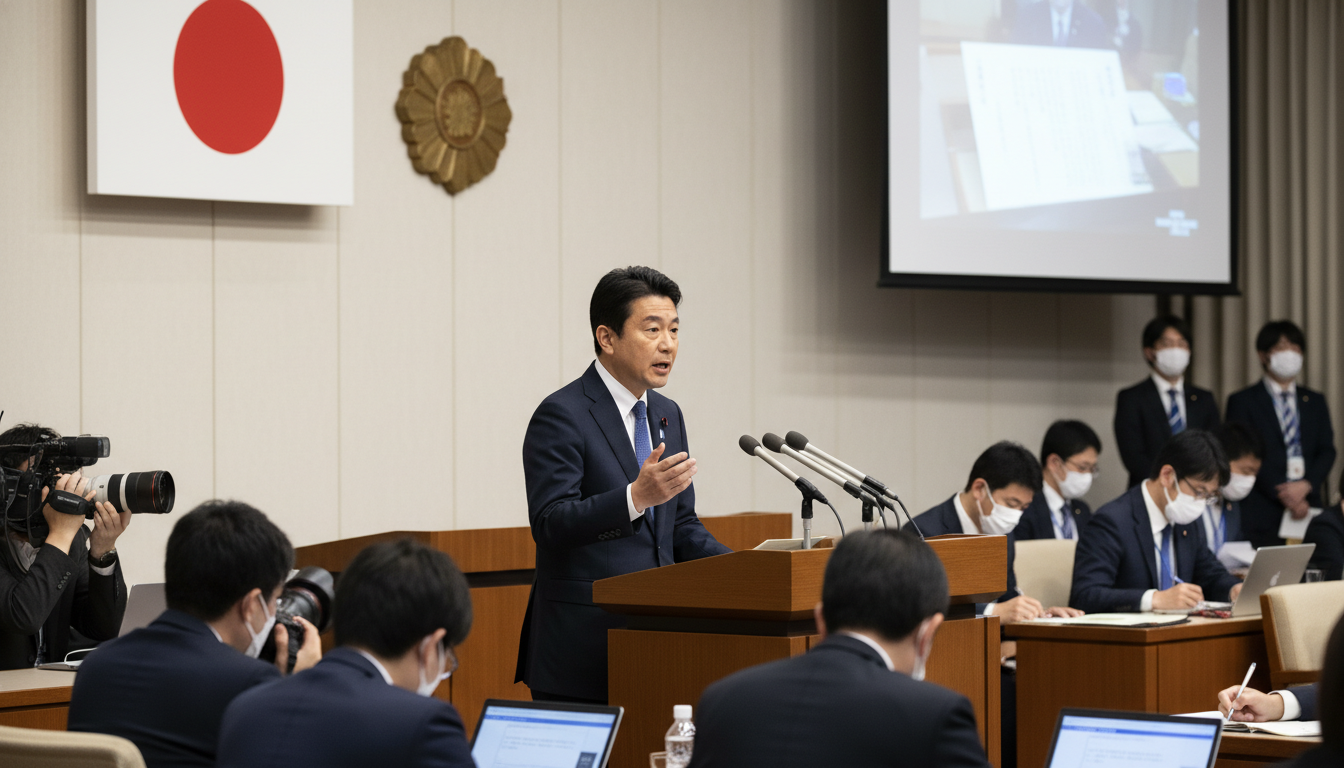
Tamaki Rejects LDP Draft for National Flag Desecration Law, Calls It Unconstitutionally Vague
On June 2, 2026, Democratic Party for the People leader Tamaki Yuichiro publicly criticized the LDP’s proposed national flag desecration law, saying its wording is vague and risks violating constitutional protections. Tamaki said he could not support the bill in its current form, signaling a major challenge for the administration’s legislative strategy.
Tamaki’s June 2 criticism and party stance
Tamaki told reporters on June 2 that while he personally believes the Japanese national flag should be protected, the LDP draft as written could be judged unconstitutional by the courts. He framed his objection around legal clarity and fundamental rights, saying the measure would unduly restrict freedom of expression and create a chilling effect on public discourse.
The Democratic Party for the People’s refusal to back the proposal represents a significant political blow for Prime Minister Sanae Takaichi’s administration, which had hoped to secure at least some opposition cooperation. Tamaki’s stance makes it harder for the ruling party to portray the bill as having broad cross-party consensus ahead of Diet deliberations.
Provisions in the LDP draft on public flag damage
The LDP draft seeks to criminalize publicly damaging the national flag in a manner that causes discomfort or disgust to others, and to impose penalties on those who record and distribute such acts online. The proposed text extends liability to cases where a person deliberately destroys or defaces the flag in a public setting and shares the footage on social media platforms.
Under the draft, the law would apply not only to individuals who physically damage the flag in public but also to those who broadcast or post such acts, making online distribution a central enforcement target. Proponents argue the measure is intended to protect a national symbol from deliberate acts meant to provoke or offend.
Concerns over freedom of expression and legal vagueness
Tamaki and other critics focused on the draft’s reliance on subjective standards — such as whether an act “causes discomfort or disgust” — to determine criminality. He warned that phrases lacking precise legal definition could leave citizens and the judiciary uncertain about what conduct is punishable under the law.
Legal clarity is a core component of the rule of law; laws must define crimes and penalties with sufficient precision to meet the principle that people can foresee the legal consequences of their actions. Tamaki argued the draft fails that test and therefore risks being struck down as unconstitutional or producing uneven enforcement.
Social media clause and enforcement challenges
The inclusion of filmed or streamed acts as punishable conduct raises distinct enforcement and proportionality questions, according to Tamaki’s remarks. Determining whether a video was intended to provoke public outrage or was created for commentary, satire or artistic expression could require complex, context-sensitive judgments by prosecutors and courts.
Authorities would also face practical issues in policing online content across platforms and borders, and in distinguishing intentional provocation from incidental or documentary footage. Critics caution that such enforcement could chill journalists, artists and activists who document controversial events involving the flag.
Political timetable and coalition dynamics
The LDP plans to submit the bill jointly with the Japan Innovation Party and aims to begin Diet debate in mid-June 2026, putting the proposal on an accelerated legislative track. Tamaki’s announcement on June 2 complicates the administration’s calculations, reducing the pool of potential cooperation among opposition parties.
With the government seeking to show momentum on symbolic lawmaking, the loss of backing from the Democratic Party for the People raises questions about whether the LDP will revise the wording or press ahead despite dissent. The coming weeks are likely to see negotiations over specific language, scope and penalties as lawmakers weigh constitutional and practical concerns.
Tamaki’s rejection underscores the broader tension between lawmakers seeking to protect national symbols and those insisting on strict safeguards for civil liberties and legal certainty. The debate over the national flag desecration law is now set to become a focal point of constitutional, political and social discussion as the Diet prepares for deliberations in mid-June 2026.

